Last update: 2019/06/25 22:53 d2:spectroscopy_module_210 https://www.vescent.com/manuals/doku.php?id=d2:spectroscopy_module_210
https://www.vescent.com/manuals/ Printed on 2019/08/21 02:55
Adjust the λ/2 waveplate to give approximately 1 Volt at the output SMA (with Reference beam1.
blocked).
Scan the laser until the Doppler broadened transitions are visible. Doppler-free hyperfine2.
transitions should be clearly evident. For
87
Rb, the cycling transition should have a depth
between 20 and 50 mV. At this stage, the input PBS can be adjusted to improve the Doppler-
free transitions; however, these adjustments are admittedly challenging. Generally it's best to
repeat the above procedure and make sure the saturation beam dump is well centered on the
output PBS and then check the quality of the spectroscopy. The 2-56 screws holding the input
and output optics assemblies can also be loosened to shift the optics assemblies around to
improve the spectroscopy.
Tighten the cone screw farthest from the alignment rod. Then tighten the last cone screw. The3.
order helps. If the spectroscopy changes then repeat the above alignment steps, but with the
cones screws just a bit tighter.
Unblock the Reference beam and use the Balance Adjust trimpot to set the desired lockpoint to4.
ground.
Replace the cover5.
The following images are representative of spectroscopy for
87
Rb with and without Doppler
subtraction. Note that Doppler subtraction (figure 8) has a minimal effect on peak lock signal
generated by dithering the laser (green traces).
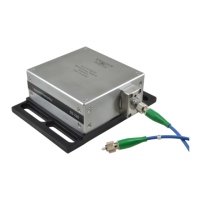
Fig. 3: Pin numbering on female Hirose 6-pin connector


 To Next Page