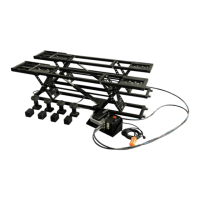
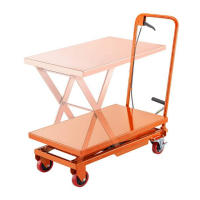
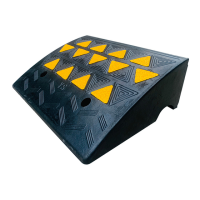
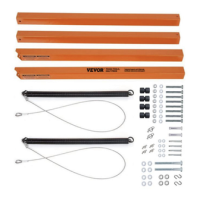
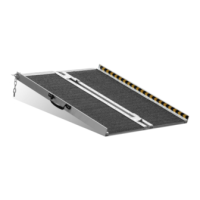
The VEVOR Portable Lifts, models JT-5000 and JT-7000, are designed to provide a competitive and efficient solution for vehicle lifting needs. These portable lifting platforms are primarily used for raising cars to facilitate maintenance, repairs, and other automotive tasks. The core function of these lifts is to elevate a vehicle safely and stably, allowing access to its underside.
Function Description:
The portable lifts operate on a hydraulic system, which is responsible for the upward and downward movement of the lifting platform. The system includes a pumping station, hydraulic hoses, and a remote control for operation. To initiate lifting, hydraulic oil is pumped into the system, extending the lift brackets and raising the vehicle. For lowering, the hydraulic pressure is released, allowing the platform to descend. The design incorporates safety features such as mechanical locks to secure the platform at elevated positions, preventing accidental drops. The lifts are designed to be portable, allowing them to be moved and set up in various locations as needed. The extension plates can be utilized for extended models, adapting to different vehicle lengths and lifting requirements.
Usage Features:
Before operating the portable lifts, users are strongly advised to read, study, and understand all warnings and operating instructions to prevent property damage or personal injury. The lifts are intended for use by qualified operators trained and familiar with hydraulic products.
Key usage features include:
- Preparation: Before first use, the hydraulic tank must be filled with 3.8 liters of ISO 46# hydraulic oil, as it is shipped without oil. The exhaust plug should be opened for injection and then closed. It's crucial not to overfill or underfill the tank.
- Connection: Two long hydraulic hoses connect the power unit to the lift platform. These connections must be properly fastened to prevent leaks and ensure system integrity.
- Placement: The lift platforms are placed on both sides of the car, with rubber pads positioned under the vehicle's jacking points as specified by the car manufacturer. There are two recommended methods for positioning: "External in" involves driving the vehicle to the desired position and then placing the lift platforms on either side, adjusting them to fit. "Inside out" involves placing the left and right frames together, driving the vehicle over them, and then pulling each frame to the ideal support point. It is critical to ensure the hydraulic hoses are not crushed during placement.
- Operation: The lifting and lowering operations are controlled via a remote control. To raise the vehicle, the "Up" button is pressed. The platform will rise to its highest height. After reaching the highest point, the "Down" button should be pressed briefly to engage the mechanical lock, securing the platform. To lower the vehicle, the "Up" button is first pressed to unlock the four lock blocks, and then the "Down" button is pressed to lower the lift to its lowest height.
- Safety during operation: Operators must ensure the vehicle is stable before continuing to raise the platform. If instability is observed, the vehicle should be carefully lowered, and adjustments made. Visual inspection is required to confirm that both sides of the lift are in the same locked position before working under the vehicle. The lifting platform should not be overloaded, and only lifting blocks of the same height should be used simultaneously. The work area must be clear of obstacles and personnel during operation.
- Power Supply: The lifts require a 60Hz power supply (120V). Using a 50Hz power supply will damage the machine.
- Environmental Conditions: Hydraulic equipment should be used at room temperature, avoiding temperatures above 65℃ (150 °F) to prevent seal softening, hose material weakening, oil leakage, and equipment failures.
Maintenance Features:
Regular maintenance is crucial for the safe and efficient operation of the portable lifts.
Key maintenance features include:
- Pre-use Inspection: Before each use, a visual inspection must be performed to check for abnormal conditions such as welding cracks, leaks, damage, loose, or missing parts. Any damaged or severely worn cables, hydraulic hoses, or labels must be replaced before operation.
- Cleanliness: Always keep the product clean.
- Storage: When not in use, all parts should be withdrawn to their original state.
- Hydraulic Oil: The hydraulic oil level should be checked regularly and supplied in time. The hydraulic oil should be replaced with the specified type if pollution is observed.
- Lubrication: All hinge joints should be lubricated, and checked for excessive wear. The lifting jack recommends yellow lithium-based grease (or similar) for lubrication nodes.
- Safety Locks: Ensure the safety lock is in good working condition. If damaged or excessively worn, the lifting platform should not be used.
- Fasteners: All bolts and pins should be checked for total movement and correct installation.
- Hose Connections: All hose connectors must be properly fastened. Do not attempt to connect or disconnect hoses when the equipment is loaded or when the hydraulic system is under pressure.
- Troubleshooting: The manual provides a troubleshooting guide for common issues like inability to lift or drop, pump pressure problems, hydraulic oil pollution, and difficulties with fast connections. For issues like the gas pump not maintaining pressure, standard valve tools can be used to check, ensuring the spool is not too tight. If pressure accumulation is too high, contacting the dealer is recommended.
- Professional Maintenance: All maintenance work, especially complex troubleshooting and repairs, must be performed by qualified personnel. Unauthorized modifications can void the warranty and increase safety risks.
- Warning Labels: All warnings and safety-related labels on the simple lifting platform should be replaced if damaged or lost.



 To Next Page
 General