Need help?
Do you have a question about the VEVOR SMS-38 and is the answer not in the manual?
Select the appropriate feeding hole according to the wire diameter for optimal stripping.
Ensure blade is collinear with roller and adjust height for wire thickness without damaging the copper core.
Addresses reasons for machine failure, including wire diameter and blade/roller alignment.
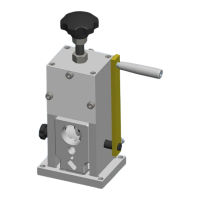
This document provides an instruction manual for a VEVOR Wire Stripping Machine, model SMS-38, designed for stripping insulation from various types of wires and cables. The machine is intended for use in environments where wires need to be processed for recycling or other purposes.
The VEVOR Wire Stripping Machine is an electrically powered device that automates the process of removing insulation from electrical wires and cables. Its primary function is to cut through the outer sheath of a wire, allowing the inner conductor (typically copper) to be easily extracted. The machine features multiple feeding holes of varying sizes, enabling it to accommodate a wide range of wire diameters. This versatility makes it suitable for processing different types of scrap wire, enhancing efficiency compared to manual stripping methods. The core mechanism involves a rotating roller system that feeds the wire through, and a sharp blade that precisely cuts the insulation without damaging the internal conductor. The machine is designed for continuous operation, making it ideal for tasks involving large quantities of wire.
Operating the VEVOR Wire Stripping Machine involves several key steps to ensure effective and safe wire stripping. The first step is to select the appropriate feeding hole based on the diameter of the wire to be stripped. This ensures that the wire is properly guided and positioned for the stripping blade. Once the correct hole is chosen, it is crucial to ensure that the center of the blade is collinear with the center of the roller. This alignment is critical for achieving a clean cut and preventing damage to the wire's core.
The machine allows for precise adjustment of the blade's height. This adjustment is made using two M12 plastic screws located above the machine. Turning these screws clockwise lowers the blade, while turning them counterclockwise raises it. The goal is to set the blade height so that it cuts through the wire's insulation effectively without touching or damaging the copper core. This fine-tuning is essential for different wire thicknesses and insulation types.
If the machine fails to strip the wire, several troubleshooting steps can be taken. One common reason is that the diameter of the wire being stripped is too small for the selected feeding hole or blade setting. Another critical factor is the alignment of the blade. If the center of the blade is not in line with the center of the roller, the stripping process will be inefficient or ineffective. To correct this, the center adjustment block can be manipulated using a wrench to shift the blade shaft left or right until proper alignment is achieved. It is important to ensure the blade is sharp for optimal performance; a dull blade may struggle to cut through insulation.
Safety is paramount during operation. Users are explicitly warned not to insert their hands into the machine while it is running. Before any checks, debugging, or troubleshooting, the machine must be stopped and unplugged. Direct contact with the blade should be avoided to prevent injuries. The machine is designed for indoor use and should not be operated outdoors. It should also never be left unattended while running.
Maintaining the VEVOR Wire Stripping Machine involves several practices to ensure its longevity and safe operation. Regular cleaning is essential. The motor housing should be cleaned with a damp cloth, and the machine should be unplugged from the outlet before cleaning or when not in use. It is crucial to avoid immersing the machine in water or other liquids to prevent electrical shock.
Periodically, the sharpness of the blade should be checked. A dull blade can hinder performance and may need to be sharpened or replaced. The manual emphasizes that if the supply cord is damaged, it must be replaced by the manufacturer, its service agent, or similarly qualified persons to avoid hazards. This highlights the importance of professional repair for critical components.
The machine is not suitable for stripping silicone rubber cables or armored cables, indicating a limitation in its design and material compatibility. Users should be aware of this to prevent damage to the machine or ineffective stripping. Proper storage when not in use, including unplugging and securing any moving parts, contributes to overall maintenance and safety. The machine's design, with components like the machine mesh cover and machine mask, suggests an emphasis on protecting internal mechanisms and user safety, which should be respected during maintenance.
 General
| Model | SMS-38 |
|---|---|
| Category | Industrial Equipment |
| Material | Steel |
| Capacity | 38 mm |
| Max. Bending Width | 38 mm / 1.5 inch |


 To Next Page