EasyManua.ls Logo

Viking pump 230 Series - User Manual

Viking pump 230 Series
16 pages
Print Icon
To Next Page IconTo Next Page
Loading...
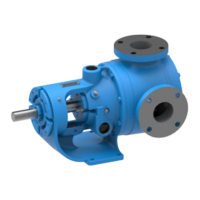
KK-230 with Jacketed casing,head,
roto and rotor bearing sleeve.
INTRODUCTION
The illustrations used in this manual are for identification purposes
only and cannot be used for ordering parts. Obtain a parts list from the
factory or a Viking representative. Always give complete name of part,
part number and material with model number and serial number of
pump when ordering repair parts. The pump model number and serial
number are on the nameplate.
In the Viking model number system, basic size letters are combined
with series number.
TECHNICAL SERVICE MANUAL
GENERAL PURPOSE JACKETED PUMPS
SERIES 230
MODELS HX4, KK, LQ, Q, M, N
VIKING PUMP, A Unit of Idex Corporation, 661 Grove Ave., Windsor, Ontario N9A 6M3 Canada
SECTION 2
BULLETIN TSM-230-V
ISSUE A
This manual deals only with Series 32 General Purpose Bracket
Mounted Pumps. Pump specifications and recommendations are
listed in Catalog Section 2, Series 32 General Purpose Pumps.
CONTENTS
Special Information 2
Maintenance 2
Packed Pump Breakdown Drawing 4
Packed Pump Disassembly 6
Packed Pump Assembly 7
Sealed Pump Breakdown Drawing 8
Sealed Pump Disassembly 10
Sealed Pump Assembly 10
Installation of Carbon Graphite Bushings 11
End Clearance Adjustment 11
Pneumatic Test 11
Pressure Relief Valve Breakdown Drawing 12
Pressure Relief Valve Instructions 13
Pressure Adjustment 13
Troubleshooting 14
Inspection Form 15
Warranty 16
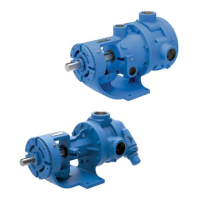
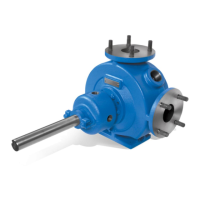
UNMOUNTED PUMP UNITS
HX4-230
KK-230
LQ-230
Q-230
M-230
Units are designated by the
unmounted pump model numbers
followed by “Arrangement”
indicating drive style.
N-230
13-Direct Connected
53-V-Belt Drive
70-Commercial Speed Reducer

Questions and Answers

Summary

Introduction and Safety

Introduction

Overview of the manual's purpose and pump identification system for Series 230 pumps.

Danger and Precautions

Critical safety warnings before opening pump chambers and handling hazardous liquids.

Pressure Relief Valve Information

Details on pump rotation, pressure protection, and relief valve configurations.

Maintenance and Repair Tools

Maintenance Procedures

Guidance on lubrication, packing adjustment, cleaning, and storage for pump longevity.

Suggested Repair Tools

List of essential tools required for servicing Series 32 pumps.

Pump Models and Disassembly;Assembly

Packed Pumps Disassembly and Assembly

Step-by-step instructions for taking apart and reassembling packed pumps.

Mechanical Seal Pumps Disassembly and Assembly

Procedures for disassembling and assembling pumps equipped with mechanical seals.

Specific Pump Component Procedures

Carbon Graphite Bushing Installation

Precautions and steps for installing brittle carbon graphite bushings.

End Clearance Adjustment

Method for measuring and setting the correct end clearance for pump operation.

Pneumatic Testing

Procedure for testing pump seals and components for leaks using air pressure.

Pressure Relief Valve Instructions

Pressure Relief Valve Disassembly and Assembly

Instructions for taking apart, cleaning, inspecting, and reassembling relief valves.

Pressure Adjustment

Guidance on how to set or change the pressure relief valve setting accurately.

Troubleshooting and Warranty

Troubleshooting Guide

Common pump issues, their causes, and recommended solutions for various operating problems.

Product Warranty Information

Details on Viking's limited warranty, coverage, and exclusions for their products.

Overview

This document is a Technical Service Manual for VIKING PUMP CANADA's General Purpose Jacketed Pumps, specifically Series 230 models HX4, KK, LQ, Q, M, and N. It provides comprehensive information for the maintenance, disassembly, assembly, and troubleshooting of these pumps.

Function Description:

The VIKING PUMP CANADA Series 230 pumps are rotary gear pumps designed for general purpose applications. As positive displacement pumps, they are capable of moving a wide variety of liquids. The "jacketed" designation indicates that these pumps are designed with a jacketed casing and/or head, allowing for temperature control of the pumped fluid through the circulation of a heating or cooling medium. This feature is particularly useful for handling viscous fluids that require heating to maintain flowability or for applications where temperature regulation is critical. The pumps are available in various arrangements, including direct-connected, V-belt drive, and commercial speed reducer, offering flexibility in drive styles to suit different operational needs.

Important Technical Specifications:

The manual covers several models: HX4-230, KK-230, LQ-230, Q-230, M-230, and N-230. These models are categorized into "Unmounted Pump" and "Units" based on their drive style.

  • Unmounted Pump Models: HX4-230, KK-230, LQ-230, Q-230, M-230, N-230.
  • Units (Drive Styles):
    • 13-Direct Connected
    • 53-V-Belt Drive
    • 70-Commercial Speed Reducer The manual details both packed and mechanical seal pump configurations. Exploded views and parts lists are provided for each type, highlighting components such as packing glands, packing rings, mechanical seal assemblies, rotor and shaft assemblies, idlers, bushings, and various casing and head configurations. Specific notes are made for models like KK-230, which can have either a non-jacketed or jacketed rotor bearing sleeve and different NPT jacketed casing sizes (e.g., 2" NPT).

Bushing Materials: The manual provides recommendations for various bushing materials, including Bronze, Carbon, Iron, Nitralloy, and Tungsten. It specifies their appearance, installation lubricant (e.g., soapy water for carbon, oil or anti-seize for others), and whether operating lubrication is required. Carbon graphite bushings, for instance, are noted as brittle and require specific installation precautions, such as using a press and soapy water lubricant, and avoiding stopping the pressing operation once started.

Pressure Relief Valves: Rotary gear pumps are positive displacement and require pressure protection. The manual describes options for relief valves, including those mounted directly on the pump or inline. It notes that pumps with a jacketed head are not available with a relief valve. The relief valve bonnet must always point towards the suction side of the pump, and its orientation must be reversed if pump rotation changes. Pressure relief valves are not to be used for flow control or discharge pressure regulation. Instructions for disassembly, assembly, and adjustment of "A" size and "B" & "C" size pressure relief valves are provided, including steps for measuring and setting the adjusting screw.

End Clearance Adjustment: A critical specification for optimal pump performance, the end clearance adjustment involves measuring distances between the rotor teeth and casing, and between the mounting surface and head, then subtracting these measurements and adding the required end-clearance. Gaskets of 0.015" thickness are used to achieve the calculated clearance.

Usage Features:

  • Rotation: Rotary gear pumps can operate in both clockwise and counterclockwise rotations. The shaft rotation determines the suction and discharge ports, with the suction port being where pumping elements (gear teeth) come out of mesh.
  • Pressure Protection: Due to their positive displacement nature, these pumps must be provided with pressure protection, such as a relief valve, torque limiting device, or rupture disk.
  • Strainer Use: A strainer on the suction side is essential to prevent foreign material from damaging gears and casing or locking up the pump. Keeping the strainer clean is crucial to avoid cavitation, which occurs when insufficient liquid reaches the pump, causing vaporization and damage.
  • Storage: For pumps stored for six months or more, proper draining, lubrication with a light coat of lubricant and rust preventative, and periodic manual rotation of the shaft are recommended to circulate oil.

Maintenance Features:

The manual emphasizes that Series 230 pumps are designed for long, trouble-free service with minimal maintenance.

  • Cleaning: Keeping the pump clean facilitates inspection, adjustment, and repair.
  • Lubrication: External lubrication fittings require multi-purpose grease every 500 hours of operation, applied slowly with a handgun. Over-greasing should be avoided. Special lubrication may be needed for extreme temperatures.
  • Packing Adjustment (for packed pumps): New packed pumps require initial adjustment to control leakage as packing "runs in." This should be done while the pump is operating under normal discharge pressure. Adjustments should be careful, avoiding over-tightening, which can lead to overheating, shaft scoring, and reduced life. Periodic inspection and readjustment for increased leakage are necessary. When the gland is tightened to the stuffing box, adding one packing ring and re-adjusting is recommended.
  • Disassembly and Assembly: Detailed, step-by-step instructions are provided for both packed and mechanical seal pumps. This includes marking parts for proper re-assembly, removing packing or mechanical seals, cleaning and inspecting components for wear or damage, and proper installation of bushings, shafts, and heads. For large pump models, the use of a lifting device is advised.
  • Special Mechanical Seals: Pumps with special mechanical seals require extra care. Users are directed to read and follow all special information supplied with the pump, as these are not fully discussed in the general TSM 32.
  • Pneumatic Testing: After assembly, pumps can be pneumatically tested by sealing ports, applying approximately 50 psi of air pressure, and spraying soapy water on external surfaces to identify leaks by observing growing air bubbles.
  • Troubleshooting Guide: A comprehensive troubleshooting table is included, addressing common issues such as "No Discharge," "Insufficient Discharge Volume," "Insufficient Pressure," "Loss of suction after a period Of operation," "Excessive power requirement," "Noisy operation with good Performance," "Noisy operation with poor or No performance," and "Leaking around the shaft." For each issue, potential causes (e.g., pump priming required, suction lift too great, worn internals, misalignment, cavitation) are listed.
  • Inspection Form: A "PUMP INSPECTION REPORT" template is provided for recording pump model, serial number, customer, sales order, application/problem, and detailed measurements of various components (Rotor O.D., I.D., Tooth Length; Idler O.D., Bushing I.D., Tooth Length; Idler Pin O.D.; Shaft O.D., Bushing I.D.; Crescent Length; Casing I.D.; End Clearance). This form allows for tracking standard dimensions, existing clearances, actual measurements, and wear, along with comments and recommendations.

Viking pump 230 Series Specifications

General IconGeneral
BrandViking pump
Model230 Series
CategoryWater Pump
LanguageEnglish

Related product manuals