The VSF3008 ITEST Flame Simulator is a portable, self-contained device designed to test Viking VSF series flame detectors. It is engineered for single-operator use, making it convenient for field applications. The simulator is robust and reliable, suitable for extreme offshore environments, and its reduced maintenance costs eliminate the need for scaffolding or ladder access to the detector.
Function Description:
The VSF3008 ITEST Flame Simulator is used to confirm the correct operation of Viking VSF Series Flame Detectors. When aligned with a flame detector, simply press the spring-loaded button to energize the simulator. The simulator's LEDs will flash, and the detector should typically go into alarm within 10 seconds. Releasing the button disconnects the power. The simulator operates for a maximum of 60 seconds before timing out.
Important Technical Specifications:
Electrical Specification – Battery Pack:
- Cells: 4
- Current: 2.6 A
- Capacity: 1.6 A-h
- Fast Charge: 1 Hour
- Full Discharge / Charge: 10 Hours
Technical Specification – Charger:
- Input Voltage: 100-240 Vac (+/- 10%)
- Charge Method: -dV
- Max. Charge Current: 800 mA (+/- 10%)
- Frequency: 50-60 Hz
- Case Protection: IP20
- Charging Indicators:
- No battery: LED off
- Charging: LED blinking green
- Charge end: LED lights green
- Error: LED blinking red
Mechanical Specification:
- Enclosure Overall Dimensions: 100 mm Diameter x 200 mm Length (4 inches Diameter x 8 inches Length)
- Shipping Weight: 2.5 Kg (5.5 lbs.)
- Material: HE30 Aluminium
- Coating: Red Powder Coated Finish
- Push button: 1 x M25 mm
- Ingress Protection: IP66
- Transit Case Overall Dimensions: 410 mm Length x 200 mm Height x 175 mm Width (16 inches Length x 8 inches Height x 7 inches Width)
- Shipping Weight: 4.5 Kg (10 lbs.)
Sensitivity:
- Coverage: 1 degree (Beam divergence)
- Range: 3-8 meters (10-26 feet)
Environmental Specification:
- Operating Ambient Temperature: -10°C to +50°C (14°F to 122°F)
- Storage Ambient Temperature: 0°C to +45°C (32°F to 113°F)
- Relative Humidity: 0-100% (Non-condensing)
Certification and Approvals:
- Hazardous Area Certification: ATEX - EN 60079-1:2014, Ex II 2 (2) G Ex db (op is T6 Gb) IIC T6 Gb IP66 (Certificate: FM21ATEX0028)
- Explosive Atmospheres: ATEX - EN 60079-28:2007, Ex II 2 (2) G Ex db (op is T6 Gb) IIC T6 Gb IP66 (Certificate: FM21ATEX0028)
Usage Features:
- Simple Operation: The flame simulator is easy to use. Once aligned with the detector, simply press the button to activate it.
- Portability: Designed as a self-contained, portable unit, it is easy to transport and handle by a single operator.
- Long Range: Capable of reliably operating Viking VSF flame detectors at distances of 3 to 8 meters (10 to 26 feet).
- Robust and Reliable: Built for demanding environments, including extreme offshore conditions.
- Timed Operation: The simulator will operate for a maximum of 60 seconds before automatically timing out.
- Charging Socket: Located inside the end cap for convenient battery charging.
Maintenance Features:
- Routine Maintenance: No set routine maintenance or repair is required beyond battery charging. The faceplate window should be kept clean to ensure proper operation.
- Battery Charging: A charging unit is supplied with the flame simulator. The charging process is done according to the dV technology. The charger goes into trickle charge mode automatically after the charge ends.
- Charging Indicators: LEDs on the charger provide clear status updates: off for no battery, blinking green for charging, solid green for charge end, and blinking red for error.
- Fault Finding: Simple diagnostics are provided for common issues, such as the flame simulator battery needing recharging or the unit being faulty and requiring repair.
- No User Serviceable Parts: The flame simulator contains no user serviceable parts, meaning replacement or repair should be handled by qualified personnel or Viking technical support in the event of a fault.
- Safety Precautions: Important warnings and cautions are provided regarding charging, handling, and operating the device in hazardous areas to ensure safety and prevent damage. For example, it is crucial not to open the enclosure in the presence of a flammable atmosphere and to disconnect the charger from the mains supply before removing the plug from the simulator.

 Need help?
 General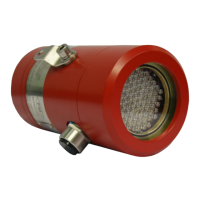

 To Next Page