10
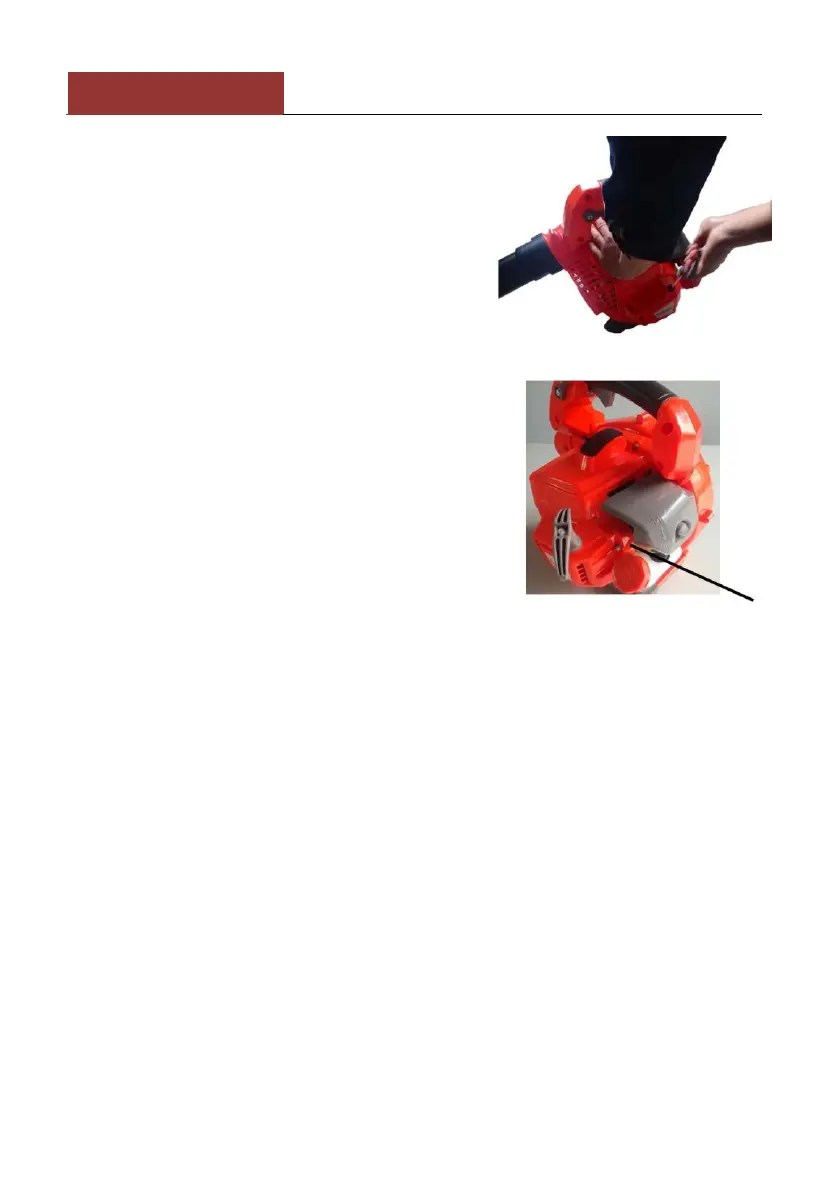
5. Place the unit firmly on the ground or a very
sturdy work surface. Make sure all bystanders
are a minimum of 50 feet (15m) away. Do not
attempt to start near pilot lights or any open
flame. Do not smoke. Grasp the Starter Rope
with one hand and press the engine cover with
the other, pull the starter rope slowly until you
feel the engine engage and then start the
machine by pulling the starter rope upwards
briskly. The unit should start within 5 pulls, then
make the choke full open (Fig.13). Once warm,
the engine should start on the first pull. If it fails
to start, re-prime the bulb and ensure the choke
lever is in the correct position (Fig.14).
6. Squeeze the throttle control slightly to warm up the engine for 15 to 30 seconds.
In cold weather, move the throttle slowly until the engine warms up for 30 to 60
seconds.
NOTE: When starting the engine in hot or cold conditions it may be necessary to
squeeze the throttle open while pulling the starter rope.
WHEN THE ENGINE STARTS
For maximum performance and operating life, allow the engine to warm before
use.
1. Run the engine for 2-3 minutes at idle speed until the operating temperature is
reached.
2. As the engine warms, open the choke gradually by slowly pushing the choke
control in to the fully retracted position.
3. The engine should now be ready for use.
IF THE ENGINE DOES NOT START
Repeat the appropriate starting procedures. If the engine still will not start, follow
the „Starting a Flooded Engine“ instructions below.


 To Next Page
 Loading...