VESDA
®
Refrigerated Storage Design Guide
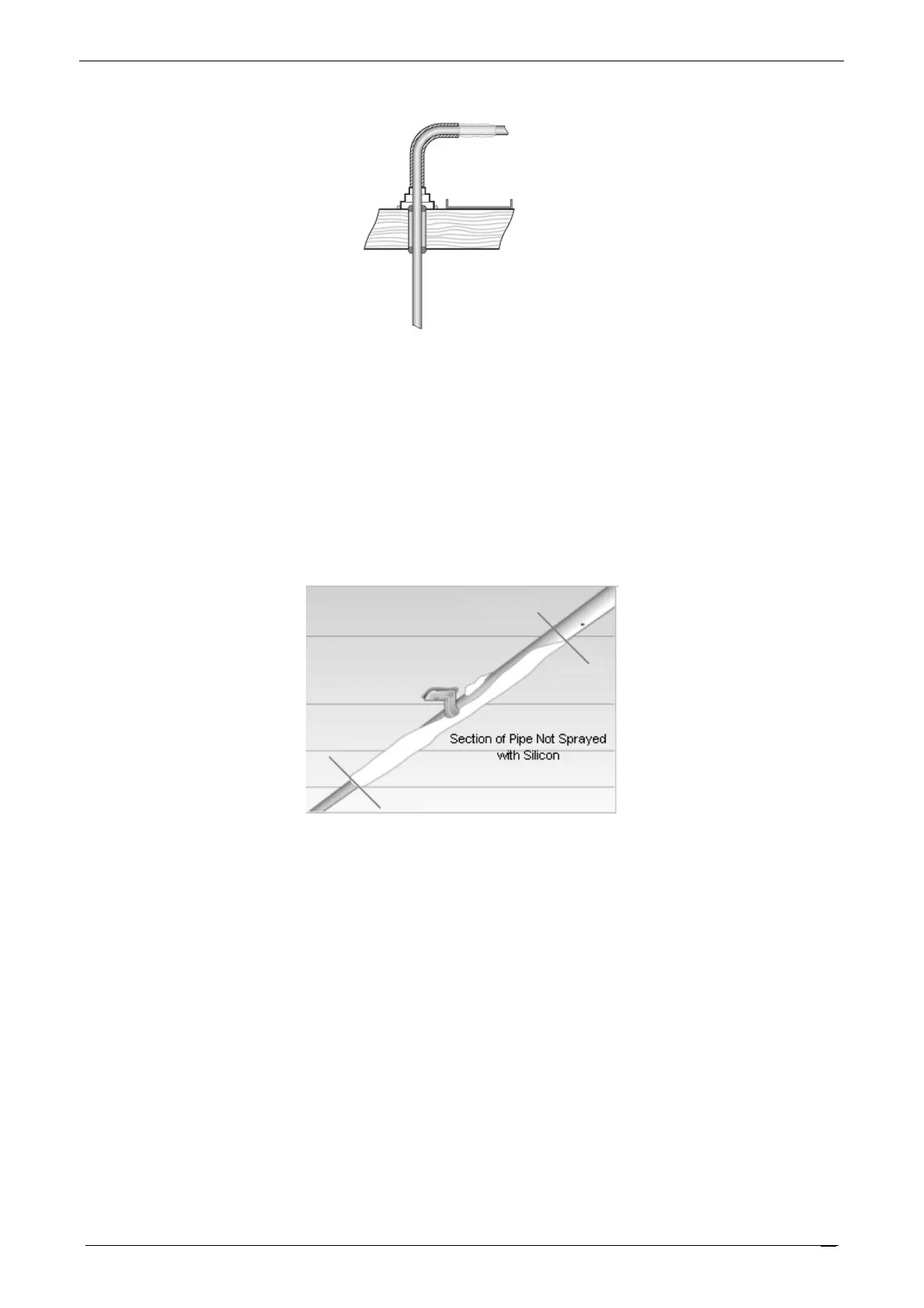
Figure 8 – Example of a
water tray.
4.3 Crystallization On The Sample Pipe Outer Surface
Occasionally, ice will form on the exterior of the sections of sampling pipe close to the refrigerator
entrances as shown below (Figure 9). This ice build up is normal and has no adverse effect on the
operation of the VESDA system, provided that sample holes are not located in the susceptible
sections of pipe where they can become blocked. Sample holes nearest to the entrances should be
sprayed with silicone to prevent ice formation.
e
Figure 9 – Example of ice formation on
sample pipes close to the refrigerator
entrance.
4.4 Condensation Inside Sample Pipes
Condensation inside sample pipes, outside the protected area is rare. However, it can occur if the
function of the protected area changes and/or as a result of seasonal temperature variations. For
example, if a chiller (-9°C, 16°F) is converted to a cooler (8°C, 46°F), condensation may form
inside the pipes outside the cooler during winter when the temperature could conceivably drop
below 8°C (46°F) .
The following measures will ensure that condensation forming in the pipes does not enter the
detector:
• Install the detector in the inverted position with the pipe entering it from below as shown above
(Figure 2).
• Install a water trap as discussed later in section 5.4.
11



 To Next Page