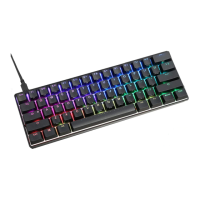
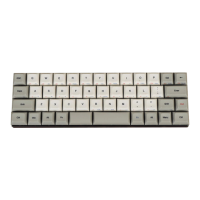
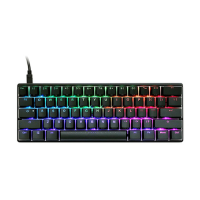
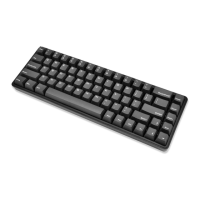
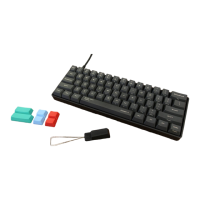
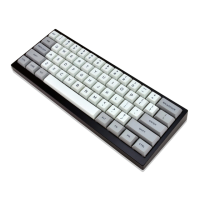
This document outlines the assembly instructions for the Model M SSK Kit, a mechanical keyboard kit. The kit is designed for users to build their own keyboard, offering a customizable experience.
Function Description
The Model M SSK Kit allows users to construct a fully functional mechanical keyboard. Mechanical keyboards are known for their tactile feedback, durability, and customizable nature, making them popular among typists, gamers, and enthusiasts. This kit provides the components and step-by-step guidance to assemble such a device.
The core function of the assembled keyboard will be to provide input to a computer or other compatible device. It features a layout that includes a main key area, function row, and potentially other keys depending on the specific layout supported by the kit. The use of hot-swap sockets for switches means that users can easily change out their key switches without soldering, allowing for significant customization of typing feel and sound.
Important Technical Specifications
While specific technical specifications like keycap profile, switch type (as it's user-selectable), or exact dimensions are not detailed in the provided excerpts, several key technical aspects can be inferred:
- Screw Types: The assembly utilizes M2 black screws for various components. Specifically, 8 M2 black screws are used for disassembling the top and bottom case, and 4 M2 black screws are used to secure the top case to the PCB after the Poron plate foam and Poron switch pad are in place.
- Standoffs: Brass standoffs are used to secure the mounting plate to the PCB. Six pieces of brass standoffs are mentioned for this purpose, along with flat-head screws from a zip bag.
- Plate Material: The mounting plate can be made from FR-4, brass, or aluminum, offering different typing feels and sound profiles.
- PCB Features: The PCB (Printed Circuit Board) includes hot-swap sockets, which are crucial for the easy interchangeability of key switches without soldering. This is explicitly mentioned in the pre-assembly precautions. It also features a daughterboard connection via an FFC (Flexible Flat Cable).
- Dampening Materials: Poron switch pads and Poron plate foam are incorporated into the design. These materials are typically used to improve the acoustics of the keyboard, reduce vibrations, and enhance the typing feel by providing a softer bottom-out. A Poron bottom foam is also placed on top of the bottom case.
- Connectivity: The main PCB connects to a daughterboard, which then connects to the F-row (likely the function key row or a separate module for it). The FFC is inserted into the connector with the metal side facing down.
Usage Features
The Model M SSK Kit offers several usage features that enhance the user experience, primarily through its customizable and modular design:
- Hot-Swap Sockets: This is a significant feature, allowing users to easily install and change key switches without the need for soldering. This means users can experiment with different switch types (linear, tactile, clicky) to find their preferred typing feel and sound. It also simplifies maintenance and repair, as individual switches can be replaced if they fail.
- Customizable Plate Material: The option to choose between FR-4, brass, or aluminum for the mounting plate allows users to further tailor the typing experience. Each material has distinct acoustic and flex properties, impacting the overall feel and sound of the keyboard.
- Sound Dampening: The inclusion of Poron switch pads, plate foam, and bottom foam indicates a design focus on acoustics. These materials help to reduce hollow sounds, pinging, and other undesirable noises, leading to a more refined and pleasant typing sound profile.
- Modular Assembly: The step-by-step assembly process, involving separate components like the top case, bottom case, PCB, daughterboard, mounting plate, and various foams, highlights the modular nature of the kit. This modularity makes it easier for users to understand and build the keyboard, and potentially to modify or upgrade components in the future.
- Clear Instructions: The manual provides detailed, illustrated instructions in both English and Chinese, making the assembly process accessible to a wider audience. The precautions section also guides users on handling sensitive components like stabilizers and hot-swap sockets.
Maintenance Features
The design of the Model M SSK Kit incorporates features that facilitate maintenance and longevity:
- Easy Switch Replacement: Due to the hot-swap sockets, individual key switches can be replaced without desoldering. This is a major advantage for maintenance, as a faulty switch can be swapped out quickly and easily, extending the lifespan of the keyboard.
- Modular Disassembly: The keyboard can be disassembled by removing screws, allowing access to internal components for cleaning, modification, or repair. For instance, the initial step involves unscrewing the top and bottom case, indicating that the entire assembly can be taken apart if needed.
- Stabilizer Care: The manual specifically mentions preparing stabilizers before assembly, implying that proper installation and lubrication of stabilizers are important for optimal performance and longevity. While not a direct maintenance feature, it guides users to ensure components are correctly set up from the start to minimize future issues.
- Component Accessibility: The assembly process reveals that components like the PCB, daughterboard, and foams are accessible once the case is opened. This allows for cleaning dust and debris, inspecting connections, or replacing worn-out dampening materials.
- Durable Materials: While not explicitly stated for all components, the use of materials like brass or aluminum for the mounting plate suggests a focus on durability. These materials are generally more robust than plastic and can withstand prolonged use.
In summary, the Model M SSK Kit is a user-buildable mechanical keyboard designed with customization, enhanced typing experience, and ease of maintenance in mind, primarily through its hot-swap capability, modular construction, and sound-dampening features.

 Need help?

 To Next Page
 General