5
TROUBLESHOOTING
I FOLLOWED ALL THE NECESSARY STEPS BUT MY VEHICLE IS STILL UNABLE TO START. NOW
WHAT?
There are several factors that could lead to a failed jump start. See the below list of what we’ve
identified to be common culprits; if the problem persists, get in touch with us
through support@myweego.com
Clamp connection quality (between clamps and battery): a poor or minimal
connection between Weego clamps and vehicle battery could result in a failed jump
start – even if the light is green, it’s still good practice to ensure your making
maximum contact with the terminals and to dig the clamps into the vehicle battery.
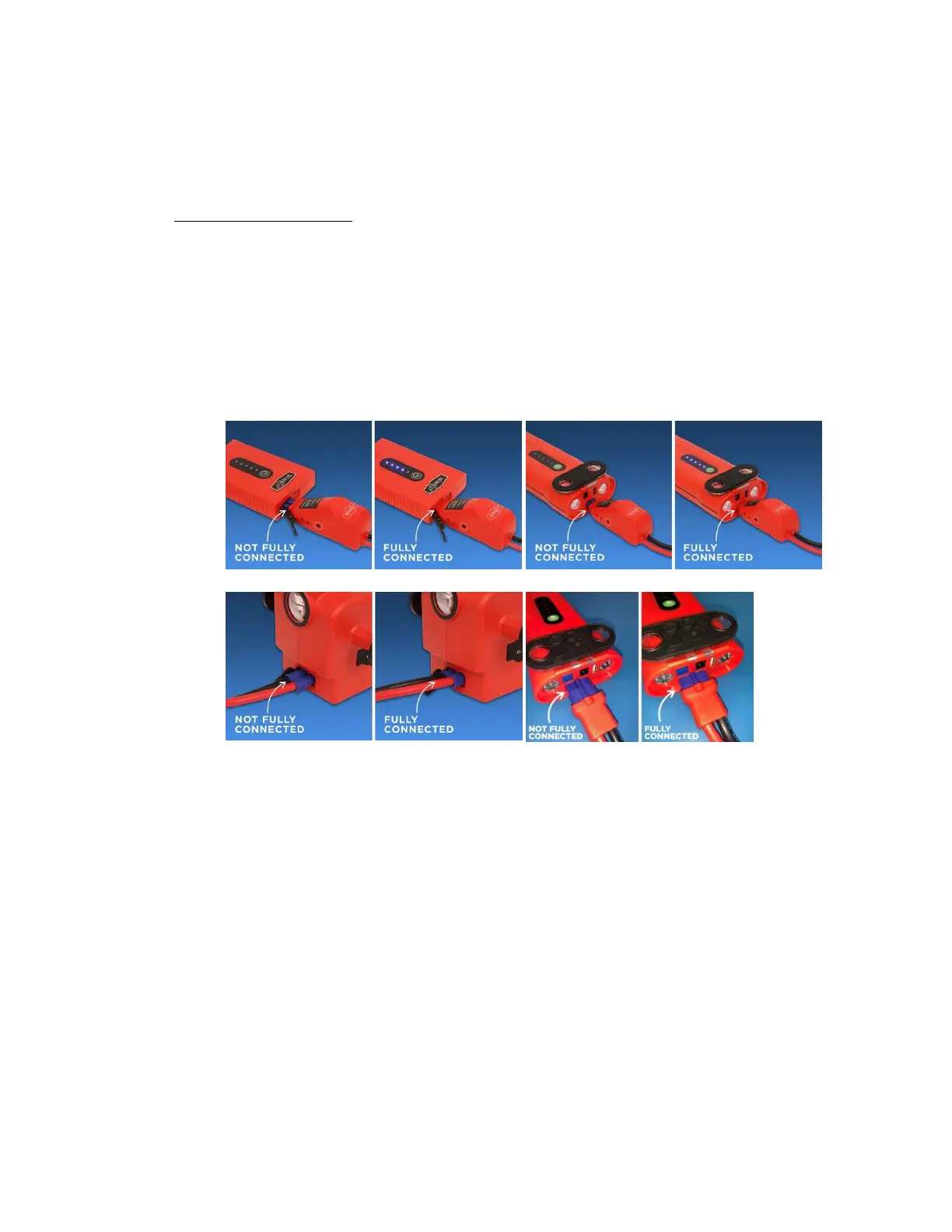
Properly connected clamps (between clamps and jump box): If your Weego
clamps are not responding when connected to a vehicle battery, assure the blue
connector is fully seated (see image). This will allow for proper communication
between the Jump Box and the smarty clamps sensors.
Weego N44s Weego N70
Weego C120 Weego 44.1 & 66.1
Dirty battery terminals: build-up blocks power from easily traveling from your
Weego to your vehicle’s battery.
Low-Charged Weego: it’s always best to work with full power on your Weego if you
can. Our jump starters perform better at 100% charge than they do at 20% charge,
especially when jumping larger engines.
Vehicle-specific compatibility issues: occasionally we come across a vehicle that
has unique power demands that a smaller model cannot fulfill, even though it’s
within our recommended engine range. In addition, vehicles with heavier
electronics can sometimes create issues when jumping with a Weego.
Ambient temperatures: below-freezing temperatures greatly hinder a jump start
as it freezes the vehicle and the Weego battery (if it was stored at ambient
temperature, too). A frozen engine needs more power than usual to start, and a
frozen battery supplies less power. It’s a lose-lose that could result in a failed jump.


 To Next Page
 Loading...