EasyManua.ls Logo

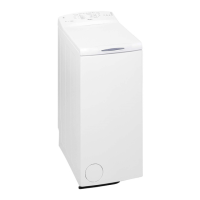
Whirlpool AWE 6760 - User Manual

Whirlpool AWE 6760
15 pages
Print Icon
To Next Page IconTo Next Page
Loading...
DEFINITION OF USE
Keep these Instructions for Use and the
Programme Chart; if you pass on the washing
machine to another person, also give him/her
Instructions for Use and Programme Chart.
This washing machine is exclusively destined to wash
and spin machine washable laundry in quantities which
are usual for private households.
Observe the instructions given in these Instructions
for Use and the Programme Chart when using the
washing machine.
BEFORE USING THE WASHING MACHINE
1. Remove the packaging and check
a. Cut and remove the shrink-wrap.
b. Remove the top protection and the protective
corners.
c. Remove the bottom protection by tilting
and turning the washing machine on one
rear bottom corner. Make sure that the
plastic part of the bottom protection
(if available on the model) remains in the
packing and not in the machine bottom.
This is important, as otherwise the plastic part could
damage the washing machine during operation.
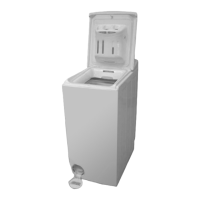
d. Open the lid by pressing it slightly down while
raising the handle. Remove the polystyrene
cushion (depending on model).
e. Remove the blue protective film from the panel
(depending on model).
After unpacking, make sure that the washing machine
is undamaged. If in doubt, do not use the washing
machine. Contact After-Sales Service or your local
retailer.
Keep the packaging materials (plastic bags,
polystyrene parts, etc.) out of reach of children;
they are potentially dangerous.
If the appliance was exposed to the cold prior to
delivery, keep it at room temperature for a few
hours before operating.
2. Remove the transport bracket
The washing machine is fitted with transport
screws and a transport bracket to prevent
damage during transport. Before using the
washing machine you must remove the
transport bracket (see “Installation”/“Removal
of transport bracket”).
3. Install the washing machine
Place the washing machine on a flat and stable
floor surface.
Adjust the feet to ensure that the machine is
stable and level (see “Installation”/“Adjust the
feet”).
In case of wooden or so-called “floating floors”
(for instance certain parquet or laminate floors),
place the appliance on a 40 x 60 cm sheet of
plywood at least 3 cm in thickness which is
secured to the floor.
Make sure that the ventilation openings in the
base of your washing machine (if available on
your model) are not obstructed by a carpet or
other material.
4. Water supply
Connect the water supply inlet hose in
accordance with the regulations of your local
water company (see “Installation”/“Connect the
water inlet hose”).
Water supply: Cold water only
Tap: 3/4” threaded hose connection
Pressure: 100-1000 kPa (1-10 bar).
Only use new hoses for connecting the washing
machine to the water supply. Used hoses must
not be used anymore and should be discarded.
5. Drain hose
Firmly connect the drain hose tothe siphon or
another outlet for drain water. (see “Installation”/
“Connect the water drain hose”).
If the washing machine is connected to a built-in
drainage system, ensure the latter is equipped
with a vent to avoid simultaneous loading and
draining of water (siphoning effect).
6. Electrical connection
Electrical connections must be carried out by a
qualified technician in compliance with the
manufacturer’s instructions and the current
standard safety regulations.
The technical data (voltage, power and fuses) are
given on the rating plate on the rear of the washing
machine.
The washing machine must be connected exclusively
by means of a socket with an earth connection in
accordance with current regulations. The washing
machine must be earthed by law. The manufacturer
declines all liability for injury to persons or animals or
damage to property deriving directly or indirectly
from failure to observe the directions.
Do not use extension leads or multi sockets.
Before any maintenance on the washing machine
disconnect it from the mains supply.
Access to the mains plug or to disconnection from
the mains supply via a double-pole switch must be
ensured at all times following the installation.
Do not operate the washing machine if it has been
damaged during transport. Inform the After-Sales
Service.
Mains cable replacement is only to be carried out
by After-Sales Service.
The washing machine must be connected to an
effective earthing installation, in compliance with the
regulations in force. In particular, washing machines
installed in premises containing a shower or a bath
must be protected by a differential residual current
device of at least 30 mA. Earthing the washing
machine is obligatory under the law.
The manufacturer declines all liability for injury to
persons or animals or damage to property deriving
either directly or indirectly from failure to observe
the directions in these Instructions for Use.
The washing machine may only be used in the
household for the prescribed uses.
Dimensions:
Width: 400 mm
Height: 900 mm
Depth: 600 mm
GB 1

Questions and Answers

Summary

Before Using the Washing Machine

Precautions and General Recommendations

Safety Instructions

General safety advice, user suitability, and cable handling for the washing machine.

Packing

Information regarding the recyclability of packaging materials.

Disposing of Packaging and Old Washing Machines

Guidelines for correct disposal of the appliance and its packaging according to WEEE directive.

General Recommendations

Advice on disconnecting the appliance, cleaning, and maintenance.

EC Declaration of Conformity

Statement regarding compliance with EC Directives for safety and electromagnetic compatibility.

Description of the Washing Machine

Installation

Removal of Transport Bracket

Instructions for removing the transport bracket before operation.

Adjust the Feet

Guidance on levelling the washing machine using its adjustable feet.

Connect the Water Inlet Hose

Connect the Water Drain Hose

Electrical Connection

Warning - This Washing Machine Must Be Earthed

Emphasizes the mandatory earthing of the washing machine for safety.

Connection to a Rewirable Plug

Steps for connecting wires to a plug by a qualified electrician.

Non-Polarized Plugs

Instructions for connecting non-polarized plugs with side earth contact.

Fuse Replacement

Procedure for replacing the fuse in the washing machine's plug.

Before the First Wash Cycle

Preparation of the Laundry

Sort the Laundry

Guidance on sorting laundry by type, colour, size, and fabric delicacy.

Empty Pockets

Instruction to empty pockets to prevent damage to laundry and machine.

Fasteners

Advice on closing zippers and buttons, and tying loose items.

Stain Removal

Tips for removing stains using detergent or pre-treatment.

Dyeing and Bleaching

Guidelines for using dyes and bleaches suitable for washing machines.

Loading the Laundry

Detergents and Additives

Choice of Detergents and Additives

Factors influencing detergent choice and usage recommendations.

Dosage

Guidelines for detergent dosage based on load size, soiling, and water hardness.

Where to Put Detergents and Additives

Diagram and explanation for placing detergents and additives in the dispenser.

Cleaning the Filter;Draining Residual Water

Care and Maintenance

Detergent Dispenser

Instructions for regular cleaning of the detergent dispenser.

Water Inlet Hose Filter

Procedure for checking and cleaning the water inlet hose filter.

Water Inlet Hose

Guidance on checking the inlet hose for damage and safety valve function.

Appliance Exterior and Control Panel

Recovering an Object That Falls Between the Drum and the Tub

Troubleshooting Guide

Appliance Does Not Start, No Indicator Lamps Are On

Troubleshooting steps for when the appliance does not power on.

Appliance Does Not Start Although Start(Pause) Has Been Pressed

Solutions for when the start button is pressed but the appliance remains inactive.

Appliance Stops During the Programme, and the Start(Pause) Light Flashes

Causes and solutions for programme interruptions and flashing start light.

Detergent Dispenser Contains Residues from Detergent;Additives at End of Wash

Troubleshooting for detergent residue in the dispenser.

Appliance Vibrates During Spin Cycle

Reasons for excessive vibration during the spin cycle.

Final Spin Results Are Poor

Causes for ineffective spinning and how to improve results.

Programme Duration is Considerably Longer or Shorter

Explanation for variations in programme duration.

Description of Failure Indications

Water Tap Closed Failure

Indicates issues with water supply or inlet hose.

Clean Pump Failure

Indicates a problem with water drainage or pump blockage.

Description of Failure Indications

bdd; Service Failure

Indicates drum flap issues or general service faults.

F02 to F35 (except F09) Failure

Indicates electrical module faults within a specific range.

F09 Failure

Indicates a high water level condition.

FA Failure

Indicates a waterstop fault, requiring immediate action.

Fod Failure

Indicates overfoaming due to excessive detergent use.

After-Sales Service

Transport and Handling

Summary

Before Using the Washing Machine

Precautions and General Recommendations

Safety Instructions

General safety advice, user suitability, and cable handling for the washing machine.

Packing

Information regarding the recyclability of packaging materials.

Disposing of Packaging and Old Washing Machines

Guidelines for correct disposal of the appliance and its packaging according to WEEE directive.

General Recommendations

Advice on disconnecting the appliance, cleaning, and maintenance.

EC Declaration of Conformity

Statement regarding compliance with EC Directives for safety and electromagnetic compatibility.

Description of the Washing Machine

Installation

Removal of Transport Bracket

Instructions for removing the transport bracket before operation.

Adjust the Feet

Guidance on levelling the washing machine using its adjustable feet.

Connect the Water Inlet Hose

Connect the Water Drain Hose

Electrical Connection

Warning - This Washing Machine Must Be Earthed

Emphasizes the mandatory earthing of the washing machine for safety.

Connection to a Rewirable Plug

Steps for connecting wires to a plug by a qualified electrician.

Non-Polarized Plugs

Instructions for connecting non-polarized plugs with side earth contact.

Fuse Replacement

Procedure for replacing the fuse in the washing machine's plug.

Before the First Wash Cycle

Preparation of the Laundry

Sort the Laundry

Guidance on sorting laundry by type, colour, size, and fabric delicacy.

Empty Pockets

Instruction to empty pockets to prevent damage to laundry and machine.

Fasteners

Advice on closing zippers and buttons, and tying loose items.

Stain Removal

Tips for removing stains using detergent or pre-treatment.

Dyeing and Bleaching

Guidelines for using dyes and bleaches suitable for washing machines.

Loading the Laundry

Detergents and Additives

Choice of Detergents and Additives

Factors influencing detergent choice and usage recommendations.

Dosage

Guidelines for detergent dosage based on load size, soiling, and water hardness.

Where to Put Detergents and Additives

Diagram and explanation for placing detergents and additives in the dispenser.

Cleaning the Filter;Draining Residual Water

Care and Maintenance

Detergent Dispenser

Instructions for regular cleaning of the detergent dispenser.

Water Inlet Hose Filter

Procedure for checking and cleaning the water inlet hose filter.

Water Inlet Hose

Guidance on checking the inlet hose for damage and safety valve function.

Appliance Exterior and Control Panel

Recovering an Object That Falls Between the Drum and the Tub

Troubleshooting Guide

Appliance Does Not Start, No Indicator Lamps Are On

Troubleshooting steps for when the appliance does not power on.

Appliance Does Not Start Although Start(Pause) Has Been Pressed

Solutions for when the start button is pressed but the appliance remains inactive.

Appliance Stops During the Programme, and the Start(Pause) Light Flashes

Causes and solutions for programme interruptions and flashing start light.

Detergent Dispenser Contains Residues from Detergent;Additives at End of Wash

Troubleshooting for detergent residue in the dispenser.

Appliance Vibrates During Spin Cycle

Reasons for excessive vibration during the spin cycle.

Final Spin Results Are Poor

Causes for ineffective spinning and how to improve results.

Programme Duration is Considerably Longer or Shorter

Explanation for variations in programme duration.

Description of Failure Indications

Water Tap Closed Failure

Indicates issues with water supply or inlet hose.

Clean Pump Failure

Indicates a problem with water drainage or pump blockage.

Description of Failure Indications

bdd; Service Failure

Indicates drum flap issues or general service faults.

F02 to F35 (except F09) Failure

Indicates electrical module faults within a specific range.

F09 Failure

Indicates a high water level condition.

FA Failure

Indicates a waterstop fault, requiring immediate action.

Fod Failure

Indicates overfoaming due to excessive detergent use.

After-Sales Service

Transport and Handling

Whirlpool AWE 6760 Specifications

General IconGeneral
BrandWhirlpool
ModelAWE 6760
CategoryWasher
LanguageEnglish

Related product manuals