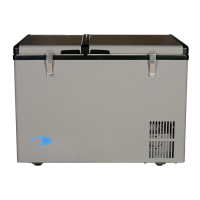
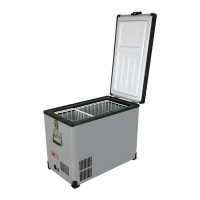
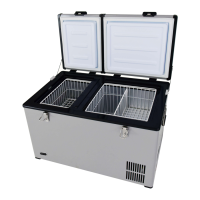
The Whynter 90 Quart Dual Zone Portable Fridge/Freezer (Model #: FM-901DZ) is a versatile appliance designed to meet your refrigeration and freezing needs in various settings, including RVs, boats, campsites, and fishing trips. This portable unit functions as both a refrigerator and a freezer, offering a wide temperature control range from -8°F to 50°F, making it suitable for keeping food and beverages chilled or frozen. It is a true freezer/refrigerator, distinguishing itself from less effective 12-volt novelty and beverage type "coolers."
Function Description
The Whynter portable fridge/freezer operates using a compressor cooling system, ensuring efficient and reliable temperature maintenance. It features a dual-zone design, allowing for separate temperature control in two distinct compartments, a small zone and a large zone. This dual-zone capability provides flexibility, enabling you to simultaneously refrigerate items in one zone and freeze items in another, or set both zones to the same temperature. The unit is designed for portability, equipped with metal handles for easy mobility and optional wheel castors for enhanced maneuverability. It can be powered by either a standard household 110-volt AC outlet or a 12-volt DC power source, such as an automotive battery, making it adaptable for both indoor and outdoor use.
The control panel features a digital display for easy temperature setting and monitoring. Users can set the desired temperature for both the small and large zones independently. A unique battery cut-out voltage setting allows you to define the minimum voltage at which the unit will operate when connected to a DC power source, preventing excessive discharge of your vehicle's battery. The unit also includes an ECO mode, which, when activated, helps conserve energy by maintaining the internal temperature within a 2°F variation, ideal for extended periods of non-access. A RUN light indicates when the unit is actively operating, and a battery display shows the current battery condition, flashing when the battery level is too low.
For convenience and safety, the freezer is equipped with energy-saving LED lights that automatically illuminate when the freezer door is opened and turn off when closed, providing effective interior lighting. An open-door warning system alerts you if a freezer door is left open for more than one minute, helping to prevent temperature fluctuations and potential food spoilage. The robust outer casing is designed to withstand various conditions, and the unit can function effectively even when tilted up to 30 degrees.
Usage Features
To ensure optimal performance, proper installation and placement are crucial. The appliance is designed for freestanding installation and requires at least a 6-inch clearance around its sides to allow for adequate heat ventilation from the compressor and condenser. It should be placed on a flat, level, and solid surface capable of supporting its weight when fully loaded. Avoid installing the unit near external heat sources, direct sunlight, or in areas exposed to rain or excessive moisture. The air vent at the front of the appliance must never be covered or blocked.
When connecting to an AC power source, ensure the power plug is firmly inserted into a grounded outlet that can support the maximum power consumption of the freezer. For DC power, the unit will not operate if the voltage is below 10.4V for a 12V socket or 22.5V for a 24V socket, restarting when the voltage is sufficient. It is recommended to plug the freezer directly into an electrical outlet rather than using multiple sockets or extension cords, which can lead to overheating. If an extension cord is necessary, it must be a UL/CUL-Listed, 3-wire grounding type with appropriate amperage and voltage ratings.
For storing frozen food, it is advisable to pre-cool the freezer to -8°F for at least two hours before introducing items. Always place purchased frozen food products into the freezer as soon as possible to prevent defrosting. When freezing fresh food, ensure hygienic conditions and pack food into separate meal portions using plastic bags, aluminum sheets, or freezing containers. Avoid placing hot or warm food directly into the freezer. Fresh foods should not be stored together with already frozen foods. When the temperature is set below 32°F, avoid storing glass-bottled drinks as they may shatter. Leave enough space inside the freezer compartments for proper air circulation to ensure best performance.
The optional wheel castors enhance the unit's portability. Two castors with plates are installed on one side, and two castors with locks are installed on the other. To lock the freezer in place, simply push down the black pedals on the locking castors until they are secured. To release, lift the pedals. It is important not to move the freezer while the wheels are locked to prevent damage.
Maintenance Features
Regular cleaning and maintenance are essential for the longevity and efficient operation of your Whynter portable freezer. Before any cleaning or maintenance, always disconnect the unit from its power source.
Defrosting and Draining: Frost buildup is a natural occurrence. It is recommended to defrost the unit when the frost layer reaches 1½ inches thick. The defrosting process is manual:
- Unplug the unit from its power source.
- Remove all food and place it in insulated containers.
- Open the door and use pans of hot water to accelerate frost loosening.
- Remove the clear drain plug from the inside base cabinet and the black drain plug from the side of the freezer to drain water.
- Sponge up any excess water from the bottom.
- After defrosting, clean and dry the interior with a soft cloth.
- Replace the drain plugs and plug in the freezer, then return food to its compartments.
Do not use sharp or metallic instruments to scrape off frost, nor mechanical devices or hot water/hair dryers to accelerate defrosting, as this can damage the freezing compartment.
Cleaning:
- Outside/Exterior: Wipe with a clean cloth lightly dampened with appliance polish wax or mild liquid dishwashing detergent. Dry and polish with a clean, soft cloth. Avoid using soiled cloths, scouring pads, powdered cleaners, bleach, or cleaners containing bleach.
- Inside: Clean the interior with a solution of warm water and baking soda (about one tablespoon per quart of water). Rinse thoroughly and wipe dry. Do not use cleaning powders or abrasive cleaners. An open box of baking soda placed inside the freezer can help absorb stale odors; replace it every three months.
Prolonged Off Periods: If the freezer will not be used for an extended period, disconnect it from the power supply, clean and dry the interior, and leave the freezer door open to prevent mold and mildew growth.
Energy Saving Tips:
- Keep the freezer door closed as much as possible, especially in hot and humid weather.
- Ensure adequate clearance for ventilation.
- For normal household use, a middle thermostat setting is recommended.
- Allow hot foods to cool to room temperature before placing them in the freezer.
- Wrap foods properly and wipe containers dry to reduce frost buildup.
- Avoid lining freezer shelves with aluminum foil, wax paper, or paper toweling, as this impedes cold air circulation.
- Organize and label food to minimize door openings and search times. Remove multiple items at once and close the door promptly.
In case of an extended power failure, keep the freezer door closed. The freezer will maintain food frozen for approximately 24 hours if warm air is not admitted. For longer outages, add dry ice in large pieces, taking precautions with gloves or other protection due to the risk of freezing hands. If dry ice is unavailable, consider moving food to a temporary storage locker until power is restored.


 To Next Page
 General