Warning: Danger of illness, bodily injury or death. Drafthood spillage with unobstructed vents, indicates that additional
air must be brought into the structure from the outside. Keep a window open a (minimum 2 inches) near the appliance
until a permanent air duct is installed.
Venting
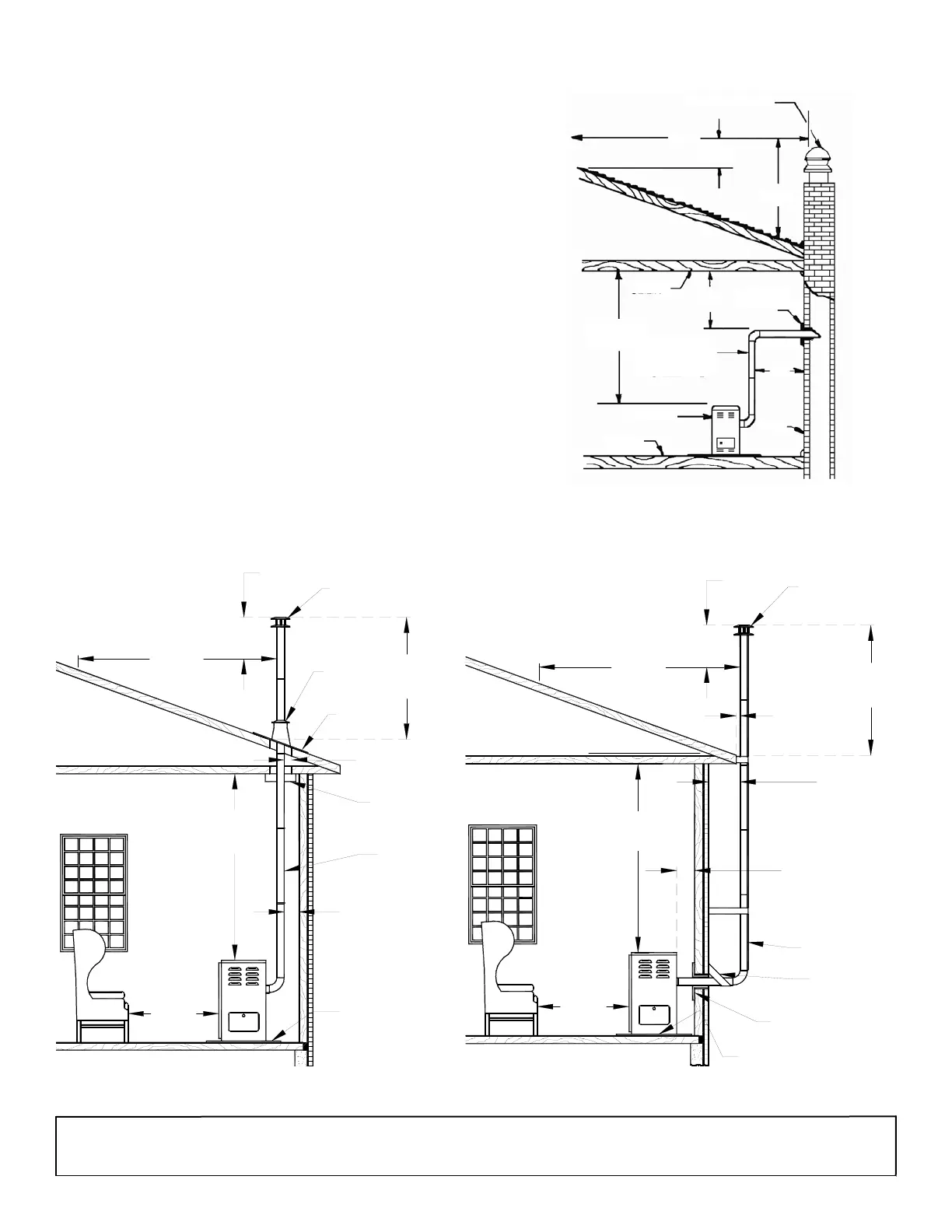
Typical Methods of Safely Venting Your Heater
1. Any horizontal run of vent pipe must slope upward a minimum of 1/4” per foot.
Secure all joints of the vent with sheet metal screws.
2. Where the vent passes through the ceiling or wall, a thimble is required to keep
the ceiling from catching fire. Use only a thimble designed for use with Type “B” gas
vent, certified by a nationally recognized testing agency.
3. The vertical (straight up and down) part of the vent must end 2 feet above any
part of the roof within 10 feet of the vent. This is to make sure the “draw” of the vent
is not obstructed in any way.
4. A cowl or cap, approved by a nationally recognized testing agency, must be
installed on top of the vent to keep out rain and snow and to prevent obstructions of
the vent. The cowl will also prevent excessive downdraft that can cause carbon
monoxide to enter into the home. Do not use a homemade cowl. They are
dangerous and can restrict the draft of the vent.
5. Safe clearances are shown below. To prevent a fire, make sure the heater is
installed no closer than the distances shown in the figures that apply to your type of
venting.
6. If you are venting into a masonry chimney, it must be lined, in good repair and
must not serve a wood or coal burning appliance. The flue must be at least as large
in diameter as the vent connector. The top of the chimney must be two (2) feet
higher above any part of the roof within ten (10) feet horizontally of the chimney and
must be three (3) feet higher than the point where it passes through the roof line. If
installed in front of a fireplace, the pipe must pass through a sheet metal cover on
the fireplace that fits tightly.


 To Next Page