EasyManua.ls Logo

Williams 5001922A - User Manual

Williams 5001922A
32 pages
Print Icon
To Next Page IconTo Next Page
Loading...
Owners Manual Save this manual for future reference.
Williams Furnace Co. 250 West Laurel Street Colton, California 92324 U.S.A.
Do not store or use gasoline or other flammable
vapors and liquids in the vicinity of this or any other
appliance.
WHAT TO DO IF YOU SMELL GAS:
Open all windows.
Do not try to light any appliance.
Do not touch any electrical switch; do not
use any phone or cell phone in your building.
Extinguish any open flame.
Immediately call your gas supplier from a
neighbors phone. Follow the gas supplier’s
instructions.
If you cannot reach the gas supplier, call the fire
department.
Installation and service must be performed by a
qualified installer, service agency or the gas
supplier.
WARNING: Improper installation, adjustment, alteration,
service or maintenance can cause injury or property
damage. Refer to this manual. For assistance or for
additional information consult a qualified installer,
service agency or the gas supplier.
Vented Room Heaters
Model Numbers:
2001622A; 2011622A; 2031622A; 2051622A; 3501522A; 3511522A;
3531522A; 3551522A; 3501922A; 3511922A; 3531922A; 3551922A;
3502522A; 3511522A; 3532522A; 3552522A; 3502922A; 3512922A;
3532922A; 3552922A; 5001522A; 5011522A; 5031522A; 5051522A;
5001922A; 5011922A; 5031922A; 5051922A; 5002522A; 5012522A;
5032522A; 5052522A; 5002922A; 5012922A; 5032922A; 5052922A;
6501522A; 6511522A; 6531522A; 6551522A; 6501922A; 6511922A;
6531922A; 6551922A; 6502522A; 6512522A; 6532522A; 6552522A;
6502922A; 6512922A; 6532922A; 6552922A
FOR USE WITH NATURAL GAS ONLY
Model Numbers:
2001621A; 2011621A; 2031621A; 2051621A; 3501521A; 3511521A;
3531521A; 3551521A; 3501921A; 3511921A; 3531921A; 3551921A;
3502521A; 3512521A; 3532521A; 3552521A; 3502921A; 3512921A;
3532921A; 3552921A; 5001521A; 5011521A; 5031521A; 5051521A;
5001921A; 5011921A; 5031921A; 5051921A; 5002521A; 5012521A;
5032521A; 5052521A; 5002921A; 5011921A; 5032921A; 5052921A;
6501521A; 6511521A; 6531521A; 6551521A; 6501921A; 6511921A;
6531921A; 6551921A; 6502521A; 6512521A; 6532521A; 6552521A;
6502921A; 6512921A; 6532921A; 6552921A
FOR USE WITH LIQUEFIED PETROLEUM (L.P.) GAS ONLY
READ THIS OWNER’S MANUAL CAREFULLY BEFORE YOU INSTALL
YOUR NEW WILLIAMS HEATER.
WARNING: If the information in these instructions
is not followed exactly, a fire or explosion may
result causing property damage, personal injury or
loss of life.
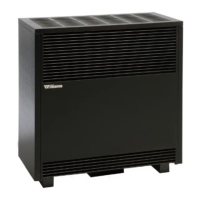
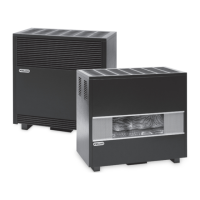
ENCLOSED MODEL
FIREPLACE MODEL
WARNING:
Installation and repair must be done by a qualified service person. The appliance should be inspected
before use and at least annually by a professional service person.


Questions and Answers

  • K
    Kristina HarringtonAug 14, 2025
    What causes pilot outage in my Williams Gas Heater?
    • A
      angela76Aug 14, 2025
      A pilot outage can occur if the pilot flame is too low or blowing too high, causing it to drop out; adjust the pilot flame accordingly. Also, the pilot orifice may be plugged, so check for spider webs or other obstructions. Drafts or drafty areas can also extinguish the pilot light, so check for doorways and high air movement areas.
  • A
    Andrew KellyAug 17, 2025
    Why won't the pilot light stay lit on my Williams Gas Heater?
    • J
      Justin NelsonAug 17, 2025
      Several factors could be at play. First, the generator may not be producing enough millivolts; ensure the pilot flame impinges on it by 1/4 to 3/8 inches and that the thermocouple is fully inserted. Also, check for loose or dirty generator connections at the gas valve, cleaning and tightening them as needed. The generator itself could be defective, requiring a millivolt meter check (reading should be 450 millivolts or more with thermostat wires disconnected). A grounded thermostat wire could also be the culprit; remove the wires to check and trace for any grounding. As a last resort, the valve itself might be defective, needing replacement after the other possibilities have been ruled out.
  • M
    Mary SantiagoAug 20, 2025
    What to do if my Williams Gas Heater burner comes on but goes off before the blower starts?
    • L
      Laura LeeAug 20, 2025
      This issue could stem from the thermostat's location. Ensure it isn't in the path of warm air from the heater, near a lamp, or above a TV or stereo. Alternatively, the thermostat itself might be defective, requiring calibration or replacement.
  • B
    bondstephanieAug 25, 2025
    What to do if my Williams Gas Heater operates, but will not shut off after room temperature is attained?
    • F
      Frank TaylorAug 25, 2025
      There are several potential causes. The thermostat wiring may be defective, possibly shorted by a nail or staple; try removing the thermostat leads from the valve terminals to check. The thermostat's location could also be the problem; if it's on an outside wall or there's a hole behind it, cold air might be interfering. Relocate the thermostat or plug the hole. The thermostat itself could be defective, so verify its temperature reading or replace it. Finally, the valve might be stuck open, requiring replacement.
  • Y
    youngwilliamAug 27, 2025
    Why is my Williams Gas Heater not producing enough heat?
    • L
      Lisa WestAug 27, 2025
      The heater may be too small for the space you're trying to heat, so check the heat sizing calculations. Also, the heater might not be burning at its full rate. Check for low gas pressure at the gas valve (it should be 4 inches W.C. for Natural Gas or 10.5 inches W.C. for L.P.G.) and look for any blockage in the burner orifice.
  • J
    Judy RobinsonAug 30, 2025
    Why is the main burner on my Williams Gas Heater not staying on?
    • W
      william53Aug 30, 2025
      Several factors could be responsible. Start by checking the vent pipe for any blockages like bird nests, twigs, or leaves. The thermostat's location is also important; if it's on an outside wall or exposed to drafts, relocate it or plug any holes. Restrictions in the vent system, caused by too many offsets, can also cause this issue. Ensure you're using the correct type of vent pipe (listed B/W type) and that it's properly installed. Finally, check for loose connections on the vent safety wiring harness, tightening them if necessary.
  • A
    Anthony ValdezSep 3, 2025
    What to do if the pilot is burning but there is no gas to the main burner in my Williams Gas Heater?
    • J
      Jermaine RichSep 3, 2025
      First, ensure the thermostat is set to a position that calls for heat. Next, check for a plugged burner orifice and clean or replace it if necessary. Inspect the thermostat wires for improper wiring or breaks, and check the connections at the valve terminals. The pilot generator may not be generating enough millivoltage to open the valve; refer to solutions 1A and 1C for guidance. Lastly, the valve itself might be defective and require replacement.
  • N
    Nicole LewisSep 6, 2025
    Why is my Williams Gas Heater making abnormal noises?
    • G
      gloriabaxterSep 6, 2025
      Abnormal operation can manifest in various ways. Delayed ignition might occur if the pilot flame is too low, so adjust it. Expansion noises or ticking could be due to the heater being distorted by uneven venting or a restricted vent. Combustible gas spillage could be caused by a blocked flue, excessive downdraft, or negative pressure in the room. Excessive flame roll-out might indicate the heater is overrated, so check for high gas pressure. An over-fired burner could also be the issue, so check the manifold gas pressure and ensure proper derating for elevations above 2,000 feet. Lastly, yellow burner or pilot flames could indicate obstructions, so inspect and clean or replace orifices as needed.
  • T
    Travis DavidsonSep 9, 2025
    Why is my Williams Gas Heater blower noisy?
    • M
      Matthew ThomasSep 10, 2025
      A noisy blower could be due to several reasons. The housing might be rattling, so tighten the blower screws. The blower itself could be dirty, so clean the blower wheel. Alternatively, the blower wheel might be bent, requiring straightening or replacement.

Summary

Williams Heater Owners Manual: Introduction and Safety

Essential Safety Warnings and Precautions

Critical safety instructions for preventing fire, explosion, injury, and property damage.

Gas Leak Detection and Response Procedures

Step-by-step guide for immediate actions if a gas leak is detected in the appliance.

Importance of Qualified Installation and Service

Emphasizes that installation and repair must be performed by qualified professionals.

Warranty Terms and Installation Record

Heater Warranty Coverage and Limitations

Details the limited one-year and extended warranties, including exclusions and limitations.

Consumer Responsibilities and General Warranty Terms

Outlines owner's duties, required documentation, and general warranty conditions.

Installation Record Keeping

A dedicated section to record critical installation details for warranty validation.

Critical Safety Rules for Heater Operation

General Installation and Operation Safety

Comprehensive safety rules covering installation, maintenance, clearances, and electrical safety.

Gas Type and Venting Safety Guidelines

Specific rules for different gas types, venting requirements, and safe handling practices.

Warning: Heater Submersion in Water

Crucial warning regarding the immediate need for inspection and repair if the heater has been exposed to water.

Heater Overview and Installation Preparation

Heater Description and Safety Features

Overview of the heater's construction, controls, and the vent safety shutoff system.

Essential Tools, Materials, and Accessories

Lists necessary tools, materials for installation, and optional accessories like blowers.

Heater Unpacking and Initial Inspection

Instructions for carefully unpacking the heater and checking for all parts before installation.

Heater Installation: Location and Gas Supply

Selecting Heater Location and Clearances

Guidelines for choosing an appropriate location, considering air circulation, safety, and minimum clearances.

Gas Controls, Supply Pressure, and Orifices

Information on gas controls, required supply pressures for Natural/L.P. gas, and orifice considerations.

Gas Piping Installation and Connections

Gas Piping Codes and Material Requirements

Specifies adherence to codes and the use of appropriate piping materials like semi-rigid tubing.

Gas Supply Line Setup and Leak Testing

Instructions for installing shutoff valves, unions, drip legs, and performing leak detection.

Combustion Air, Ventilation, and Pipe Sizing

Ensuring Adequate Combustion and Ventilation Air

Explains the critical need for fresh air, risks of CO, and signals of air starvation.

Gas Pipe Sizing Based on Capacity

Provides tables for determining the correct gas pipe size based on the required Btu/hr. capacity.

Air Requirements for Unconfined Spaces and Draft Hoods

Ventilation Openings and Free Area Calculations

Guidance on louvers, grilles, and calculating required free area for air openings.

Testing and Correcting Draft Hood Spillage

Procedures for testing draft hood spillage and recommended solutions for issues.

Confined Space Ventilation and Opening Sizing

Providing Air for Confined Installations

Methods for supplying combustion air for heaters installed in confined spaces.

Calculating Minimum Free Area for Openings

Table and guidance for determining the required free area of openings based on appliance input.

Ventilation Diagrams and Thermostat Installation

Visualizing Ventilation Setups

Diagrams illustrating ventilation configurations for connecting rooms and air intake from outdoors.

Initial Thermostat Installation Steps

Basic steps for installing a millivolt thermostat, including running wires and selecting a location.

Thermostat Installation Details and Wiring

Wall-Mounted Thermostat Installation Guide

Step-by-step instructions for installing a thermostat on the wall, including wiring.

Cabinet-Mounted Thermostat Installation

Procedures for mounting a thermostat directly on the heater cabinet, with wiring and clearance details.

Vent Installation and Safety System

Vent System Requirements and CO Risk

Importance of proper venting, the vent safety shutoff, and the risk of carbon monoxide.

Venting Guidelines and Pipe Material

Rules for vent pipe installation, clearances, and recommended materials like Type "B" vent.

Venting into Masonry Chimneys

Masonry Chimney Venting Requirements

Guidelines for lining, flue height, and clearances when venting into masonry chimneys.

Safe Clearances for Venting Installations

General safety advice regarding clearances to prevent fires during venting operations.

Diagrams of Common Venting Configurations

Straight Up Type B Gas Vent Diagram

Illustration of correct installation for vertical venting with Type "B" gas vent.

Outside Wall Type B Gas Vent Diagram

Illustration of correct installation for venting through an exterior wall using Type "B" gas vent.

Heater Start-Up Procedures and Checks

Gas Input and Pressure Verification

Steps to check natural gas input, supply pressure, and manifold pressure.

Thermostat and Pilot Burner Checks

How to verify thermostat operation and pilot burner performance before full operation.

Heater Burner Flame Characteristics

Normal Burner Flame Appearance

Describes correct flame color and cone appearance for Natural Gas and L.P. Gas.

Identifying and Addressing Abnormal Flames

Guides on recognizing lazy, fast flames, and warnings about potential hazards.

Heater Lighting and Operation Steps

Pre-Lighting Safety and Gas Checks

Safety precautions before lighting, including gas detection and proper knob handling.

Pilot Light Ignition and Verification

Detailed instructions for lighting the pilot light and confirming it remains lit.

Heater Care and Maintenance Procedures

Cabinet Cleaning and Pilot Adjustment

Instructions for cleaning the heater cabinet and adjusting the pilot burner flame.

Blower Cleaning and Vent System Inspection

Guidance on cleaning the blower and checking the venting system for blockages or damage.

Burner Compartment Cleaning and Log Handling

Cleaning for Proper Air Mixture and Safety

Importance of cleaning the burner compartment to prevent carbon monoxide and ensure correct air-fuel mixture.

Safe Removal and Reassembly of Heater Logs

Step-by-step guide for carefully removing and reinstalling the heater logs for cleaning.

Replacement Parts Diagram (Enclosed Model)

Exploded View of Heater Components

A diagram showing the assembly of various internal and external parts for the enclosed model.

Replacement Parts List for Enclosed Models

Detailed Part Numbers for Enclosed Heaters

A table listing specific part numbers for various components of enclosed heater models.

Replacement Parts Diagram (Enclosed Front)

Component Breakdown for Enclosed Front

Diagram illustrating the assembly of parts specific to the enclosed front heater configuration.

Replacement Parts List for Enclosed Front

Part Numbers for Enclosed Front Models

A table providing part numbers for components used in enclosed front heater models.

Replacement Parts Diagram (Fireplace-Look)

Component Breakdown for Fireplace-Look Model

Diagram showing the assembly of parts for the fireplace-look with logs heater configuration.

Replacement Parts List for Fireplace-Look

Part Numbers for Fireplace-Look Models

A table listing specific part numbers for components of fireplace-look with logs heater models.

Blower Accessory 2102 Installation

Mounting the Blower Motor and Fan

Step-by-step instructions for physically installing the blower accessory onto the heater.

Blower Wiring Diagram and Connections

Provides the wiring diagram and legend for connecting the blower accessory correctly.

Blower Accessory 2102 Operation and Parts

Selecting Blower Speed and Operation

Guide on operating the blower accessory by selecting speed settings for automatic temperature control.

Replacement Parts for Blower Accessory

A list of replacement parts available for the 2102 Blower Accessory kit.

Troubleshooting: Pilot and Burner Issues

Pilot Light Failure Diagnosis

Steps to diagnose why the pilot light will not stay lit after following lighting instructions.

Burner Ignition and Heat Output Problems

Troubleshooting for issues where the burner cycles off or the heater produces insufficient heat.

Troubleshooting: Operational and Venting Problems

Heater Not Shutting Off or Pilot Outage

Solutions for heaters that run continuously or experience pilot outages due to drafts or wiring.

Main Burner Stability and Vent Restrictions

Diagnosing issues with the main burner staying on, vent blockages, and improper vent pipe usage.

Troubleshooting: Advanced Operation and Blower Issues

Abnormal Operation and Flame Roll-out

Addresses issues like delayed ignition, expansion noise, gas spillage, and flame roll-out.

Blower Noise and Non-Operation

Solutions for noisy blowers, dirty blower wheels, or blowers that do not operate.

Service Hints and Ordering Parts

General Service Recommendations

Advice to check troubleshooting guides before service calls and reiterates gas safety.

Essential Information for Ordering Parts

Lists the required model, date code, and part number information for ordering replacement parts.

Williams 5001922A Specifications

General IconGeneral
BrandWilliams
Model5001922A
CategoryHeater
LanguageEnglish

Related product manuals