6-5
SECTION 6 –
ELECTRICAL
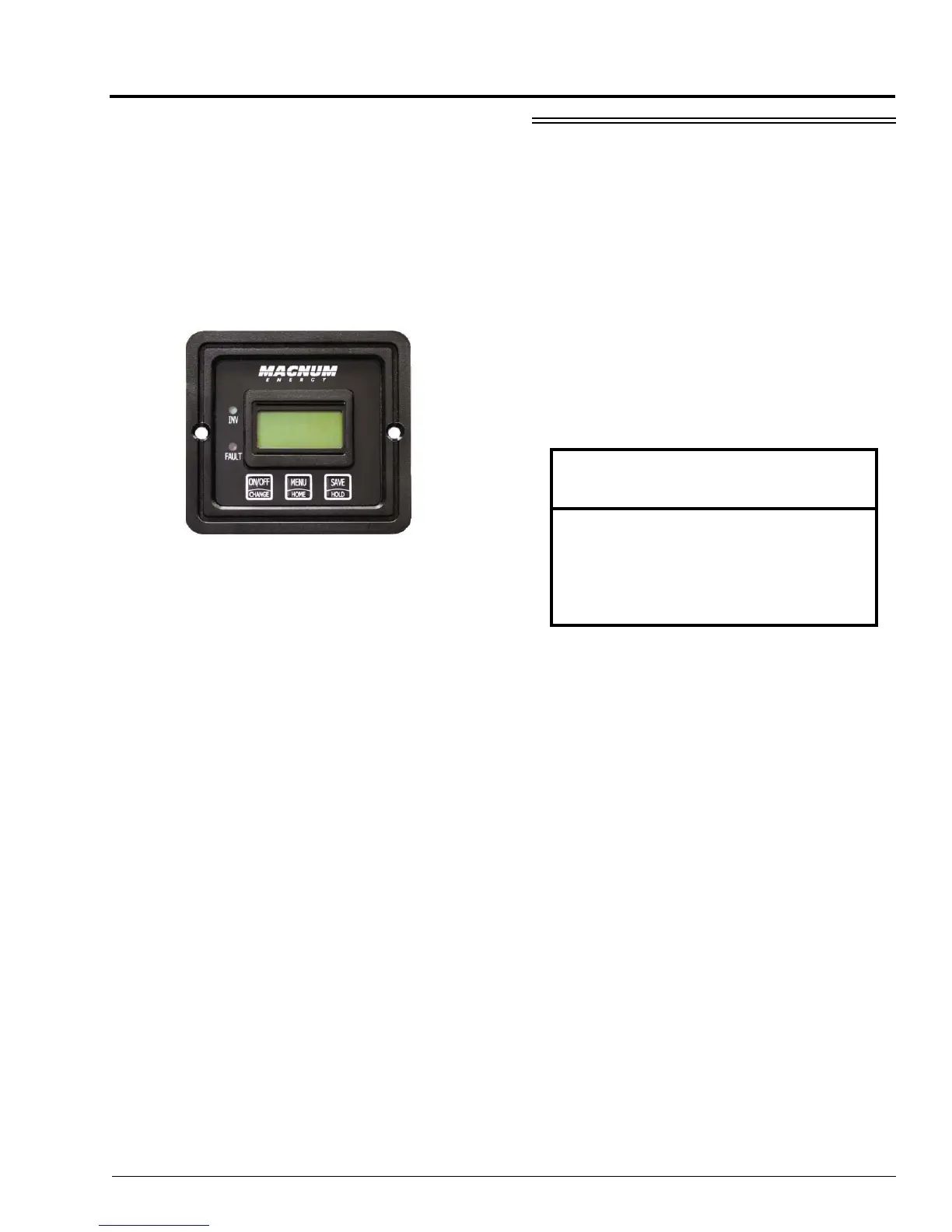
Inverter/Charger Control Panel
The inverter/charger has a wall-mounted
control panel that can be programmed for several
charging options. It will also display warnings for
overload conditions or other operating failure
conditions.
The inverter/charger control panel is located
near the monitor panel.
When the inverter is not being used, it should
be shut off at the control panel. The inverter
could drain the house batteries if the shoreline is
not connected to external power and the House/
Coach Battery Disconnect switch is on.
NOTE: Switch the refrigerator to GAS mode
anytime you are running it with the
shoreline unplugged to avoid
discharging house batteries.
The refrigerator draws its electrical
current through the inverter and not
directly from the shoreline. If the
refrigerator is in ELECTRIC or AUTO
mode, it will continue to draw from
house batteries through the inverter
when the shoreline is unplugged unless
the inverter is turned OFF.
Further Information
See the inverter/charger manufacturer’s user
guide provided in your InfoCase for complete
instructions and charging setup directions.
POWER CENTER
(Converter)
The power converter is generally located
under a cabinet in the galley, living area, or in the
power cord compartment, depending on the
floorplan of your model.
The power converter changes 120-volt AC
current from the auxiliary generator or the
shoreline into 12-volt DC current for use by 12-
volt equipment in the motorhome.
NOTE: The converter will not change 12-volt
DC current to 120-volt AC.
Further Information
See the manufacturer’s operation, care and
maintenance information in your InfoCase.
Charging Section
The converter charges house batteries while
120-volt external power is connected. The
converter will automatically “sense” the
condition of the battery. If it is below “full
charge”, the Charging Section will start charging
the batteries.
If the house batteries have been extremely
discharged, they will accept charge at a relatively
high amperage rate. If they are only slightly
discharged, they will charge at a lower amperage
rate. The rate of charge will decrease as the
batteries reach “full charge”, then will continue
“trickle” charging at a very low amperage rate. If
your battery does not charge as described above,
it is possible the battery is defective.
NOTICE
Do not block the converter cover vents in
any way. The converter generates heat
while operating and needs unrestricted
airflow for proper cooling. Damage to the
converter can result.



 To Next Page