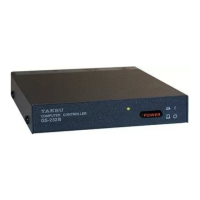
FAS-1-4R Remote Antenna Selector
The FAS-1-4R Remote Antenna Selector is a versatile device designed to facilitate the selection of up to four antennas for radio communication systems. It can be integrated with an FC-102 Antenna Tuner or operated independently, offering flexibility in installation and use.
Function Description
The primary function of the FAS-1-4R is to provide a switching mechanism between multiple antennas and a single transceiver or antenna tuner. This allows users to easily switch between different antennas without manually disconnecting and reconnecting cables. The device utilizes heavy-duty relays to ensure good isolation between selected and unselected antennas, which is crucial for maintaining signal integrity and preventing interference, especially at higher power levels.
When integrated with an FC-102 Antenna Tuner, the FAS-1-4R can be installed either at the feedpoints of the antennas (remote location) or inside the FC-102 itself. This integration allows the FC-102 to control the antenna selection. If operated independently, the FAS-1-4R requires an external 12 VDC power source and a separate switching mechanism (e.g., a 1P4T switch) to control antenna selection.
A key safety and operational feature is its behavior when power is removed. If power is lost from the FC-102 and/or the FAS-1-4R, the input terminal of the FAS-1-4R automatically connects to Antenna 1. This ensures a default connection in case of power failure. Additionally, when antennas 2, 3, and 4 are not selected, their center contacts are connected to ground within the FAS-1-4R, providing a measure of protection. The center contact of Antenna 1, however, has no connection unless power is off or Antenna 1 is specifically selected. In both these scenarios, Antenna 1 is connected to an FC-102 input terminal via the tuner.
Important Technical Specifications
- RF Power Levels: The FAS-1-4R is designed to handle RF power levels up to 1.2 kW PEP (Peak Envelope Power), indicating its suitability for high-power amateur radio and similar applications.
- Antenna Capacity: It supports the selection of up to four antennas.
- Power Requirement (Independent Operation): When operated independently, it requires a 12 V DC power source at 100 mA.
- Coaxial Cable: Short feeder lengths of 50-ohm coaxial cable are recommended for connecting antenna feedpoints to the FAS-1-4R for optimal performance.
- Antenna Feedpoints: Antenna feedpoints should be unbalanced. If balanced antennas are used, baluns (balancing-unbalancing transformers) are necessary.
- Mast Diameter (Remote Installation): For mast mounting, the mast diameter should be between 37-64 mm. Different hardware may be required for masts outside this range.
Usage Features
Installation in the FC-102:
- Subpanel Removal: The installation process begins by removing the subpanel on the rear of the FC-102.
- Module Insertion: The FAS-1-4R module is then inserted into the FC-102 and secured with four mounting screws.
- Cable Connections: A short coaxial jumper connects the ANT B terminal on the FC-102 to the INPUT coaxial terminal on the FAS-1-4R. A 4-conductor interconnection cable connects to the terminal strip on the FC-102, with its other end secured into the REMOTE jack on the FAS-1-4R. Finally, antenna feedlines are connected to jacks 1 through 4 on the FAS-1-4R.
- Control with FC-102: When controlling the FAS-1-4R with the FC-102, the ANT switch on the FC-102 must be set to the B (depressed) position to enable antenna selection. If the ANT switch is not depressed, the transceiver will be connected to the A ANT terminal on the rear panel of the FC-102 as long as power is supplied to the FC-102.
Installation at a Remote Location:
- Mounting: The FAS-1-4R is bolted to an angle bracket using supplied screws, nuts, and washers. It is then mounted on a tower or support mast using a U-bolt and Mast Clamp.
- Cable Preparation: Weather sleeves are cut to size to provide a tight fit around the coaxial and control cables. The sleeves are slid over the cables, and wires are soldered to the connectors.
- Connector Mating: Connectors are mated one at a time with their respective jacks on the FAS-1-4R. Sealing compound is applied around each mated fitting after the weather sleeve has been slid over the connector to ensure weatherproofing.
- Antenna Feedlines: Short lengths of 50-ohm coaxial cable are used to connect the antenna feedpoints to the FAS-1-4R. Antennas should ideally be unbalanced and present a 50-ohm impedance at the operating frequencies for best results.
Independent Operation (without FC-102):
- Power and Switch: The FAS-1-4R can be operated independently at the station or a remote location by providing 12 V DC at 100 mA and using a 1P4T switch for antenna selection.
- Interconnections: Specific wiring instructions are provided for connecting the external power supply, external switch, and the 4-pin control cable to the FAS-1-4R.
Maintenance Features
- Weatherproofing: The use of weather sleeves and sealing compound during remote installation is critical for protecting the connections from environmental elements, ensuring long-term reliability.
- Cable Management: Proper routing and securing of cables are emphasized to prevent damage and maintain connection integrity.
- Component Quality: The use of heavy-duty relays suggests a robust design intended for durability and reliable operation over time.
- Troubleshooting: The default connection to Antenna 1 upon power loss can aid in basic troubleshooting by providing a known state. The grounding of unselected antenna contacts also contributes to system stability and safety.

 Need help?
 General

 To Next Page