L
6-5
PERIODIC MAINTENANCE AND MINOR REPAIR
/home/Imai/imai_data/YMC-om/AB9239_RT100-26/English/E-6.frame
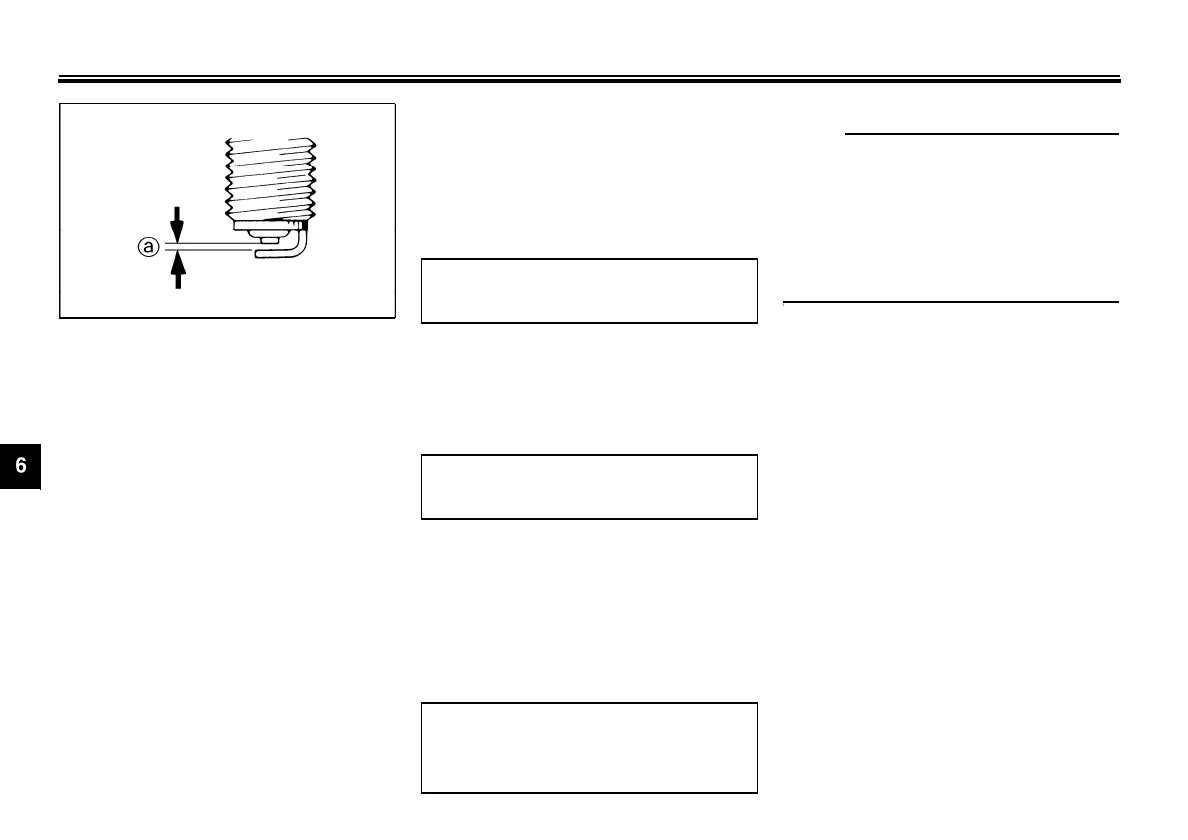
a. Spark plug gap
EAU01651
Spark plug inspection
The spark plug is an important engine
component and should be inspected
periodically, preferably by a Yamaha
dealer. The condition of the spark plug
can indicate the condition of the en-
gine. The ideal color on the white insu-
lator around the center electrode is a
medium-to-light tan color for a machine
that is being ridden normally. Do not at-
tempt to diagnose any problems your-
self. Instead, take the machine to a
Yamaha dealer. The spark plug should
be periodically removed and inspected
because heat and deposits will cause
the spark plug to slowly break down
and erode. If electrode erosion be-
comes excessive, or if carbon and oth-
er deposits are excessive, the spark
plug should be replaced with the speci-
fied plug.
Before installing the spark plug, mea-
sure the electrode gap with a wire
thickness gauge and adjust it to speci-
fication.
When installing the plug, the gasket
surface should always be cleaned and
a new gasket used. Any grime should
be wiped off from the threads and the
spark plug tightened to the specified
torque.
Specified spark plug:
BR7ES (NGK)
Spark plug gap:
0.7 ~ 0.8 mm
Tightening torque:
Spark plug:
25 Nm (2.5 mákg)
NOTE:
If a torque wrench is not available when
installing a spark plug, a good estimate
of the correct torque is 1/4 to 1/2 turn
past finger tight. The spark plug should
be tightened to the specified torque as
soon as possible.



 To Next Page