
 Need help?
Do you have a question about the Yamaha VIKING VI and is the answer not in the manual?
Explains the meaning of safety alert symbols, WARNING, NOTICE, and TIP notations used in the manual.
Emphasizes owner responsibility and familiarizing with vehicle handling and safety.
Covers essential steps for operator, passenger, vehicle, load, and trailer preparation before driving.
Provides critical information on avoiding rollovers and preventing carbon monoxide poisoning.
Advises on using genuine accessories and potential risks of aftermarket modifications.
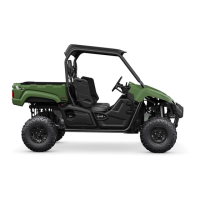
Identifies key components of the vehicle from the left side with numbered labels.
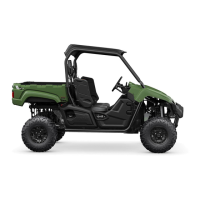
Identifies key components of the vehicle from the right side with numbered labels.
Details the location and function of various controls and instruments within the cabin.
Explains the operation of the vehicle's main ignition switch and its different positions.
Describes the meaning of various indicator and warning lights on the instrument panel.
Details the functions and displays of the multi-function meter unit, including speedometer and fuel gauge.
Explains the operation of key driver controls like pedals, levers, and parking brake.
Covers seats, storage compartments, glove compartment, and cup holders.
Describes the cargo bed, tailgate, and lifting mechanisms for the cargo bed.
Details components like shock absorbers, trailer hitch, and auxiliary DC jacks.
Details checks for brake pedal operation, fluid level, and fluid leakage before driving.
Instructions on checking the fuel level and refueling the vehicle.
Guides on checking the engine oil level and oil quantity required.
Instructions for checking the coolant level in the reservoir and replenishing if necessary.
Ensures seat belts are not frayed or damaged and move smoothly.
Advises checking tire pressure and for wear or damage before each ride.
Explains the critical break-in period for the engine and necessary operating precautions.
Provides step-by-step instructions on how to start the vehicle's engine safely.
Guides on shifting transmission modes, reverse driving, and drive knob operation.
Instructions for safely parking the vehicle and precautions for loading cargo or towing.
Offers advice on operating the vehicle on various surfaces and terrains, including hills and rough areas.
Guidance on storing the manual and locating the tool kit.
Outlines intervals for emission control and general vehicle maintenance.
Instructions for removing/installing the hood and rear access panels.
Covers checking engine oil level and replacing the oil filter cartridge.
Details procedures for checking and changing final and differential gear oils.
Guides on checking and changing the coolant level and the coolant type.
Instructions for spark plug inspection, removal, and installation.
Detailed steps for cleaning and maintaining the air filter element.
Covers checks for brake pads, fluid level, pedal operation, and fluid replacement.
Procedures for adjusting parking brake free play and brake light switch.
Guides on inspecting, lubricating, and replacing control cables.
Covers wheel removal/installation and tire replacement.
Information on battery maintenance, charging, storage, and jump-starting.
Details fuse replacement and procedures for replacing headlight and tail/brake bulbs.
Provides guidance on diagnosing starting issues, engine overheating, and general troubleshooting.
Offers instructions for thoroughly cleaning the vehicle to improve performance and extend component life.
Provides essential procedures for long-term storage to prevent vehicle deterioration.
Lists physical dimensions and weight specifications for the vehicle.
Details engine type, displacement, bore, stroke, and oil requirements.
Specifies quantities and types for coolant, gear oils, and recommended fuel.
Lists tire sizes, manufacturers, wheel rim sizes, and recommended air pressures.
Describes the types of front and rear brake systems and front suspension.
Covers system voltage, battery type, capacity, and lighting specifications.
Lists the amperage ratings for all vehicle fuses.
Information on emission labels and federal noise control regulations.
Provides a template for recording vehicle maintenance history.
Covers warranty period, exclusions, customer responsibilities, and transfer procedures.
Offers contact info for service and details on Yamaha Extended Service (Y.E.S.) plans.
 General
| Brand | Yamaha |
|---|---|
| Model | VIKING VI |
| Category | Offroad Vehicle |
| Language | English |


 To Next Page