
 Need help?
Do you have a question about the Yamaha waverunner xlt800 and is the answer not in the manual?
Instructions that could result in severe injury or death to the operator, passenger(s), bystander, or inspector.
Special precautions that must be taken to avoid damage to the watercraft.
Designed as thumb tabs to indicate the content of a chapter.
Indicate specific data.
Indicate the grade of lubricant and the location of lubrication point.
Indicate the grade of the sealing or locking agent, and the location of the application point.
Procedures and precautions for safe work.
Handling gasoline safely, avoiding sparks and flames.
Importance of ventilation for gasoline vapor and exhaust gases.
Protecting eyes, hands, and feet during operations.
Use of genuine Yamaha or recommended fluids.
Lists specified torques for fasteners.
Guide to general maintenance intervals based on hours or time.
Outlines periodic service intervals for various systems.
Measure and adjust throttle lever free play.
Check YPVS valve position and adjust cable slack.
Inspect and adjust jet thrust nozzle clearance and steering cable joint.
Measure and adjust QSTS cable lengths.
Loosen locknuts, turn adjusters, align holes, and tighten.
Warning about handling fuel system, and fuel line inspection.
Inspect fuel filter, hoses, tank, and filler cap.
Inspect oil filter, rubber seal, hoses, tank, filler cap, and check valve.
Spark plug inspection, including electrode condition and insulator color.
Measure spark gap and tighten spark plug.
Exploded diagram, removal/installation chart, and service points.
Check and adjust throttle valve synchronization.
Inspect main jet, pilot jet, and carburetor body.
Steps for bleeding air, including notes on recommended oil and cautions.
Exploded diagram, removal/installation chart, and service points.
Exploded diagram, removal/installation chart, and service points.
Exploded diagram, removal/installation chart, and service points.
Eliminate carbon deposits, inspect valve assembly.
Wiring diagram for the YPVS system.
Remove cylinder head, referring to exhaust manifold.
Remove cylinder, referring to YPVS and cylinder head sections.
Eliminate carbon deposits, inspect water jacket, inner surface, and measure bore/taper/roundness.
Eliminate carbon deposits, inspect piston wall, and measure skirt diameter.
Exploded diagram for starter motor disassembly.
Exploded diagram for crankcase disassembly.
Inspect mating surfaces and crankcase.
Remove crankcase, oil seals, bearings, and crankshaft.
Exploded diagram, removal/installation chart.
Exploded diagram, removal/installation chart, service points.
Remove impeller, nut, drive shaft, bearings, and oil seals.
Inspect bearings, drive shaft, and grease hose.
Procedures for digital multimeter, low resistance measurement.
Wiring diagram, spark gap, peak voltage, spark plugs, caps, coil, switches.
Importance of peak voltage, factors affecting it, and consequences of low voltage.
Warnings and steps for checking spark gap.
Measure peak voltage and replace if out of specification.
Remove and install YPVS cables.
General checks before consulting the chart.
Chart linking problems to items to be checked.
Lists components to check for each problem.
Lists potential problems.
Lists components to check for each problem.
Lists potential problems.
Lists components to check for each problem.
Lists potential problems.
Lists components to check for each problem.
 General
| Manufacturer | Yamaha |
|---|---|
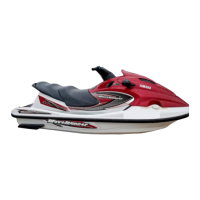
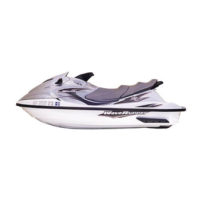
| Model | WaveRunner XLT800 |
| Engine Type | 2-cylinder, 2-stroke |
| Fuel Type | Gasoline |
| Category | Personal Watercraft |
| Seating Capacity | 3 |


 To Next Page
