Need help?
Do you have a question about the York Turbomaster M Series and is the answer not in the manual?
Explains the meaning of hazard symbols used throughout the document.
Details how the document content is subject to change without notice.
Lists related documents and their form numbers for further reference.
Illustrates the naming convention for compressor components and their designations.
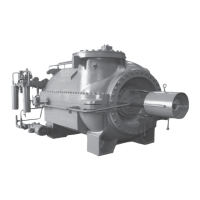
Overview of compressor purpose, construction, and size variations.
Details operating principles and materials used in compressor construction.
Emphasizes importance of as-built drawings for spare parts and service.
Lists potential hazards and necessary precautions during maintenance and service.
Specifies requirements for the compressor's base and foundation for stable installation.
Lists essential documents to retain for reference during installation.
Outlines procedures for conducting pressure, vacuum, and dehydration tests.
Details the procedure for the initial start-up and mechanical run-in.
Describes the procedure for performing a final alignment check after initial operation.
Details the path of refrigerant gas through the compressor stages.
Explains the function and importance of the balance piston in managing axial thrust.
Describes the function of the external sump vent line for oil reservoir pressure.
Highlights the importance and evaluation of the compressor's internal sealing systems.
Explains the role of labyrinth seals in minimizing gas leakage along the shaft.
Details the function of the seal ring in minimizing leakage around the balance piston.
Describes the function of oil seals in preventing oil from entering the impellers.
Explains the atmospheric shaft seal, its function, and replacement criteria.
Traces the path of lubricating oil through the various components of the compressor.
Lists essential checks to be performed daily during normal compressor operation.
Specifies temperature limits and safety controls related to discharge temperature.
Details the procedure for adding oil to systems with series oil flow.
Details the procedure for adding oil to systems with parallel oil flow.
Details the function, location, and settings of the AOP differential control switch.
Explains the function and settings of the low differential oil pressure control switch.
Discusses essential service aspects like lubrication system maintenance and seal replacement.
Offers best practices for disassembly, reassembly, and part handling.
Stresses the importance of inspecting parts during disassembly to identify failure causes.
Provides guidelines on protecting components and surfaces during service operations.
Emphasizes the necessity of thorough internal cleaning for optimal performance.
Details procedures for cleaning and checking parts for wear before reassembly.
Guides users on identifying compressor parts using figures and accompanying lists.
Lists minimum recommended maintenance actions and intervals for the compressors.
Outlines checks to perform before disassembly to determine shutdown causes.
Provides step-by-step instructions for removing the driven coupling disk.
Details the procedure and special tools required for removing the compressor drive shaft.
Outlines the steps involved in safely removing the existing shaft seal.
Details the procedure for correctly installing a new shaft seal assembly.
Outlines the steps for replacing the suction end journal bearing.
Details the procedure for checking the alignment of the oil pump assembly.
Describes the process of removing individual vanes from the assembly.
Guides on replacing pre-rotation vanes, ensuring correct airfoil section and overlap.
Details the critical steps for correctly fitting the rotor into the compressor casing.
Covers the final steps for completing the compressor assembly after service.
Outlines the necessary checks and procedures before performing a test run.
 General
| Brand | York |
|---|---|
| Model | Turbomaster M Series |
| Category | Air Compressor |
| Language | English |

 To Next Page