5
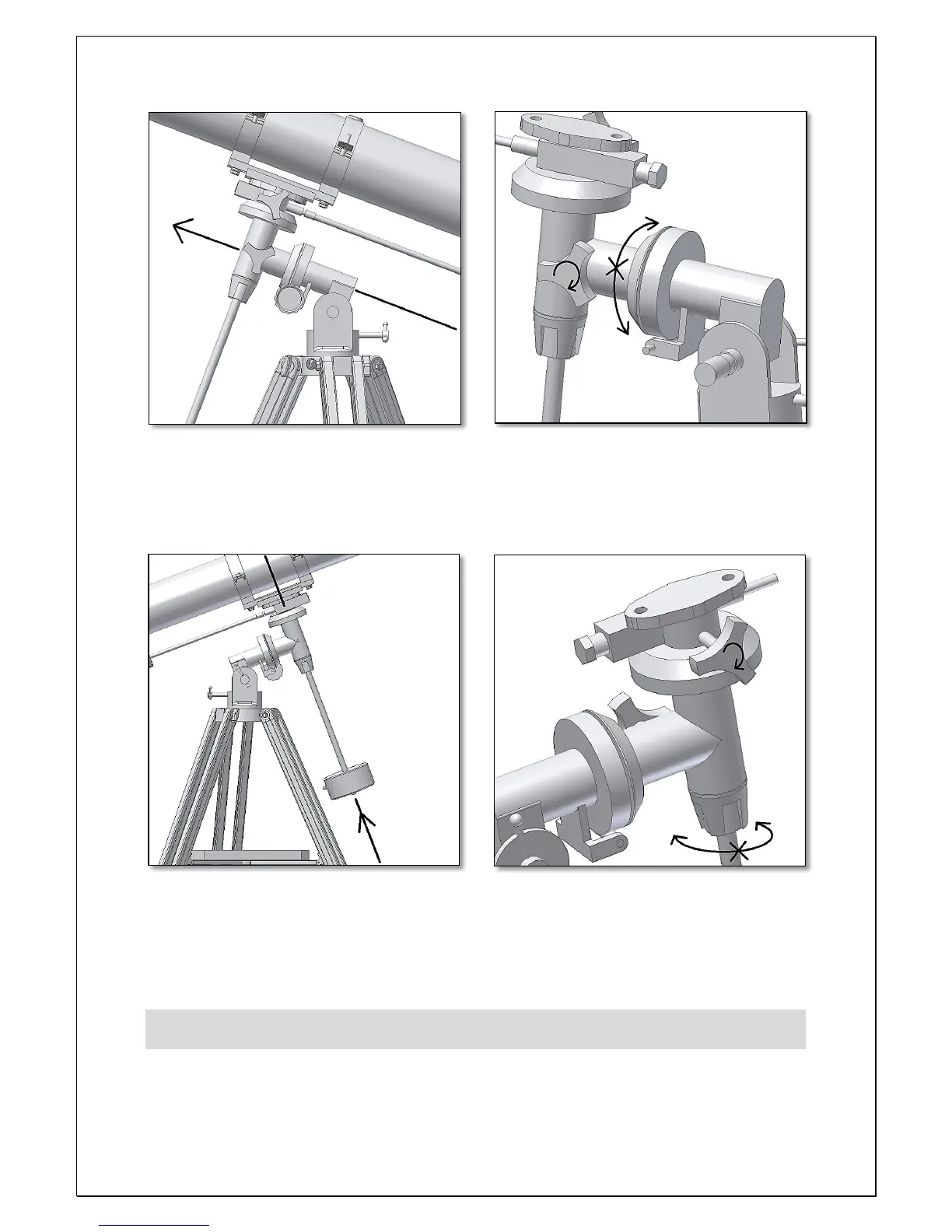
There are two axis in the eq. mount. One is the R.A. (Right Ascension) axis as shown in fig. 14. This
means the telescope can rotate around this axis. The R.A. should point north to Polaris. Tracking (see
what this is below) is made using the R.A. axis. Use the R.A. fixing knob (clutch) to lock the R.A. axis –
figure 15. The second axis is the Dec (Declination) axis – fig. 16. To lock this axis use the Dec locking
knob as shown in figure 17.
4.1. What is tracking?
Star’s positions rotate, slowly but surely, in the night sky. This is caused by the Earth’s rotation. Every
24 hours Earth will make a complete turn. So does the night sky. This means that, when observing
through a telescope, the stars will move away from the field of view after a few seconds. This is even
more evident when using high power eyepieces. They go away quite easily from the field of view.
To keep a star in the centre of the field of view tracking is required. Tracking can be done manually
or by a motor. Manual tracking can be done using the two Dec and R.A. handles. They allow small



 To Next Page