15
When replacing the original tires or
the cranks, make sure that there is
enough free space between the tires
and the shoe. Accidents and severe falls
could otherwise occur.
In particular, rims made of compos-
ite materials, such as carbon bre,
require special attention. Friction
caused by the rim brakes, but also by simply
riding the bike, puts a substantial amount of
strain on the bike.
• Only use brake pads that are designed for
use on the rims’ material.
• Each time before riding the bike, check for
wear, tear, defects, cracks and chipping on
the rims and wheels when they are made of
composite materials!
• If you nd any changes, do not ride the
bike with this part until a specialist retailer
or manufacturer has checked the part and
deemed it to be fully functional.
• Never expose components made of carbon
bre to high temperatures. Intense sun-
light can produce high temperatures, for
example when the wheel has been stored
in a vehicle. This could damage the com-
ponent’s structure. Failing parts, falls and
very serious injuries could result.
If you replace the tires, only exchange them
for the same model with the same dimensions
and prole. The bicycle’s handling could oth-
erwise be negatively affected. This may lead
to accidents.
The permitted tire pressure may not
be exceeded when inating the tires.
Otherwise this could lead to the dan-
ger of a tire exploding. The tires have to be
pumped up with at least the stated minimum
tire pressure. If the tire pressure is too low,
there is a possibility that the tire could free it-
self from the rim
On the side surface of the tire, there is
information on the maximum permitted tire
pressure and generally also on the minimum
permitted tire pressure.
Tires are available in various dimen-
sions. The tire dimensions are stated
with normed information.
Example 1: “46-622” states that the tires
have a width of 46 mm and the rim has a di-
ameter of 622 mm
Example 2: “28 x 1.60 inches” states that
the tire has a diameter of 28 inches and a
width of 1.60 inches
Tires and tire pressure
The amounts for the recommended tire pressure
can either be named in bar or PSI. The follow-
ing table presents the conversions for the usual
pressure levels and shows which tire widths
these pressures should be applied to.
Rider weight
in kg
Tire width
23mm
Tire width
25mm
< 50 6,0 bar 5,5 bar
60 6,5 bar 6,0 bar
70 7,0 bar 6,5 bar
80 7,5 bar 7,0 bar
90 8,0 bar 7,5 bar
>=100 8,5 bar 8,0 bar
Tires are wearable parts. You should
therefore regularly check the pres-
sure, tread and condition of your
tires. Not every tire is designed for every type
of use. Allow a specialist retailer to advise you
when selecting tires.
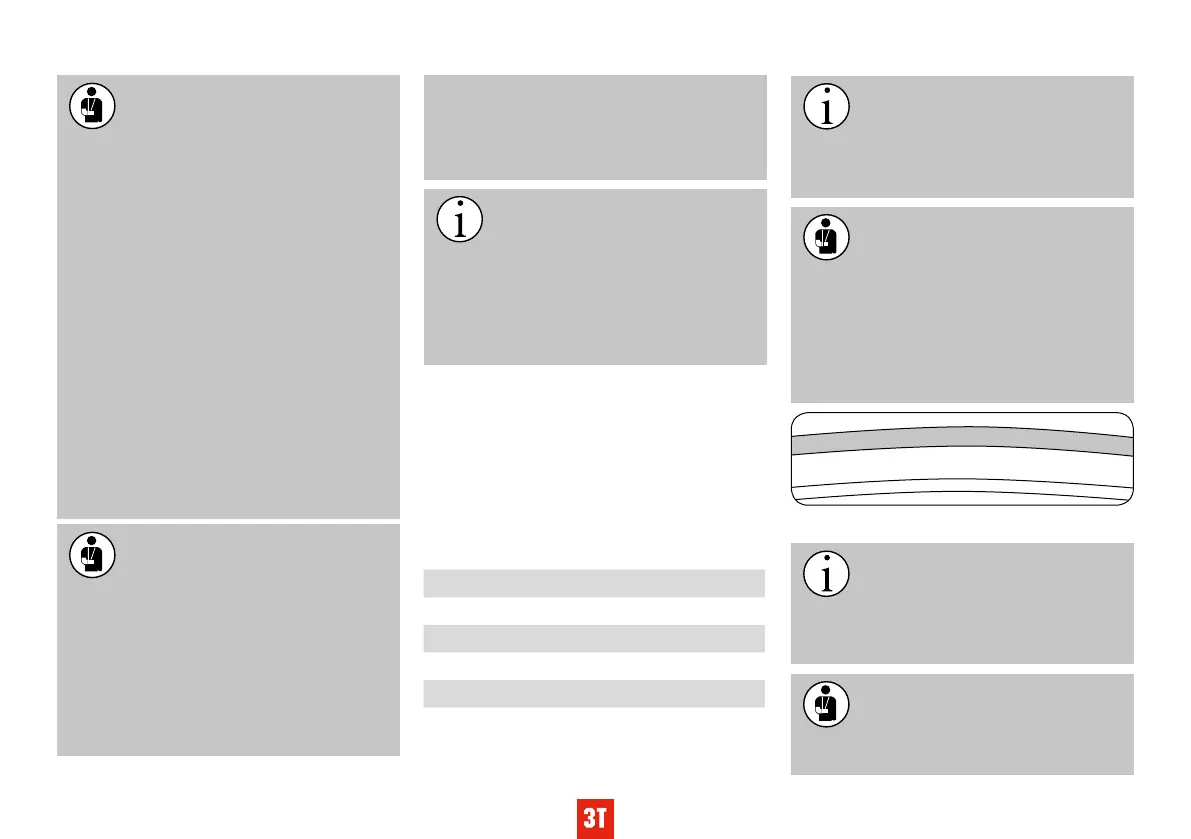
Example of tire pressure information
You should also regularly check your
bicycle‘s tires. The minimum and
maximum permitted tire pressure is
printed on the side of the tires. Please adhere
to these levels, otherwise the tires could slip
off the rims or explode!
If the ination pressure ratings indicated on
the tyre and on the rim differ, the lower maxi-
mum pressure and the higher minimum pres-
sure apply.
Please also inform yourself using
the information provided by your tire
manufacturer. This could possibly be
different from the tire pressures listed here.
Not adhering to these guidelines can lead to
damage to your tires and inner tubes.



 To Next Page