18
Brakes
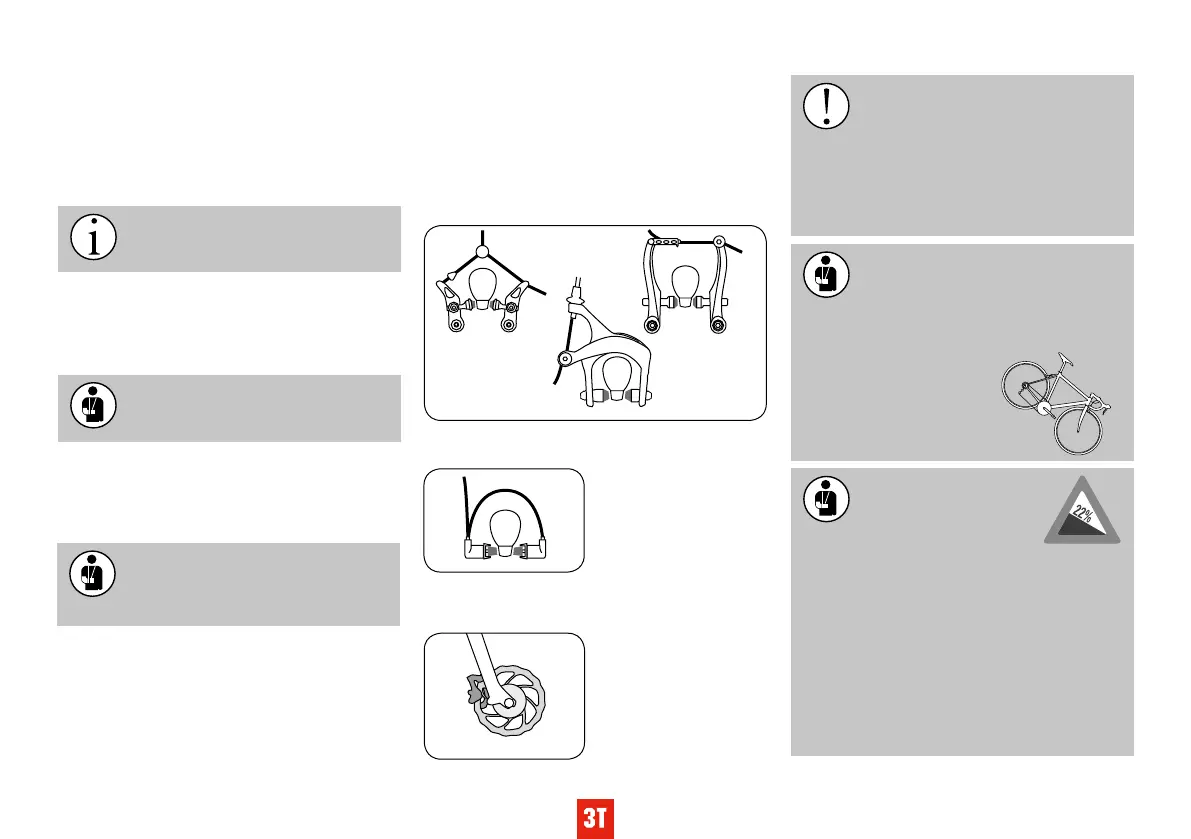
Modern bicycles can be equipped with a variety
of different braking systems.
There are various options:
• Rim brakes in the form of V-brakes and canti-
lever brakes
• Hydraulic rim brakes
• Disc brakes with hydraulic or mechanical op-
eration
Almost all modern brakes provide
considerably more braking power
than was available for bicycles in the
past. Carefully familiarise yourself with them,
practising using the brakes and even emer-
gency braking, starting
on safe ground with no
trafc before setting out
into the trafc.
When cycling down
a long or very steep
slope, do not keep the
brakes applied all the time or
slow yourself down with one brake only. This
can result in overheating and therefore the
loss of braking power through fading.
Braking properly and safely involves using
both brakes evenly. The only exception is if
you are cycling in slippery conditions such as
on sand or a smooth surface. You should then
exercise great care, slowing yourself down
mainly with the rear brake. Otherwise there
is the risk of the front wheel slipping out to
the side and causing a fall. On extremely long
Various versions of disk brakes are
available for racing and cyclo-cross
bikes. Please always read the en-
closed instructions from the component
manufacturer before the first ride. Familiar-
ise yourself with the operation and behav-
iour of the brakes on a safe piece of land
before riding.
• Check that the tire is properly in place and
runs true using the control ring on the side of
the tire. Adjust the positioning of the tire with
your hand if it does not quite run true.
• Pump the inner tube up to the recommended
tire pressure.
Please take note of the running di-
rection of the tire when installing it.
6. Reattaching the wheel
Reattach the wheel securely back in the frame or
fork with the corresponding quick release, bolted
connection or full oating axle mechanism.
If your bicycle has disc brakes, please
ensure that the brake discs are cor-
rectly secured between the brake pads!
Read the gear manufacturer‘s instructions to
correctly and safely assemble and set up derail-
leur gear systems, gear hubs and combined hub
and derailleur gear systems.
Tighten all screws to the recom-
mended torque. Otherwise the
screws could break and parts could
fall off (see page 26).
• Connect the brake line, attach it or close the brake
quick release.
• Check if the brake pads are aligned with the
brake surfaces.
• Securely attach the brake arm.
• Test the brakes.



 To Next Page