
 Need help?
Do you have a question about the ACR Electronics RLB-38 and is the answer not in the manual?
Explains the mandatory nature of EPIRB registration with national authorities and the importance of updated registration for search and rescue.
Guides users on selecting the correct country for EPIRB registration, typically based on purchase location or vessel flag.
Details methods for EPIRB registration, including online, fax, and mail options for US registration and international procedures.
Advises on potential radio license requirements in the US and directs users to FCC resources for the latest information.
Describes the EPIRB's function as a distress transmitter aiding search and rescue (SAR) operations via satellite systems.
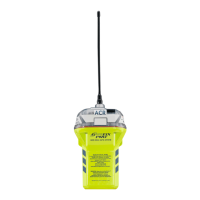
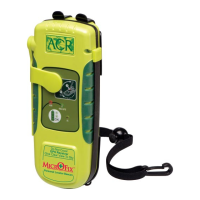
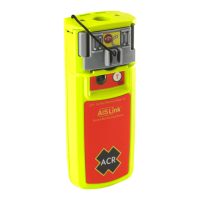
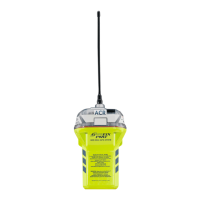
Identifies and illustrates the key components and features of the EPIRB, including antenna, LEDs, and activation switch.
Explains activation procedures for Category I and II beacons, covering automatic deployment and manual activation methods.
Details the process for deactivating a manually or automatically activated beacon, including troubleshooting steps for deactivation failure.
Provides information on how the beacon can be activated unintentionally and lists precautions to prevent false alarms.
Guides users on recording and marking expiration dates for the beacon battery and HRU for proper service and replacement.
Provides criteria and hazards to consider when selecting a suitable and secure mounting location for the beacon bracket.
Details the installation procedure for the SeaShelter™ Category I mounting bracket, including fastener recommendations.
Explains the mounting and reinstallation process for the QuickDraw™ Category II bracket, including push-lever release.
Describes connecting an external GPS receiver via an optical cable for enhanced location accuracy and data transmission.
Lists essential safety precautions and recommended practices for handling, mounting, and using the beacon aboard a ship.
Outlines regular inspection procedures for the bracket and beacon, including visual checks, cleaning, and crack inspection.
Specifies the battery replacement interval (5 years) and conditions requiring replacement, emphasizing professional service.
Refers to guidelines for shore-based maintenance of satellite beacons for SOLAS vessels, linking it to battery replacement.
Mentions SOLAS regulations requiring annual testing of 406 MHz EPIRBs and how to perform these tests using self-test mode.
Explains the owner's responsibility to update registration information with the national authority upon change of ownership.
Provides immediate steps to take if an EPIRB is lost or stolen, including reporting to local authorities and NOAA.
Details servicing of the Category I bracket and the mandatory replacement of the HydroFix™™ HRU every two years.
Briefly covers servicing for the Category II bracket, noting it typically requires only cleaning or rare replacement.
Explains how to perform a beacon self-test, its frequency, and the meaning of LED indications for test results.
Describes the optical interface for connecting an external GPS receiver to determine latitude and longitude for emergency transmission.
Explains how to use the GPS interface for accurate location data and the importance of ensuring data accuracy before activation.
Details the procedure for testing the GPS interface connection, confirming data acquisition via LED feedback during self-test.
Explains how GPS data is updated automatically every 20 minutes or manually forced via self-test with a valid GPS fix.
Describes LED indicators for GPS fix status, including normal operation, loss of signal, and reacquisition of coordinates.
Lists requirements for external GPS receivers to be compatible with the beacon, including NMEA version and baud rate.
Provides an overview of the Cospas-Sarsat system, its satellite network, and how EPIRB signals are processed for distress alerts.
Explains the GPS system's role in providing accurate positional data for search and rescue operations, enhancing search efficiency.
Lists general specifications like size, weight, material, color, waterproof rating, and deployment types.
Details battery specifications, including operational life, type, replacement interval, and operating temperatures.
Provides technical details for the 406 MHz transmitter, including frequency, power output, and digital message format.
Lists technical specifications for the 121.5 MHz transmitter, including frequency, power output, and modulation type.
Specifies the technical characteristics of the LED strobe, such as light color, output power, flash rate, and range.
Lists available accessories and mounting brackets for the beacon, including optional GPS interface cables.
Lists the regulatory approvals and certifications obtained by the beacon, such as FCC, Cospas-Sarsat, and MED.
Outlines the product's limited warranty period (1 year, 5 for EPIRB), coverage, and procedures for service and registration.
Provides disclaimers regarding manual accuracy, copyright information, and product improvement notices.
 General
| GPS | Yes |
|---|---|
| Waterproof Rating | IPX7 |
| Operating Temperature | -20°C to +55°C |
| Floatation | Yes |
| Frequency | 406 MHz |
| Battery Life | 48 hours |
| GPS Accuracy | Within 100 meters |


 To Next Page