Need help?
Do you have a question about the actionair SmokeShield and is the answer not in the manual?
Step-by-step installation method for DWFX-C dampers in dry walls, covering track framing, suspension, and sealing.
Guidelines for annual checks and more frequent inspections for dampers in dust-laden atmospheres.
Steps for inspecting, cleaning, lubricating, and testing damper operation and indicator feedback.
Instructions for fitting control mode/actuators in accordance with supplied documentation.
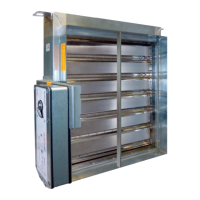
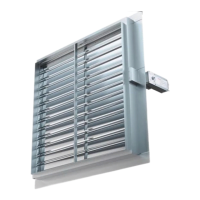
The SmokeShield PTC & FireShield Dampers, specifically the Dry Wall Fix Cleats (DWFX-C) models, are critical components in maintaining fire and smoke compartmentation within buildings. These devices are designed to automatically close upon detection of fire or smoke, preventing the spread of these hazards through ductwork and openings in fire-rated walls. The SmokeShield PTC is an ES Rated Fire Damper, functioning as both a fire and smoke barrier, while the FireShield PTC is an E Rated Fire Damper, serving as a fire barrier. Their primary function is to preserve the integrity of fire-rated constructions, thereby enhancing life safety and property protection.
The core function of these dampers is to provide a robust barrier against fire and smoke. In the event of a fire, a thermal release mechanism, typically a fusible link, activates the damper. Upon activation, the damper blades rapidly close, sealing off the opening in the wall. For SmokeShield PTC models, this closure also prevents the passage of smoke, which is equally critical in evacuation scenarios. The design ensures that the damper remains closed for a specified period, as dictated by its fire rating (e.g., E120), effectively containing the fire within its compartment.
The dampers are typically installed within dry wall partitions, integrated into the building's ductwork system. The installation method, particularly for vertical applications in dry walls using DWFX-C, involves a precise sequence to ensure optimal performance and compliance with fire safety regulations. This includes fitting track to the ceiling, suspending the damper, framing it out with tracks and studs, building the partition around it, insulating the wall, and finally sealing the damper to the partition with intumescent sealant. The intumescent sealant plays a crucial role by expanding when exposed to heat, further enhancing the seal and preventing the passage of fire and smoke around the damper frame.
The mechanical operation relies on a spring-loaded mechanism that, once released by the thermal element, drives the blades to a closed position. Some models may incorporate actuators, which allow for remote control and integration with building management systems (BMS) or fire alarm systems. This enables the dampers to be closed automatically upon a signal from the fire alarm, even before the local thermal element activates, providing an earlier response to a fire event. The blades are designed to interlock or seal tightly when closed, minimizing leakage of fire and smoke.
The SmokeShield and FireShield Dampers are designed for integration into various building types, particularly those requiring stringent fire and smoke compartmentation. Their primary application is within dry wall partitions, but the installation method can be adapted for concrete or masonry walls using direct field of application rules. This versatility makes them suitable for a wide range of commercial, industrial, and residential buildings.
A key usage feature is their passive fire protection capability. Once installed, they operate autonomously in a fire event, requiring no human intervention to activate. This automatic operation is crucial for ensuring immediate response to fire and smoke spread, especially in situations where occupants may not be present or able to react.
The dampers are available in different configurations, including those with and without actuators. Actuated dampers offer enhanced control and monitoring capabilities. They can be integrated into a building's fire safety system, allowing for centralized control, status monitoring (open/closed), and testing. This is particularly beneficial in large or complex buildings where manual inspection of every damper would be impractical. The ability to receive feedback from micro switches indicating blade position is a significant advantage for system diagnostics and compliance.
The design emphasizes ease of installation, although it requires competent personnel due to the critical nature of fire safety components. The DWFX-C system, with its specific framing and sealing requirements, is engineered to ensure a secure and fire-resistant installation within dry walls. The use of standard building materials like plasterboard and studs, combined with specialized components like intumescent sealant, ensures that the entire assembly meets the required fire rating.
Regular maintenance is paramount to ensure the continued reliability and effectiveness of SmokeShield and FireShield Dampers. The manufacturer specifies a periodic maintenance schedule, as detailed in BS 9999:2008, which should be followed diligently.
The maintenance procedure involves several key steps:
The maintenance schedule is flexible, with a minimum of once per year for spring-operated units. However, in dust-laden atmospheres, checks should be more frequent. For dampers integrated into life safety systems, checks may be required as often as once per week or month to ensure ongoing confidence in the system's reliability, similar to fire alarm systems.
The installation and handover check sheet is an integral part of the maintenance and quality assurance process. It ensures that the damper is correctly installed, identified, and operational before commissioning. This includes verifying the damper type, location, orientation, access, cleanliness, and the integrity of the fire barrier and penetration seal. This comprehensive checklist helps to prevent common installation errors and ensures that the damper is ready for service.
Overall, the SmokeShield PTC & FireShield Dampers are sophisticated, yet robust, fire safety devices designed to provide reliable protection against the spread of fire and smoke. Their effective functioning relies on meticulous installation, regular maintenance, and adherence to specified procedures, all of which contribute to the overall safety of building occupants and assets.
 General
| Application | Smoke control |
|---|---|
| Material | Galvanized steel |
| Operation | Motorized |
| Leakage | Class I or Class II leakage ratings |
| Fire Rating | EN 1366-2 tested |
| Operating Temperature | Up to 72°C (actuator dependent) |
| Standards | EN 1366-2 |


 To Next Page