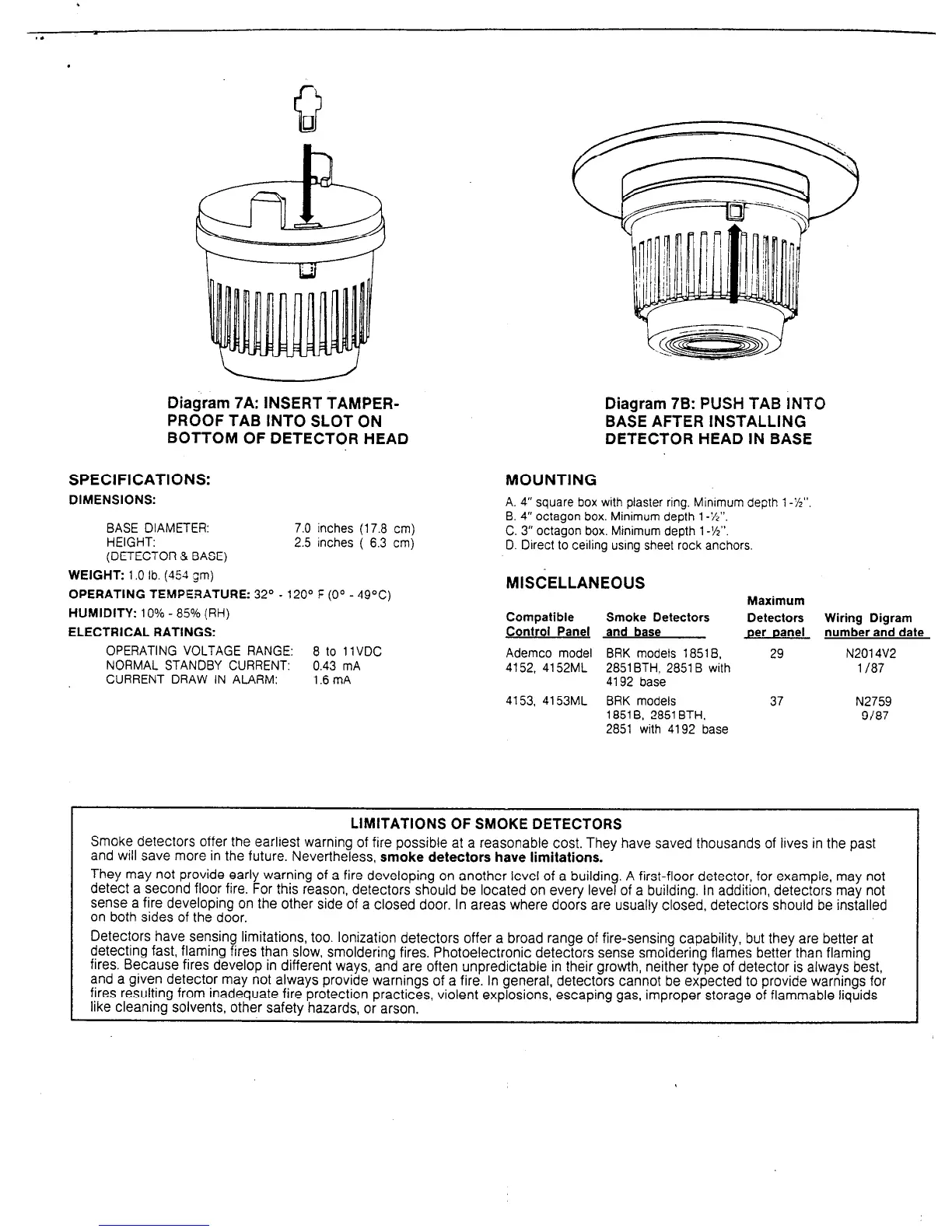
Diagram 7A: INSERT TAMPER- Diagram 78: PUSH TAB INTO
PROOF TAB INTO SLOT ON BASE AFTER INSTALLING
BOTTOM OF DETECTOR HEAD
DETECTOR HEAD IN BASE
SPECIFICATIONS:
DIMENSIONS:
BASE DIAMETER: 7.0 inches (17.8 cm)
HEIGHT:
(DETECTOR & BASE)
2.5 inches ( 6.3
cmj
WEIGHT: 1 .O lb. (454 gm)
OPERATING TEMPERATURE: 32” - 120° F (O” - 49OC)
HUMIDITY: 10% - 85% (RH)
ELECTRICAL RATINGS:
OPERATING VOLTAGE RANGE:
8 to 11VDC
NORMAL STANDBY CURRENT:
0.43
mA
CURRENT DRAW IN ALARM: 1.6 mA
MOUNTING
A. 4” square box with plaster ring. Minimum depth i -7~".
B. 4” octagon box. Minimum depth 1-X”.
C. 3” octagon box. Minimum depth 1-E”.
D. Direct to ceiling usrng sheet rock anchors.
MISCELLANEOUS
Maximum
Compatible Smoke Detectors Detectors Wiring Digram
Control Panel and base per panel number and date
Ademco model BRK models 1851 B. 29 N2014V2
4152, 4152ML 2851 BTH, 2851 B with
1 I87
4192
base
4153, 4153ML BRK models
37 N2759
1851 B. 2851 BTH. 9187
2851 with 4192 base
LIMITATIONS OF SMOKE DETECTORS
Smoke detectors offer the earliest warning of fire possible at a reasonable cost. They have saved thousands of lives in the past
and will save more in the future. Nevertheless,
smoke detectors have limitations.
They may not provide early warning of a fire developing on another level of a building. A first-floor detector, for example, may not
detect a second floor fire. For this reason, detectors should be located on every level of a building. In addition, detectors may not
sense a fire developing on the other side of a closed door. In areas where doors are usually closed, detectors should be installed
on both sides of the door.
Detectors have sensing limitations, too. Ionization detectors offer a broad range of fire-sensing capability, but they are better at
detecting fast, flaming fires than slow, smoldering fires, Photoelectronic detectors sense smoldering flames better than flaming
fires. Because fires develop in different ways, and are often unpredictable in their growth, neither type of detector is always best,
and a given detector may not always provide warnings of a fire. In general, detectors cannot be expected to provide warnings for
fires resulting from inadequate fire protection practices, violent explosions, escaping gas, improper storage of flammable liquids
like cleaning solvents, other safety hazards, or arson.


 To Next Page
 Loading...