I •
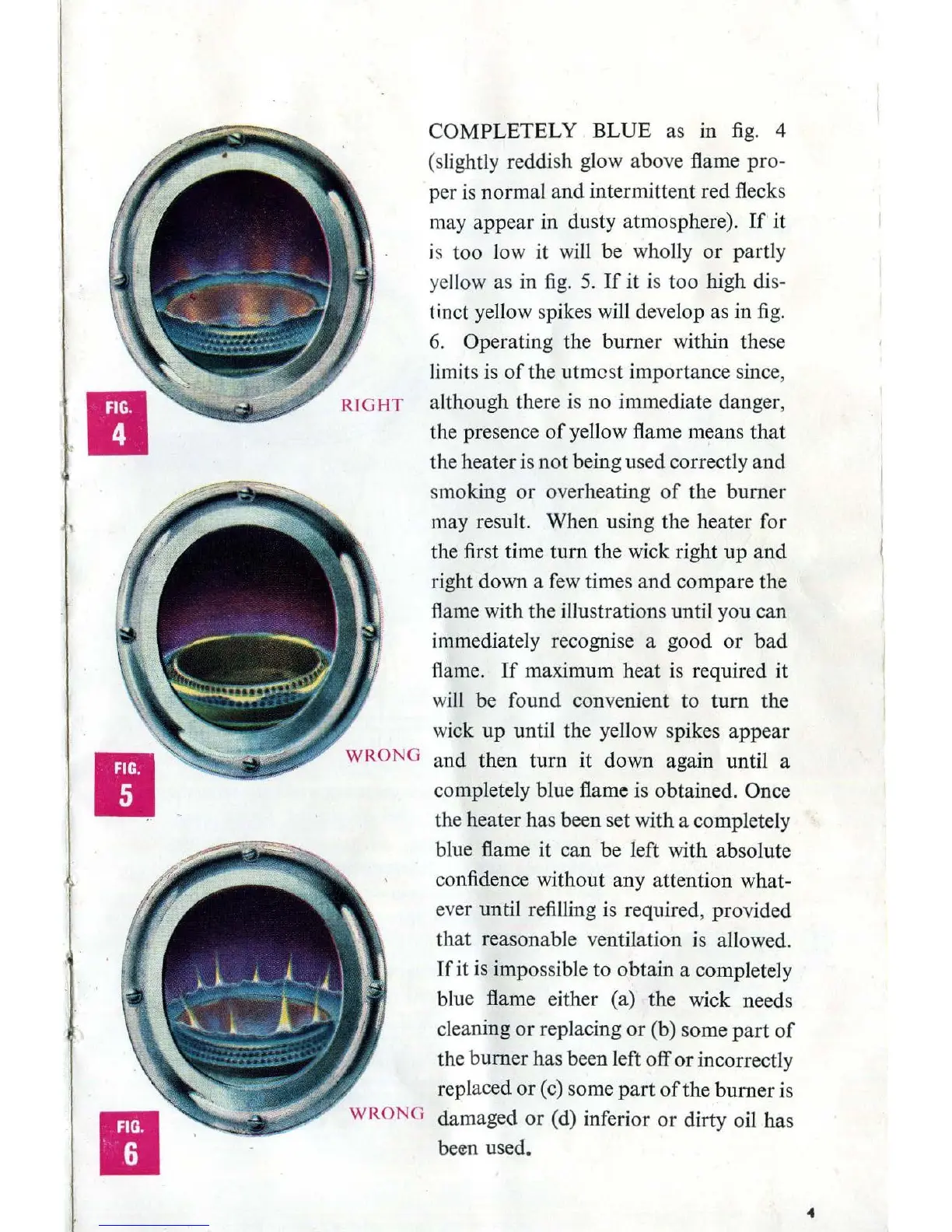
COMPLETELY
BLUE
as in
fig.
4
(slightly reddish glow above flame pro-
per is normal
and
intermittent red flecks
may appear in dusty atmosphere).
If
it
is too low it will be wholly
or
partly
yellow as
in
fig.
5.
If
it
is too high dis-
tinct yellow spikes will develop as in
fig.
6. Operating the burner within these
limits is
of
the
utm
ost importance since,
although there is
no
immediate danger,
the presence
of
yellow flame means
that
the heater is
not
being used correctly
and
smoking or overheating
of
the burner
may result. When using the heater for
the first time turn the wick right
up
and
right down a few times
and
compare the
flame with the illustrations until you can
immediately recognise a good
or
bad
flame.
If
maximum heat is required
it
wi
ll
be found convenient to
turn
the
wick
up
until the yellow spikes appear
and then turn
it
down again until a
completely blue flame is obtained.
Once
the heater has been set with a completely
blue flame
it
can be left with absolute
confidence without any attention what-
ever until refilling is required, provided
that reasonable ventilation is allowed.
If
it is impossible to obtain a completely
blue flame either (a) the wick needs
cleaning
or
replacing
or
(b) some
part
of
the burner has been left off
or
incorrectly
replaced
or
(c) some
part
of
the burner is
damaged
or
(d) inferior
or
dirty oil has
been used.
..


 To Next Page