This service manual details the Allen & Heath iLive-T series, a range of digital mixing consoles designed for professional audio applications. The iLive-T series is engineered to provide comprehensive control over audio signals, offering a flexible and powerful platform for live sound, studio recording, and broadcast environments. These consoles are characterized by their intuitive user interface, robust construction, and advanced digital signal processing capabilities.
Function Description
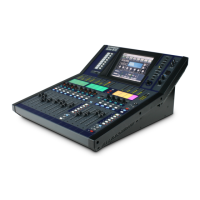
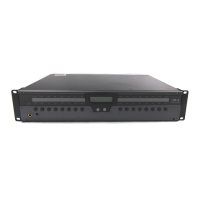
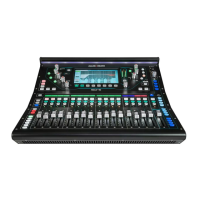
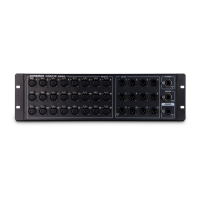
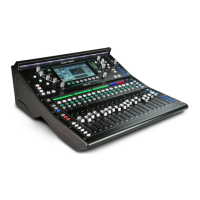
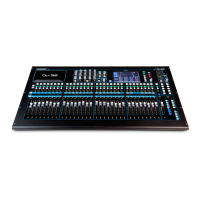
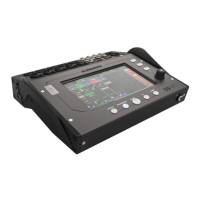
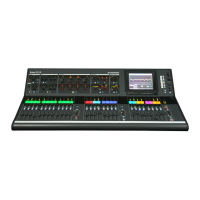
The iLive-T consoles serve as central control hubs for audio systems, managing multiple input and output channels with precision and flexibility. At its core, the system comprises a control surface (T80 or T112) and a separate iDR-series MixRack (not detailed in this service manual but integral to the system's operation). The control surface provides the physical interface for engineers to interact with the digital audio engine housed in the MixRack.
Key functions include:
- Input Processing: Each input channel typically features a preamplifier, gain control, phantom power, high-pass filter, gate, compressor, 4-band parametric EQ, and delay. These tools allow for meticulous shaping and conditioning of incoming audio signals from microphones, line-level sources, and digital inputs.
- Mixing and Routing: The console facilitates the creation of various mixes, including main stereo outputs, mono outputs, auxiliary sends for monitor mixes or effects, and group mixes. Flexible routing options allow engineers to direct any input to any output or internal bus, providing extensive control over signal flow.
- Output Processing: Output channels often include their own set of processing tools such as EQ, compression, and delay, enabling optimization of the sound for different speaker systems or broadcast requirements.
- Effects Processing: Integrated digital effects engines provide a range of reverbs, delays, modulations, and other effects, which can be inserted into channels or mixes to enhance the audio.
- Scene Management: The console can store and recall complete console setups (scenes), allowing for quick transitions between different configurations for various songs, acts, or broadcast segments. This feature is crucial for live performances where rapid changes are often required.
- Monitoring: Dedicated headphone outputs and control room outputs allow engineers to monitor various points in the signal path, ensuring accurate sound checks and mix adjustments.
- Talkback System: An integrated talkback microphone and routing system enable communication between the engineer and musicians on stage or other production personnel.
- Network Integration: The iLive-T series is designed for network integration, allowing for remote control via computers or tablets, and connectivity with other digital audio devices using proprietary ACE (Audio Control Ethernet) protocols. This expands the system's versatility and allows for distributed control and I/O.
- User Interface: The consoles feature a combination of physical faders, rotary encoders, illuminated buttons, and touchscreens. The touchscreens provide visual feedback and access to deeper menu functions, while the physical controls offer tactile, immediate adjustments to critical parameters.
Usage Features
The iLive-T consoles are designed for ease of use and operational efficiency in demanding professional environments.
- Intuitive Layout: The control surface is laid out logically, with dedicated sections for inputs, outputs, and master controls. This helps engineers quickly locate and adjust parameters.
- Motorized Faders: Motorized faders provide visual feedback of channel levels and automatically snap to position when scenes are recalled or layers are switched, enhancing workflow and accuracy.
- Touchscreen Control: The integrated touchscreens offer a graphical interface for detailed parameter adjustments, routing configurations, and system settings. This visual feedback complements the physical controls, providing a comprehensive overview of the mix.
- Customizable Layers: The console allows users to create custom fader layers, enabling quick access to specific channels or groups of channels relevant to a particular part of a show. This optimizes the workflow for complex productions.
- Soft Keys and User-Assignable Controls: Programmable soft keys and user-assignable rotary encoders allow engineers to customize the console for their specific needs, mapping frequently used functions to easily accessible controls.
- Recallable Preamps: The digital nature of the console allows for all preamp settings to be stored and recalled with scenes, ensuring consistent sound reproduction across different performances.
- Flexible I/O Options: While the core audio processing resides in a separate MixRack, the control surface provides local I/O for talkback, headphones, and potentially some local inputs/outputs, enhancing its standalone utility for certain tasks.
- Robust Connectivity: Multiple USB ports, network ports, and other digital connections facilitate integration with external devices, recording systems, and control networks.
- Compact Design (T80): The T80 model offers a more compact footprint, making it suitable for applications where space is limited, without significantly compromising on features. The T112 provides an expanded control surface for larger productions.
Maintenance Features
The service manual emphasizes several aspects related to the maintenance and repair of the iLive-T series, ensuring longevity and reliable operation.
- Modular Construction: The consoles are designed with a modular approach, where various functions are housed on separate Printed Circuit Boards (PCBs). This facilitates easier diagnosis and replacement of faulty components or entire board assemblies. For example, distinct PCBs are identified for processors (left, middle, right), TFT displays, audio I/O, fader power, and the main controller.
- Identifiable Parts: The manual provides clear identification of internal parts, including PCB locations, part numbers for ordering, and descriptions of switch caps and knobs. This detailed information is crucial for accurate part replacement.
- Service Access Procedures: Step-by-step instructions are provided for gaining access to the internal components, including removing screws from the armrest, base internal bracket, and rear panels. Emphasis is placed on noting the locations of internal harnesses before disconnection to ensure correct reassembly.
- Component-Level Repair Guidance: While the manual states that no schematics are released for this product, it does provide PCB overlays for identification purposes. This suggests that while component-level repair might be challenging without full schematics, identifying and replacing entire PCBs is the intended service approach.
- Voltage Test Points: Specific voltage test points are highlighted on key PCBs, such as the Audio PCB and Controller PCB. These points allow service engineers to verify critical power supply voltages (e.g., 24V, +/-15V, 3.3V, Phantom Power) to aid in fault diagnosis.
- Authorized Service Network: The manual directs users to contact their local distributor or authorized service center for parts and assistance, ensuring that repairs are carried out by qualified personnel using genuine parts.
- Warranty Conditions: The warranty terms highlight that repairs must be carried out by Allen & Heath or an authorized agent, and that the equipment should not be subject to misuse or unauthorized alteration. This underscores the importance of proper servicing.
- General Servicing Precautions: The manual outlines essential safety precautions for service personnel, including working with mains power, using appropriate tools, ensuring adequate lighting, and following workshop safety requirements. It also advises on proper packing for shipping and thorough testing after service.
- Development Changes: The manual notes that development changes are implemented at the factory as part of ongoing policy and are not critical to basic function, leaving it to the owner/service engineer to decide on updates. This indicates a continuous improvement process for the product.

 Need help?
 General

 To Next Page