EasyManua.ls Logo

ALSA ALSATOM MB1 MC - User Manual

Default Icon
8 pages
Print Icon
To Next Page IconTo Next Page
Loading...
1
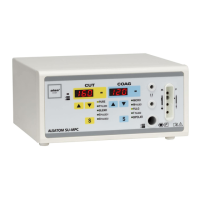
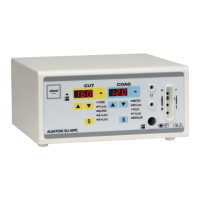
ALSATOM MB1 MC, ALSATOM MB1/A MC
INSTRUCTION MANUAL
(Edition January 2002)
This unit is manufactured by ALSA APPARECCHI MEDICALI S.R.L.- CASTEL MAGGIORE - BOLOGNA - ITALY that answers for safety, reliability and
performances only if the installation, additions, recalibrations, changes or repairs are effected by personnel authorized by ALSA and if the installation,
additions, recalibrations, changes or repairs are effected by personnel authorized and only if the installation takes place in a room complying with relative
prescriptions IEC or CEI and the unit is used in compliance with given instructions.
The Manufacturer will supply, on demand, the electric diagrams and will supply any further information needed.
These instructions must be kept where the unit is employed, must be read from the operator before use and ask for them again to the Manufacturer
in case missing.
If the instructions are not exhaustive for the specific field, please contact the Manufacturer directly or through the local distributor, before using the unit.
IMPORTANT
Every unit has specific features and so, before using it with a patient it is advisable to check carefully its working without trusting blindly to the previous
experiences with others similar units.
VERY IMPORTANT
In accordance with the requests of the European directive for medical devices 93/42 CEE and according to the procedures of company quality system
for the after-sale control of the production, the users have to inform, in detail, the Manufacturer about every little problem of this unit in order to
attend it in a short time.
INTRODUCTION
In a biological tissue which is crossed by an electric current, are shown the following effects:
- Thermal - related to the specific resistance of the tissue, to current density and length of phenomenon;
- Faradic - due to the stimulus of electrically excitable cells.
- Electrolytic - for which in the tissue positive ions are pushed towards negative pole and vice versa
By using high-frequency alternate electric current, are eliminated two last not desired effects, taking best advantage from thermal effect.
In fact, when an electric current having such characteristics, flowing from active electrode to the neutral one, crosses with sufficient density the cellular liquid
of the tissues warms it by producing as follows:
1) Heating is so quick that the pressure of created vapour in the cells breaks the membranes causing cutting;
2) Heating is lower, so the liquid slowly evaporates allowing coagulation of the tissue components which can be coagulated (coagulation or haemostasis):
3) The phenomenon is middle course between above said (blend cut).
Therefore, the electrosurgical units are ‘high frequency units’ which allow to ‘destroy’ cells of biological tissues, so they must be handled by expert staff only
who knows very well all problems and risks concerning their use following, for safety, all instructions supplied by the Manufacturer.
INSTRUCTIONS TO USE THE UNIT
ALSATOM models MB1-MC and MB1/A-MC designed for use in the field of minor and medium surgery, for all the operations that need powers not more
than 150 Watts for the cut and monopolar coagulation and 60 Watts for the bipolar coagulation combined to a very fine and precision in the power delivery.
Units are suitable for:
- GYNAECOLOGY: ......................................................for every kind of cut and coagulation or micro coagulation.
- DERMATOLOGY: .....................................................for every kind of cut and coagulation or micro coagulation.
- PLASTIC AND AESTHETIC SURGERY:................for every kind of cut and coagulation or micro coagulation.
- OTORHINOLARYNGOLOGY:.................................for every kind of cut and coagulation or micro coagulation.
- UROLOGY: ..................................................................not for endoscopy use under liquid except for fulguration.
- DENTAL SURGERY AND MAXILLO-FACIAL:....for every kind of cut and coagulation or micro coagulation.
- ANGIOLOGY: .............................................................for every kind of cut and coagulation or micro coagulation.
- GENERAL SURGERY:...............................................for every kind of cut and coagulation or micro coagulation.
- SPECIALITY SURGICAL:.........................................for every kind of cut and coagulation or micro coagulation.
- GASTROENTEROLOGY: .........................................for every kind of cut and coagulation or micro coagulation.
- VETERINARY:............................................................for every kind of cut and coagulation or micro coagulation.
In particular, functions are the following:
- CUT: ............................................................................pure cut without coagulant effect;
- BLEND:.........................................................................cut with coagulant effect;
- FORCED COAG: .........................................................coagulation with an high scintillation (fulguration);
- SOFT COAG: ...............................................................coagulation with a low scintillation and a marked action into the depths (desiccation);
- BIPOLAR: ....................................................................bipolar coagulation;
GENERAL PRECAUTIONS, it’s dangerous to not comply with the following:
1. It’s dangerous to use the unit if the electric system and the installations of the operating theatre do not comply with the safety standards in force:
Do not use ‘extensions’ for the supply cable and when use at the same time several apparatuses ask to Technical Office for the compatibility.
2. It’s dangerous to use old accessories or not supplied by the Manufacturer.
3. The interference on other electromedical equipments is regular when apparatus works.
4. Please remind that when operate on patient wearing pace-makers or pace-maker electrodes, these last may be troubled or damaged (to cause
fibrillations and so on)(Please address you to the Cardiology Dep.).
5. Take off all metal items from the patient: rings, chains and so on and don’t use the unit with inflammable anaesthetic gas (ex. oxygen and nitrous
oxide and so on) especially in case operate in cavities (thorax, abdomen, trachea, head, and so on)
6. Don’t use or evaporate, before the operation, cleaning substances, disinfectants or inflammable solvents. Always carefully remove any possible
stagnation from body’s depressions or cavities (navel, vagina, and so on) as well as under the patient. Remind that during the use a spark may cause
the burst of endogenous gas (intestine) or set materials saturated with oxygen (cotton, gauze and so on) on fire.
7. Avoid the touch of earthed metal parts or electricity conductors with the patient (tables, supports et cetera) and insulate the body’s parts at strong
secretion and the skin to skin contacts (for ex. between arm and body) by means of dry cloth.
8. Always keep eventual monitor electrodes not properly protected as much as possible away from those of electrosurgical unit. It’s certainly advisable
against using needle monitor electrodes or small size electrodes.
9. Set neutral electrode as follows:* Check its perfect conditions and choose the nearest body’s part to the operating area (the best is a soft part, without
hairs, osseous protuberances or superficial inhomogeneity). Clean, shave and massage it to help the circulation.
* Set the electrode very well without interpose anything making sure the best possible contact on the whole surface, but without pushing too much to
not create ischaemic zones (use, in case, conductive gel and so on) and always check during the operation good and homogeneous contact at all time

Question and Answer IconNeed help?

Do you have a question about the ALSA ALSATOM MB1 MC and is the answer not in the manual?

Summary

Safety Instructions

General Precautions

Crucial safety guidelines to prevent hazards during operation and patient contact.

Unit Operation Basics

Introduction and Applications

Explains electrosurgery principles and lists medical specialties where the unit is suitable.

Operational Modes

Details the specific operational modes like cut, blend, and coagulation types.

Usage Principles and Proposals

Patient and Electrode Placement

Guidelines for correct patient and neutral electrode placement for safe operation.

Cut and Coagulation Techniques

Details how current achieves cutting/coagulation and practical advice for pure, blend cuts.

Micro Coagulation

Specific advice for micro coagulation in dermatology for conditions like telangiectasis.

Coagulation and Power Settings

Coagulation Modes Explained

Explains forced, soft, and bipolar coagulation techniques and their applications.

Power Adjustment

How to adjust power levels for different procedures.

Unit Running and Diagnostics

Safety Circuits and Timer

Neutral Electrode Safety

Explains the safety circuit for the neutral electrode connection.

Automatic Timer Usage

Detailed guide for using the automatic timer function for precise pulse delivery.

Unit Usage Procedures

Maintenance and Troubleshooting

Bipolar Running Procedures

Instructions for using the Lejeune bipolar running mode.

Troubleshooting Common Issues

Guide for diagnosing and resolving problems with the pedal switch and general unit malfunctions.

Cleaning and Accessories

Procedures for cleaning the unit, sterilizing accessories, and list of standard items.

Control Panel Functions

Control Elements

Description of buttons, indicators, and connections on the control panel.

Automatic Timer Controls

Timer function for precise pulse control in MB1/A MC model.

Technical and Power Specifications

Overview

The ALSATOM MB1 MC and ALSATOM MB1/A MC are electrosurgical units designed for minor and medium surgery, offering precise power delivery for various operations. Manufactured by ALSA APPARECCHI MEDICALI S.R.L. in Castel Maggiore, Bologna, Italy, these units prioritize safety, reliability, and performance, provided that installation, additions, recalibrations, changes, or repairs are carried out by authorized personnel and in compliance with IEC or CEI regulations. Users are encouraged to inform the manufacturer about any issues to ensure prompt attention.

Function Description

These units operate on the principle of high-frequency alternate electric current to achieve thermal effects in biological tissues, eliminating undesirable faradic (nerve stimulation) and electrolytic (ion movement) effects. When current flows from an active electrode to a neutral one, the cellular liquid of tissues is warmed, leading to different effects based on current density and heating speed:

  • Cutting: High current density causes rapid heating, creating vapor pressure that breaks cell membranes.
  • Coagulation (Hemostasis): Lower heating allows slow evaporation of liquid, leading to coagulation and contraction of tissue components, thus closing blood vessels.
  • Blend Cut: An intermediate effect between cutting and coagulation.

The ALSATOM MB1 MC and MB1/A MC models deliver powers up to 150 Watts for cut and monopolar coagulation, and 60 Watts for bipolar coagulation. They are suitable for a wide range of surgical fields, including:

  • Gynaecology: For all types of cut, coagulation, or micro-coagulation.
  • Dermatology: For all types of cut, coagulation, or micro-coagulation.
  • Plastic and Aesthetic Surgery: For all types of cut, coagulation, or micro-coagulation.
  • Otorhinolaryngology: For all types of cut, coagulation, or micro-coagulation.
  • Urology: Not for endoscopy under liquid, except for fulguration.
  • Dental Surgery and Maxillo-Facial: For all types of cut, coagulation, or micro-coagulation.
  • Angiology: For all types of cut, coagulation, or micro-coagulation.
  • General Surgery: For all types of cut, coagulation, or micro-coagulation.
  • Specialty Surgical: For all types of cut, coagulation, or micro-coagulation.
  • Gastroenterology: For all types of cut, coagulation, or micro-coagulation.
  • Veterinary: For all types of cut, coagulation, or micro-coagulation.

Specific functions include:

  • CUT: Pure cut without coagulant effect.
  • BLEND: Cut with coagulant effect.
  • FORCED COAG: Coagulation with high scintillation (fulguration).
  • SOFT COAG: Coagulation with low scintillation and a marked action into the depths (desiccation).
  • BIPOLAR: Bipolar coagulation.

Important Technical Specifications

  • Electronic Generator: Complies with Standards CEI EN 60601-2-2 (IEC 601-2-2 ed. 1991).
  • Work Frequency: 475 kHz for both monopolar and bipolar modes.
  • Classification: Class I, type CF. The output circuit is 'floating out' and isolated from ground at high and low frequencies, offering high protection against direct and indirect contacts, especially regarding admissible leakage currents. This unit is specific for direct cardiosurgery applications.
  • Mains Supply, Absorption, and Fuses: Data available on the back plate.
  • Running: Activated by pedal switch with acoustic signals and warning lights.
  • Neutral Electrode Safety Circuit: Features an alarm acoustic signal and warning light.
  • Power Adjusting: Controlled by push-buttons, displayed in percent scale.
  • Protection against Liquid Access: Usual, cabinet not protected.
  • Cooling: Convection cooling, without fan; not designed for continuous running (10s ON/30s OFF).
  • Running Checking Circuit: Microprocessor-controlled.
  • Dimensions and Weight: 31x28x11 cm, 7.8 Kg.
  • Timer Circuit (MB1/A MC only): Adjustable from 1 to 99/100 of a second, with double mode (simple pulses or continuous impulsed).

Power Output (at 500 ohm unless specified):

  • Cut: 150 WRMS (Vpp 956, cf 1.83).
  • Blend: 140 WRMS (Vpp 1519, cf 3.02).
  • Forced Coag: 70 WRMS (Vpp 3000, cf 7.04).
  • Soft Coag: 140 WRMS (Vpp 1200, cf 2.54).
  • Bipolar (at 100 ohm): 60 WRMS (Vpp 296, cf 1.55).

Usage Features

The unit's operation is straightforward but requires careful attention to safety guidelines.

  1. Power On/Off: Connect the unit to the mains supply (ensuring compliance with technical data) with the mains switch (1) OFF.
  2. Pedal Switch Connection: Insert the pedal's ring (C) and gasket (B) into the pedal's tube, then into socket (A), and screw the locking ring (C) without pressing the pedal. The pneumatic pedal switch is waterproof and explosion-proof.
  3. Electrode Connection:
    • Neutral electrode: Socket 4.
    • Active electrode: Socket 5.
    • Bipolar electrode: Socket 6 (no specific polarity for pins).
    • Monopolar and bipolar electrodes can be connected simultaneously, with outlets activated alternatively based on the selected function.
  4. Function Selection: Use button S (2) to choose the desired performance (CUT, BLEND, FORCED COAG, SOFT COAG, BIPOLAR). Initial power can be adjusted using the respective buttons.
  5. Power Delivery: Activate by pushing the pedal switch. Regular running is indicated by yellow light and a grave acoustic signal for cut, and blue light and a high-pitched acoustic signal for coagulations.
  6. Automatic Timer (MB1/A MC only):
    • Simple Pulses Mode: Push button T once (display lights up), adjust pulse length. Each activation delivers a pulse of the pre-selected length.
    • Continuous Super-Pulsed Mode: Push button T twice (display lights up and flashes), adjust pulse length. During activation, delivery is pulsed with equal active and passive times.
    • Deactivate timer by pushing button T until the display is OFF.

General Precautions:

  • Always verify the unit's working condition before use, especially with a new patient.
  • Ensure the operating theatre's electrical system complies with safety standards.
  • Avoid using extensions for the supply cable.
  • Do not use old or non-manufacturer-supplied accessories.
  • Interference with other electromedical equipment is normal.
  • Exercise caution with patients wearing pacemakers or pacemaker electrodes, as these may be affected.
  • Remove all metal items from the patient (rings, chains, etc.).
  • Do not use the unit with inflammable anesthetic gases, especially in cavities.
  • Avoid using or evaporating cleaning substances, disinfectants, or inflammable solvents before operation. Remove any liquid stagnation from body depressions or under the patient.
  • Prevent contact between the patient and earthed metal parts or electricity conductors. Insulate body parts with strong secretion and skin-to-skin contacts with dry cloth.
  • Keep monitor electrodes away from electrosurgical unit electrodes; needle or small-sized monitor electrodes are not advisable.
  • Neutral Electrode Placement:
    • Ensure perfect condition and choose the nearest body part to the operating area (soft, hairless, without bony protuberances, or superficial inhomogeneity).
    • Clean, shave, and massage the area to improve circulation.
    • Set the electrode firmly, ensuring good, homogeneous contact over the entire surface without excessive pressure that could cause ischemic zones. Use conductive gel if necessary.
    • Continuously check contact during operation.
    • Avoid placing the neutral electrode near metal items (prostheses, catheters) on the patient, as this can cause strong current condensations and burns.
  • Use the lowest possible power for the operative necessities.
  • Verify electrode connections and active electrode condition if efficiency is poor before increasing power.
  • For small areas or cavities, use bipolar technique to avoid wide, unwanted coagulations.
  • When the unit is ON, do not directly contact the active electrode with the neutral one (short circuit) and minimize the time active electrode touches tissues to prevent detrimental warming or reduced unit life.
  • For disposable electrodes, contact the Technical Department.
  • In case of supply mains failure, set all controls to ZERO and turn OFF the unit.

Monopolar Mode: Current flows from the active electrode to the neutral electrode, affecting the tissue around the active electrode's application point. Bipolar Mode: Current flows between the points of the electrode itself, affecting only the tissue included between those points. This method is ideal for delicate tissues to minimize damage.

Maintenance Features

  • Cleaning: Clean the unit with neutral soap solution, taking care not to let any liquid enter, and wipe with a dry cloth.
  • Sterilization: Accessories are not sterile upon sale. The electrodes-holder handle (MPE/S) and active electrodes are sterilizable by autoclave (120°C for 20 minutes) or cold solutions (e.g., 'Cydex'). Boiling is possible but not ideal due to potential sediments and oxidation on electric contacts. The neutral electrode (EIP/9) is sterilizable by cold solutions.
  • Cable Care: During sterilization, do not bend connection cables excessively. Wipe all accessories perfectly before use to remove humidity; centrifuging is recommended.
  • Storage: When not in use, store the unit in a dry, dust-free place with moderate temperature. Avoid spilling any liquid on it.
  • Periodic Overhaul: Submit the unit for a periodic overhaul (at least yearly) to specialized staff, preferably the manufacturer. Regularly check the condition of accessories, as damaged cables, clamped pins, or dirty electrodes can be dangerous.

Environmental Conditions:

  • Operating: Temperature +10 to +40°C, Humidity 30% to 75%, Pressure 700 to 1060 hPA.
  • Transport and Storage: Temperature -40 to +70°C, Humidity 10% to 95%, Pressure 500 to 1060 hPA.

Standard Accessories:

  • MPE/S: Sterilizable electrodes-holder handle with cable.
  • SEL/VI: Set of 6 electrodes.
  • EIP/9: Neutral electrode with connection cable.
  • FFE: Fixing rubber belt for neutral electrode.
  • STOP/PN: Pneumatic pedal switch.

ALSA ALSATOM MB1 MC Specifications

General IconGeneral
BrandALSA
ModelALSATOM MB1 MC
CategoryMedical Equipment
LanguageEnglish

Related product manuals