Controlling the B-Channels• 9-2 •
The H.110 Basic Rate ISDN Board
stream. There are 32 streams defined on the H.110 bus and these range
from 00 to 1F. The last two digits are used to indicate the timeslot. H.110
streams have 128 timeslots ranging from 00-7Fh. As an example, the
argument 712 would refer to stream 7, timeslot 12h, or 18 decimal.
9.2 MVIP-95 Compatibility Commands
Several commands exist for compatibility with the MVIP-95 driver
specification. This specification uses the concept of a “terminus” to define
an input or output timeslot. The terminus argument consists of three parts,
a bus, a stream within the bus, and a timeslot on that stream. In MVIP
compatibility messages, a terminus is represented by a five character string.
The first character indicates the bus. Valid bus selections are “H” for the
H.110 CT bus, and “L” for the local bus. The local bus provides
connections to the B-channels and DSP resources as shown in the
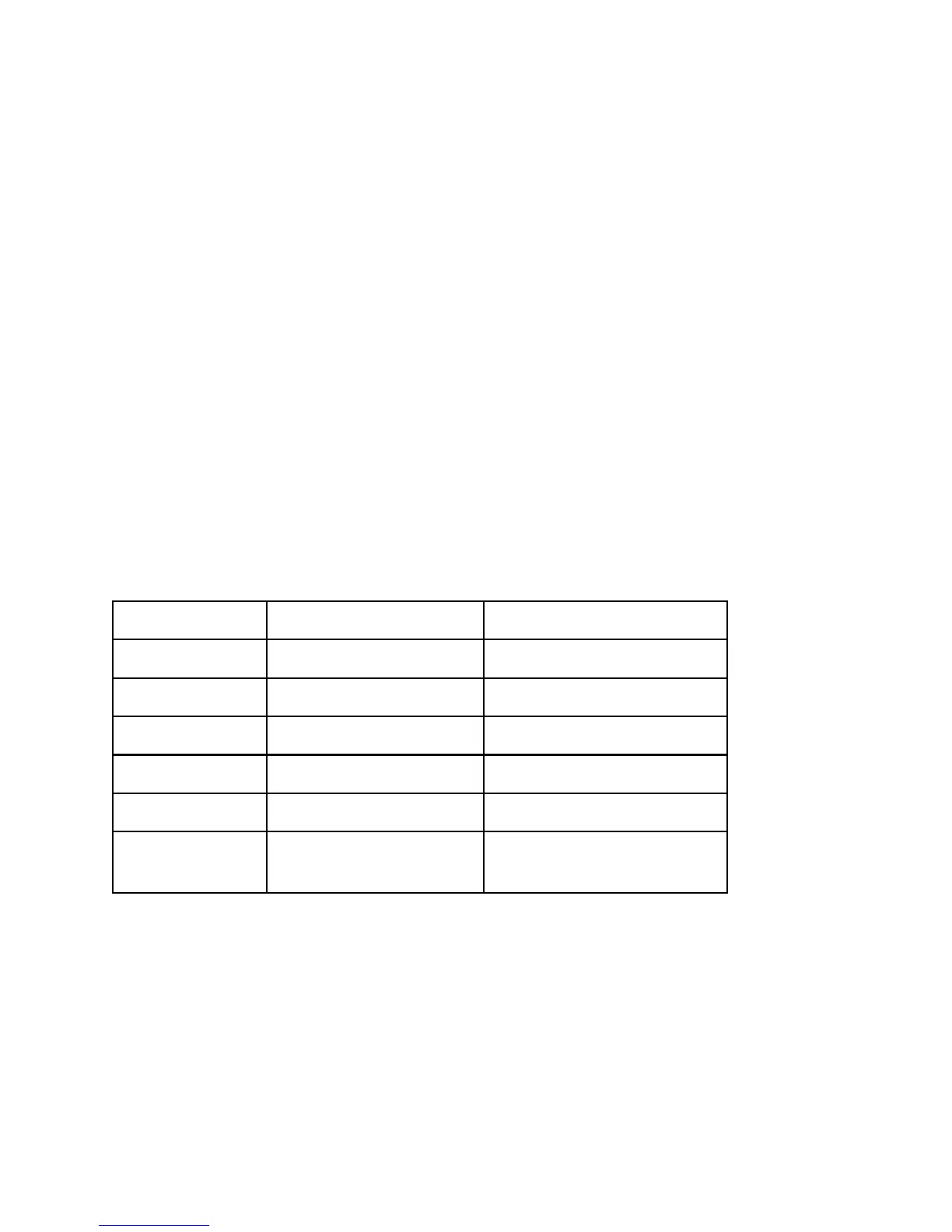
following table:
Local Stream Input Output
0 B-channels 00-1F B-channels 00-1F
1 B-channels 20-3F B-channels 20-3F
2 voice ports 00-1F voice ports 00-1F
3 voice ports 20-3F voice ports 20-3F
4 none call progress tones 0-1F
5 DTMF & Energy DTMF generators 00-3F
detectors 00-3F
In the MVIP compatibility mode, connections are controlled using the Set
Output command MO. This command takes the form MObssttm, where
“bsstt” is the output terminus being controlled, and m is the mode. Valid
modes are “D” for disable, “E” for enable, and “P” for pattern output. In
the enabled mode, the input terminus follows the mode character, and in
the pattern mode, a two digit hexadecimal number representing the value



 To Next Page