EN
115
• Move the unit to a more suitable place if the anges show
signs of corrosion.
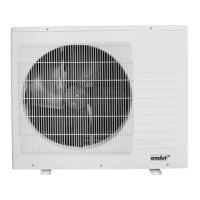
The heat exchanger anges get covered in dust or other
impurities in time, which aects the eciency. Clean the heat
exchanges according to the instructions below 2 times a year.
1. Remove dust and dirt from the anges with a vacuum
cleaner.
2. Clean the anges with water and a soft plastic brush. Do
not use a high-pressure jet. If the outdoor unit is used in
dirty or oily environments it should be cleaned by qualied
personnel using the stipulated detergent.
3. Allow the outdoor unit to dry.
CLEANING THE HEAT EXCHANGER
• Turbulence in the heat exchanger normally keeps the ducts
clean. However, in certain applications deposits can form, for
example in operations with very hard water and a high
temperature. In these cases, the heat exchanger can be
cleaned if cleaning uid circulates through it (CIP, Cleaning
In Place).
• When connected to a radiator system, the heating system
must be cleaned before connection to the heat pump.
• The connection of magnetite and Sy-Klon lters to the
heating system’s return line is recommended.
• Use a container with phosphoric acid 5 % or, if the heat
exchanger is cleaned more frequently, with oxalic acid 5 %.
• Pump the cleaning uid through the heat exchanger.
• The work should be carried out by qualied personnel.
GAS REFILLING
If the heat pump does not contain enough refrigerant it will
not work eciently. Note the following points before lling
refrigerant.
• The work should be carried out by qualied personnel.
• Check before relling that the copper pipes are not leaking.
Repair any leaks, or replace the pipes, before relling.
• Do not overll with refrigerant, this can cause problems such
as overpressure and low eciency.
• Only use refrigerant of the R410A type.
• The refrigerant system must not contain any air, this can
cause abnormal overpressure, which can damage the gas
pipes reduce eciency.
• Evacuate and ventilate the room if refrigerant leaks out.
• Never use pipes of any other material than copper as gas
pipes.
FROST PROTECTION
To prevent the water freezing and damaging the heat pump,
avoid switching o the heat pump unnecessarily when the
outdoor temperature is below 0°C. Allow the heat pump to run
or be in standby mode.


 To Next Page
 Loading...