EasyManua.ls Logo

ApooDr ASF16-18H2B - User Manual

Default Icon
38 pages
Print Icon
To Next Page IconTo Next Page
Loading...
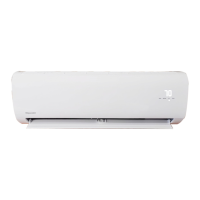
SPLIT-TYPE ROOM AIR CONDITIONER
Owner’s Manual &
Installation Manual
IMPORTANT NOTE:
Read this manual carefully before installing
or operating your new air conditioning
unit. Make sure to save this manual for
future reference.
Please check the applicable models, technical
data, F-GAS(if any) and manufacturer information
from the “Owner's Manual - Product Fiche ”
in the packaging of the outdoor unit.
(European Union products only)
ASF16-12H1A
ASF16-12H1B
ASF16-18H2A
ASF16-18H2B
(888) 487-1125, www.apoodr.com

Questions and Answers

  • J
    jennifer79Aug 20, 2025
    What to do if my ApooDr ASF16-18H2B Air Conditioner is not working?
    • J
      jeffrey47Aug 20, 2025
      If your ApooDr Air Conditioner isn't working, consider these possible causes: * Power failure: Wait for the power to be restored. * Power is off: Turn the power on. * Blown fuse: Replace the fuse. * Dead remote control batteries: Replace the batteries. * Unit's 3-minute protection activated: Wait three minutes after restarting the unit. * Timer activated: Turn the timer off.
  • K
    Kelly BushAug 29, 2025
    Why does my ApooDr ASF16-18H2B start and stop frequently?
    • K
      Karen HartAug 29, 2025
      Frequent starting and stopping of your ApooDr Air Conditioner can be due to: * Too much or too little refrigerant: Check for leaks and recharge the system with refrigerant. * Incompressible gas or moisture in the system: Evacuate and recharge the system with refrigerant. * Broken compressor: Replace the compressor. * Voltage issues: Install a manostat to regulate the voltage.
  • A
    Angela ReedNov 9, 2025
    Why is my ApooDr Air Conditioner not cooling properly?
    • M
      Mr. Benjamin RamosNov 9, 2025
      Several factors can cause poor cooling performance in your ApooDr Air Conditioner. These include: * Temperature setting being too high: Lower the temperature setting below the ambient room temperature. * Dirty heat exchanger: Clean the heat exchanger on the indoor or outdoor unit. * Dirty air filter: Remove and clean the air filter according to the instructions. * Blocked air inlet or outlet: Turn off the unit, remove any obstructions, and turn it back on. * Open doors and windows: Ensure all doors and windows are closed during operation. * Excessive heat from sunlight: Close windows and curtains during periods of high heat. * Too many heat sources: Reduce the number of heat sources in the room. * Low refrigerant: Check for leaks, reseal if necessary, and top off the refri...

Summary

Safety Precautions

Warnings for Product Use

Safety warnings related to using the air conditioner, including fire, injury, and electrical hazards.

Cleaning and Maintenance Warnings

Warnings and precautions for cleaning the unit, including electrical shock and material damage risks.

Electrical Warnings

Critical warnings about electrical work, wiring, grounding, and power supply safety.

Warnings for Product Installation

Safety guidelines for installing the unit to prevent damage, leaks, shock, and fire.

Refrigerant Safety and Disposal

Safety rules for refrigerants and guidelines for proper disposal of the air conditioning unit.

Unit Specifications and Features

Troubleshooting

Common Operational Issues

Lists common operational problems and their possible causes, such as unit not turning on or emitting mist.

Unit Not Working and Heating Issues

Covers unit failure, frequent stopping, poor heating, and flashing indicator lamps with error codes.

Installation Summary - Indoor Unit

Indoor Unit Installation

Selecting Indoor Unit Location

Criteria for choosing an appropriate location for the indoor unit, avoiding specific hazards and obstacles.

Connecting Signal and Power Cables

Instructions for wiring, including safety regulations, cable types, sizes, and connection to terminal blocks.

Outdoor Unit Installation

Selecting Outdoor Unit Location

Criteria for choosing an appropriate outdoor location, considering spatial requirements and environmental factors.

Connecting Outdoor Unit Cables

Steps for connecting signal and power cables to the outdoor unit's terminal block, following wiring diagrams.

Refrigerant Piping Connection

Connecting Refrigerant Pipes

Detailed instructions for connecting pipes to indoor and outdoor units, including torque requirements and valve handling.

Air Evacuation

Evacuation Procedure

Step-by-step guide on using a vacuum pump and manifold gauge to evacuate the system for at least 15 minutes.

Electrical and Gas Leak Checks

Gas Leak Checks

Methods for checking gas leaks at all connection points using soap water or a leak detector.

Test Run

ApooDr ASF16-18H2B Specifications

General IconGeneral
BrandApooDr
ModelASF16-18H2B
CategoryAir Conditioner
LanguageEnglish

Related product manuals