EasyManua.ls Logo

Aprilaire 8100 - User Manual

Aprilaire 8100
26 pages
Print Icon
To Next Page IconTo Next Page
Loading...
READ AND SAVE THESE INSTRUCTIONS
OWNER’S
MANUAL
Includes Safety, Operating and
Maintenance Instructions
MODEL 8100

Other manuals for Aprilaire 8100

Questions and Answers

Summary

INTRODUCTION

PRINCIPLE OF OPERATION

MAINTENANCE INSTRUCTIONS

Filter Maintenance

Clean and recoat aluminum filters every six months for optimal efficiency.

EnergyMax Transfer Core Cleaning

Annually clean the EnergyMax transfer core using a soft brush and vacuum.

Fresh Air Intake Vent Check

Check and clean the fresh air intake vent every six months as necessary.

Blower Compartment Inspection

Inspect blower compartments for debris buildup every six months and clean if needed.

APRILAIRE LIMITED WARRANTY

Aprilaire INDOOR AIR COMFORT SYSTEM

Warranty Registration

SAFETY INSTRUCTIONS

Electrical Shock Hazard

Beware of electrical shock from 120 Volts and moving parts; disconnect power before servicing.

Fresh Air Intake Location

Mount fresh air intake away from toxic gas sources and exhaust vents.

Exhaust Source Separation

Ensure Aprilaire ducting is separate from other exhaust sources to prevent toxic conditions.

Handling Precautions

Handle unit with care to prevent injury or damage due to weight or dropping.

Mounting Orientation

Mount unit in an upright position with the access door not facing down to avoid serious injury.

Sharp Edge Hazard

Wear protective gloves to avoid cuts from sharp edges during handling.

Airflow Balancing

Airflow must be balanced to prevent health problems or structural damage.

Combustion Air Safety

Ensure adequate combustion air; do not exhaust air from rooms with combustion appliances.

Code Compliance

Installation must conform to all applicable local codes and standards.

Duct Insulation

Insulate fresh air and stale air ducts to prevent condensation formation.

SPECIFICATIONS

Energy Recovery Ventilator Components

GENERAL INFORMATION

Unit Operation Overview

Explains how the ERV works in winter and summer for fresh air and energy recovery.

Installation Requirements

Details mounting, ducting, electrical, grille, hood, and collar requirements for installation.

INSTALLATION - NEW HOME

New Home Installation Location

Recommends mounting in conditioned space, away from extreme temperatures or bedrooms.

General Mounting Guidelines

Emphasizes upright mounting and sufficient clearance for maintenance access.

Mounting the Unit

Instructions for mounting the unit, including removing components for easier handling.

Mounting to Concrete Wall Sequence

Step-by-step guide for mounting the unit to a concrete wall using brackets and hardware.

Mounting to Ceiling Sequence

Step-by-step guide for mounting the unit to ceiling joists, avoiding 'I' beam wood trusses.

Ductwork Specifications

Details requirements for airflow measuring devices, sound absorbers, flexible ducts, and galvanized ducting.

Grille and Hood Specifications

Specifies requirements for living space return grilles and exterior intake/exhaust hoods.

Ductwork Connections - Forced Air

Guidelines for connecting duct collars, rigid/flexible ducts, and sealing for forced air systems.

Electrical Connection

Details connecting the power cord to a 120 VAC grounded outlet.

INSTALLATION INTO EXISTING HOME (RETROFITTING)

Installation in Homes Without Forced Air

Adapting installation for homes without forced air, using supply ducts to distribute fresh air.

SYSTEM START-UP

BALANCING THE SYSTEM

Balancing Equipment and Materials

Lists necessary items like pressure gauges, airflow measuring devices, and flexible tubing.

Balancing Procedure

Step-by-step guide to balance airflow using dampers and measuring devices.

Summary

INTRODUCTION

PRINCIPLE OF OPERATION

MAINTENANCE INSTRUCTIONS

Filter Maintenance

Clean and recoat aluminum filters every six months for optimal efficiency.

EnergyMax Transfer Core Cleaning

Annually clean the EnergyMax transfer core using a soft brush and vacuum.

Fresh Air Intake Vent Check

Check and clean the fresh air intake vent every six months as necessary.

Blower Compartment Inspection

Inspect blower compartments for debris buildup every six months and clean if needed.

APRILAIRE LIMITED WARRANTY

Aprilaire INDOOR AIR COMFORT SYSTEM

Warranty Registration

SAFETY INSTRUCTIONS

Electrical Shock Hazard

Beware of electrical shock from 120 Volts and moving parts; disconnect power before servicing.

Fresh Air Intake Location

Mount fresh air intake away from toxic gas sources and exhaust vents.

Exhaust Source Separation

Ensure Aprilaire ducting is separate from other exhaust sources to prevent toxic conditions.

Handling Precautions

Handle unit with care to prevent injury or damage due to weight or dropping.

Mounting Orientation

Mount unit in an upright position with the access door not facing down to avoid serious injury.

Sharp Edge Hazard

Wear protective gloves to avoid cuts from sharp edges during handling.

Airflow Balancing

Airflow must be balanced to prevent health problems or structural damage.

Combustion Air Safety

Ensure adequate combustion air; do not exhaust air from rooms with combustion appliances.

Code Compliance

Installation must conform to all applicable local codes and standards.

Duct Insulation

Insulate fresh air and stale air ducts to prevent condensation formation.

SPECIFICATIONS

Energy Recovery Ventilator Components

GENERAL INFORMATION

Unit Operation Overview

Explains how the ERV works in winter and summer for fresh air and energy recovery.

Installation Requirements

Details mounting, ducting, electrical, grille, hood, and collar requirements for installation.

INSTALLATION - NEW HOME

New Home Installation Location

Recommends mounting in conditioned space, away from extreme temperatures or bedrooms.

General Mounting Guidelines

Emphasizes upright mounting and sufficient clearance for maintenance access.

Mounting the Unit

Instructions for mounting the unit, including removing components for easier handling.

Mounting to Concrete Wall Sequence

Step-by-step guide for mounting the unit to a concrete wall using brackets and hardware.

Mounting to Ceiling Sequence

Step-by-step guide for mounting the unit to ceiling joists, avoiding 'I' beam wood trusses.

Ductwork Specifications

Details requirements for airflow measuring devices, sound absorbers, flexible ducts, and galvanized ducting.

Grille and Hood Specifications

Specifies requirements for living space return grilles and exterior intake/exhaust hoods.

Ductwork Connections - Forced Air

Guidelines for connecting duct collars, rigid/flexible ducts, and sealing for forced air systems.

Electrical Connection

Details connecting the power cord to a 120 VAC grounded outlet.

INSTALLATION INTO EXISTING HOME (RETROFITTING)

Installation in Homes Without Forced Air

Adapting installation for homes without forced air, using supply ducts to distribute fresh air.

SYSTEM START-UP

BALANCING THE SYSTEM

Balancing Equipment and Materials

Lists necessary items like pressure gauges, airflow measuring devices, and flexible tubing.

Balancing Procedure

Step-by-step guide to balance airflow using dampers and measuring devices.

Overview

The Aprilaire Model 8100 is an Energy Recovery Ventilator (ERV) designed to improve indoor air quality by providing a constant supply of fresh air while exhausting stale air from the home. It utilizes a special EnergyMax® transfer core to exchange energy between the incoming fresh air and the outgoing stale air, which helps to pre-heat or pre-cool the fresh air depending on the season. This process reduces the energy required by the home's heating and air conditioning system to bring the incoming air to the desired temperature. The ERV is designed for continuous operation to provide optimum benefits, ensuring a comfortable and healthy environment year-round with minimal maintenance.

Function Description:

The Aprilaire Model 8100 ERV works by drawing fresh air from outside and distributing it into the living space, while simultaneously exhausting stale air from the home to the outdoors. The core of its operation is the EnergyMax® transfer core, an enthalpy-type unit that facilitates both sensible (temperature) and moisture transfer. In winter, the warm, stale exhaust air preheats the incoming cold fresh air, reducing the heating load. In summer, the cool, stale exhaust air pre-cools and dehumidifies the incoming warm, fresh air, lessening the cooling and dehumidification load. This cross-flow design ensures that energy is recovered from the conditioned indoor air before it is exhausted, making the ventilation process more energy-efficient. The system is designed to handle homes up to 3600 sq. ft. of living space.

Important Technical Specifications:

  • Model Type: Enthalpy (sensible and moisture transfer) type unit.
  • EnergyMax® Transfer Core: Unique paper/aluminum core exchanges energy between fresh air supply and exhaust air streams.
  • Unit Dimensions (Overall): 37-3/8" W x 12-3/4" D x 20-5/8" H.
  • EnergyMax® Transfer Core Dimensions: 12-5/8" x 12-5/8" x 10".
  • Air Flow Capacity: 120 cfm (cubic feet per minute) at 0.30 in. w.g. external ductwork resistance, equivalent to 240 feet for each of the "fresh" and "stale" air streams.
  • Performance (Apparent Sensible Effectiveness - ASE): 77% at rated ventilation capacity with 72°F indoor temperature and 32°F outdoor temperature.
  • Home Size: Up to 3600 sq. ft. at rated air flow.
  • Power Requirements: 120 VAC, 1.4 ampere maximum. Equipped with a 3 ft. grounded power cord.
  • Interior Insulation: Entire interior surface sealed with 1" single face insulation.
  • Filters: Two (2) 10-13/16" x 11-5/16" x 3/8" EZ Kleen® washable aluminum air filters, factory coated with Super Filter Coat adhesive for maximum performance.
  • Unit Weight and Packaging: Total Shipping Weight with Mounting Hardware – 76 lbs.
  • Ducting: All ducting must be 6" round or equivalent. Insulated ducting (R-4 minimum with continuous vapor barrier) is required for runs connecting to the outdoors or through unheated spaces. Galvanized uninsulated ducting is used between the ERV and the home interior.
  • Sound Absorber: A 6' long sound absorber duct section (1" thick rigid fiberglass or insulated flexible duct) is required in the stale air return duct from the house to the unit to minimize noise.
  • Return Grille: Minimum 75 square inches free area, centrally located in the living space.
  • Outdoor Hoods: Two weather-resistant hoods with cleanable screens (no greater than ½ inch openings) are required for intake and exhaust.

Usage Features:

  • Continuous Operation: Designed for continuous use to maintain optimal indoor air quality.
  • Energy Recovery: Utilizes the EnergyMax® core to recover heating and cooling energy, reducing the load on HVAC systems.
  • Balanced Airflow: Requires balancing after installation to ensure the volume of fresh air supplied matches the volume of stale air exhausted, preventing excess negative or positive pressure in the home. This is achieved using balancing dampers and airflow measuring devices.
  • Flexible Installation: Can be integrated with a home's forced air system or installed independently with its own duct system.
  • Quiet Operation: Designed for quiet performance, though some sound is generated by the blower system.
  • Pre-wired: The unit comes pre-wired from the factory for easier electrical connection.

Maintenance Features:

  • Filter Cleaning: Aluminum filters should be cleaned every six months and recoated with Super Filter Coat adhesive. The filters are washable.
  • EnergyMax® Transfer Core Cleaning: The EnergyMax® transfer core should be slid out annually and gently vacuumed with a soft brush attachment when completely dry. It should not be washed to avoid damage.
  • Fresh Air Intake Vent Check: The outside fresh air intake vent should be checked and cleaned every six months if necessary.
  • Blower Compartment Inspection: Blower compartments should be inspected for debris buildup every six months and cleaned if necessary. No maintenance is required for the blower motor itself.
  • Easy Access: The unit is designed with an access door for easy access to filters, the EnergyMax® core, and other internal components for maintenance and service. A minimum of 36" opening clearance is recommended for safe removal of the access door.
  • Warranty: The Energy Recovery Ventilator is warranted for three (3) years from the date of installation against defects in material or workmanship. The EnergyMax® Transfer Core has a separate five (5) year warranty.
  • Service Information: For service or parts, users are directed to contact their installer or heating and air conditioning dealer. Research Products Corporation does not sell directly to consumers.

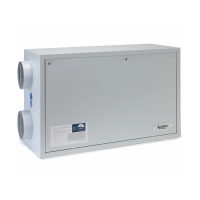
Aprilaire 8100 Specifications

General IconGeneral
BrandAprilaire
Model8100
CategoryFan
LanguageEnglish

Related product manuals