Aquor
®
House Hydrant V2+
ASSE 1019A CERTIFIED / meets IAPMO/cUPC
27
www.aquorwatersystems.com
(800) 458-1749
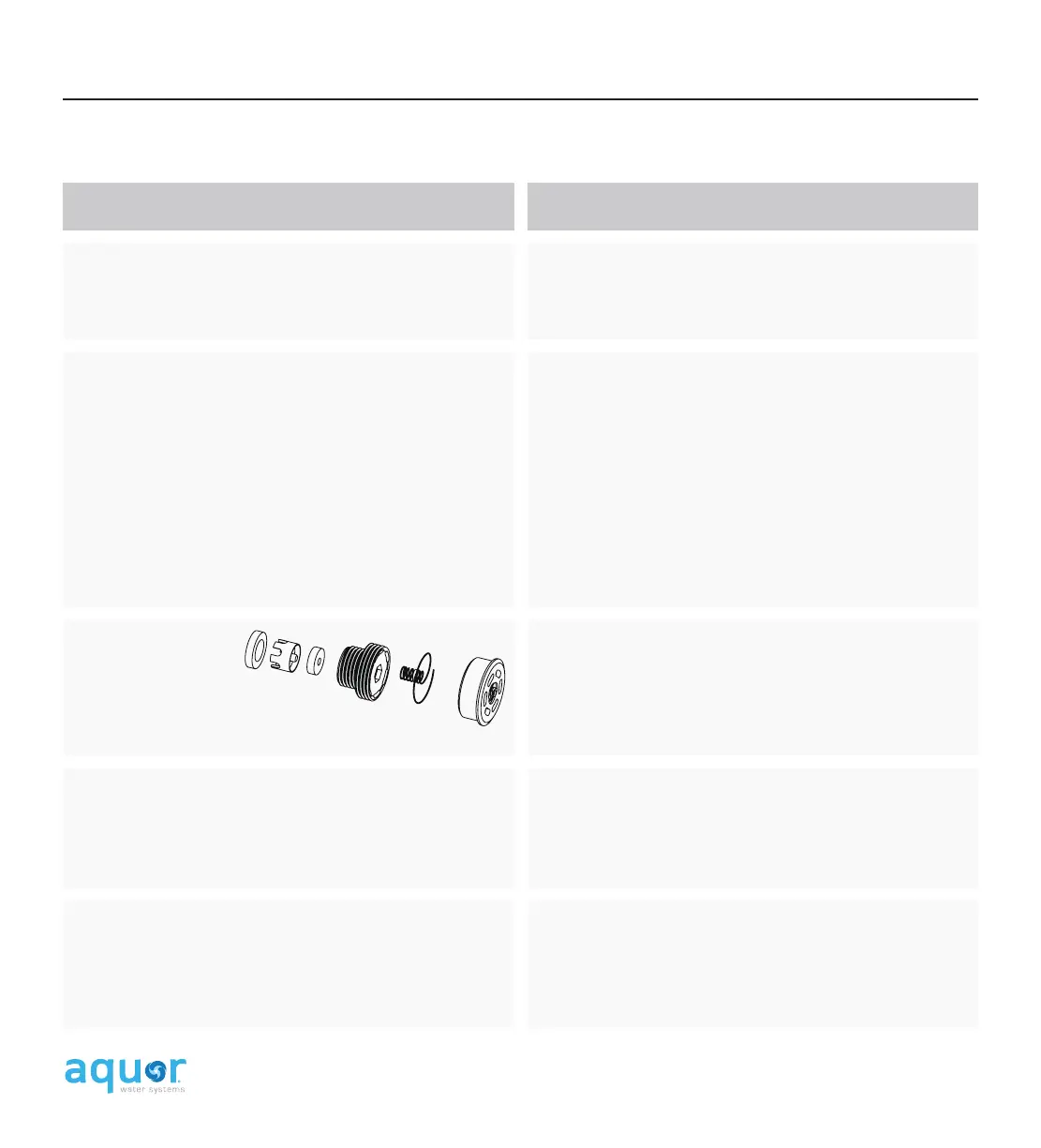
Correct order of vacuum breaker assembly
Water leaking from the hydrant main outlet when
disconnected.
Water leaking from
vacuum breaker
when connected.
Water sprays from the vacuum breaker when
connecting.
Hose connector won’t stay plugged in.
Water leaking from the hydrant main outlet (front) when
connected.
PROBLEM
TROUBLESHOOTING
A slow leak may indicate a stuck or bent internal rod, or
damaged O-ring.
First, try to reset the valve from the front. Shut-o water
supply and use needlenose pliers to press in and rotate
the internal operating rod. Resistance could indicate a
piece of debris behind the valve.
If leak persists, remove the internal operating rod from
the hydrant by unscrewing the rear inlet from the body.
Inspect the O-ring and stem for any damage, remove
debris or replace assembly if needed.
First, ensure water pressure is between 25-125 PSI.
Pressure that is too high or too low can cause issues with
backfl ow preventers.
Next, test with a second hose connector. If the issue
persists, replace the faulty hose connector.
A small burst of water when connecting or disconnecting
is normal due to pressure.
If the spray or leak persists, inspect the vacuum breaker
washer and replace if needed.
Ensure water pressure is not too low. The hydrant uses
water pressure to seal, and is designed for pressures of
25-125 PSI. If you are installing the hydrant on a well
or low-pressure system, contact us for a higher weight
hydrant valve spring, or add a pressure booster.
First, make sure the vacuum- breaker is not leaking.
Inspect hose connector O-rings for damage, replace or
lubricate if needed.
SOLUTION


 To Next Page