10
If you experience a problem with your appliance or are concerned that the appliance is not functioning correctly, you can
carry out some easy checks before calling for service, please see below.
WARNING! DO NOT try to repair the appliance yourself. If the problem persists after you have made the checks mentioned
below, contact a qualied electrician, authorized service engineer or the shop where you purchased the product.
TROUBLESHOOTING
BEFORE CALLING FOR SERVICE, PLEASE REVIEW THE CHART BELOW
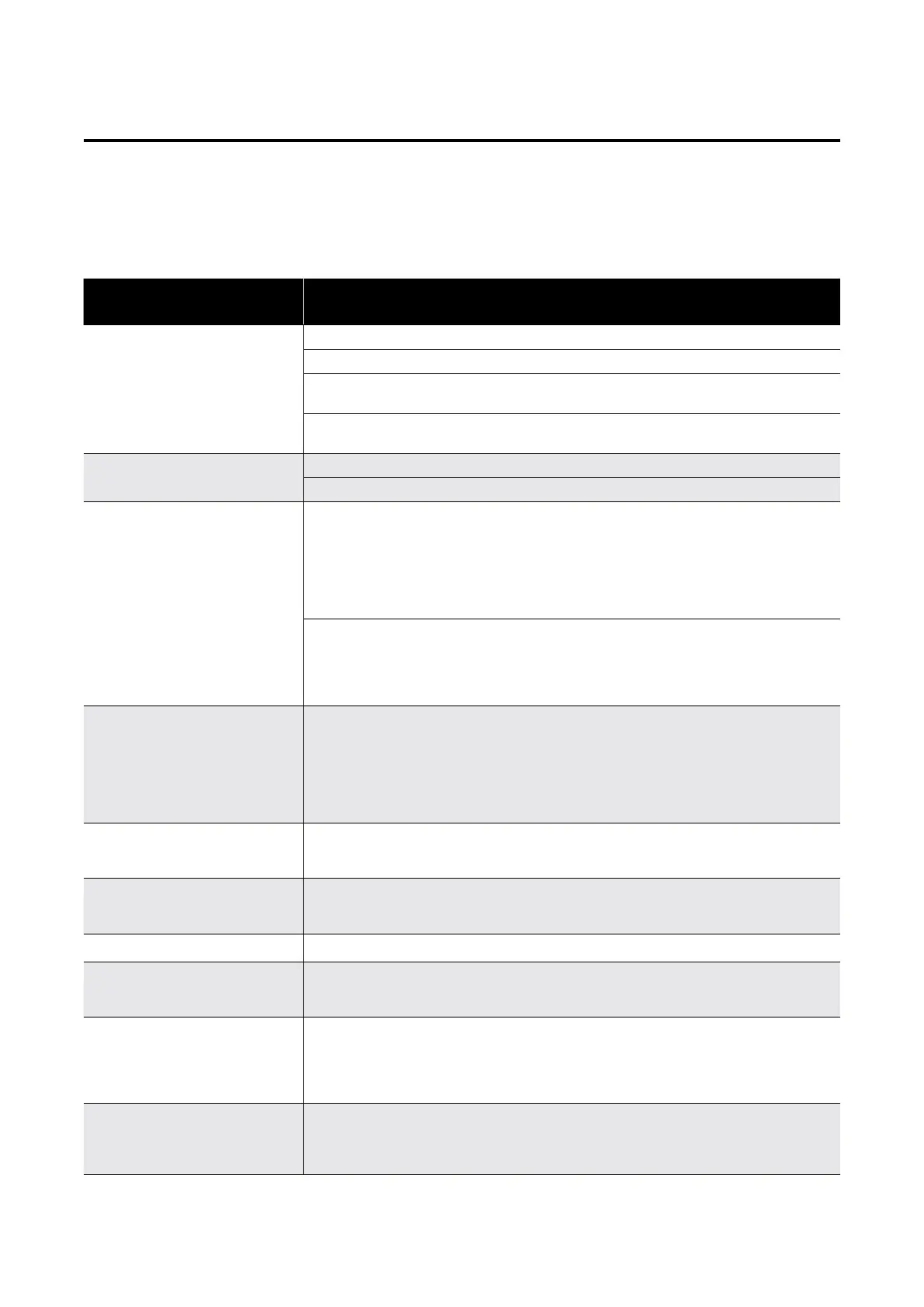
PROBLEM POSSIBLE CAUSES & SOLUTIONS
APPLIANCE IS NOT
WORKING CORRECTLY
Check whether the power cord is properly plugged into the power outlet.
Check your power supply fuse or circuit. Replace/repair if necessary.
The ambient temperature is either too low or too high. Please refer to page 3 for
information regarding the required ambient temperature ranges.
It is normal that the freezer is not operating during the automatic defrost cycle, or
for a short time after the appliance is switched on to protect the compressor.
ODOR FROM THE COMPARTMENTS
The interior may need to be cleaned.
Some food, containers or wrapping cause odors.
NOISE FROM THE APPLIANCE
The sounds below are normal:
• Compressor running noises.
• Air movement noise from the small fan motor in the freezer compartment or other
compartments.
• Gurgling sound similar to water boiling.
• Popping noise during automatic defrosting.
• Clicking noise before the compressor starts.
Other unusual noises are due to the reasons below and may need you to check and
take action:
• The cabinet is not level.
• The back of appliance touches the wall.
• Bottles or containers fallen or rolling.
THE MOTOR RUNS CONTINUOUSLY
It is normal to frequently hear the sound of the motor; it will need to run more in the
following circumstances:
• Temperature setting is set colder than necessary.
• Large quantity of warm food has recently been stored in the appliance.
• The temperature outside the appliance is too high.
• Doors are kept open too long or too often.
• After your installing the appliance or it has been switched o for a long time.
A LAYER OF FROST OCCURS IN
THE COMPARTMENT
Check that the air outlets are not blocked by food and ensure food is placed within
the appliance to allow sucient ventilation. Ensure that door is fully closed. To
remove the frost, please refer to “Cleaning and Care” section of this manual.
TEMPERATURE INSIDE IS
TOO WARM
You may have left the doors open too long or too frequently; or the doors are kept
open by some obstacle; or the appliance is located with insucient clearance at the
sides, back and top.
TEMPERATURE INSIDE IS TOO COLD
Increase the temperature by following the “Display Controls” section of this manual.
DOORS DO NOT CLOSE EASILY
Check whether the top of the refrigerator is tilted back by 0.3 – 0.4 inches
(10 – 15mm) to allow the doors to self close, or if something inside is preventing the
doors from closing.
WATER DRIPS ON THE FLOOR
The water pan (located at the bottom rear of the cabinet) may not be properly
leveled, or the draining spout (located underneath the top of the compressor depot)
may not be properly positioned to direct water into this pan, or the water spout is
blocked. You may need to pull the refrigerator away from the wall to check the pan
and spout.
THE LIGHT IS NOT WORKING
• The LED light may be damaged. Refer to “Replace LED lights” in “Cleaning and
Care” section.
• The control system has disabled the lights due to the door being kept open too
long. Close and reopen the door to reactivate the lights.
For further assistance, contact Consumer Services at 855-663-WIND (855-663-9463).


 To Next Page
 Loading...