TD 90227GB
2006-09-18/ Ver. C
System Installation
On Site Paging System
1
1 Introduction
The units in the On Site Paging (OSP) system are designed for wall mounting, either
adjacent to each other or individually. The units are housed in two types of cases; die-cast
aluminium for fixed receivers and slave transmitters, and ABS plastic for all other units.
Both types provide protection against dust and mechanical damage but should not be
located in areas subjected to moisture or extreme humidity.
Operating temperature ranges are -25 to +55ºC for radio equipment and 0 to +40ºC for
other modules. If possible, all units should be placed in dry locations with moderate
temperatures to facilitate service. Avoid locations that are subject to strong
electromagnetic fields, vibration, or rapid temperature changes. The procedure for the
installation of each unit is described in the installation guide for the respective unit.
1.1
OSP On Site Paging
PBX Private Branch Exchange
FL Frequency Lock
SP Speech
RI Receiver Interface
Abbreviations and Glossary
1.2 System Bus
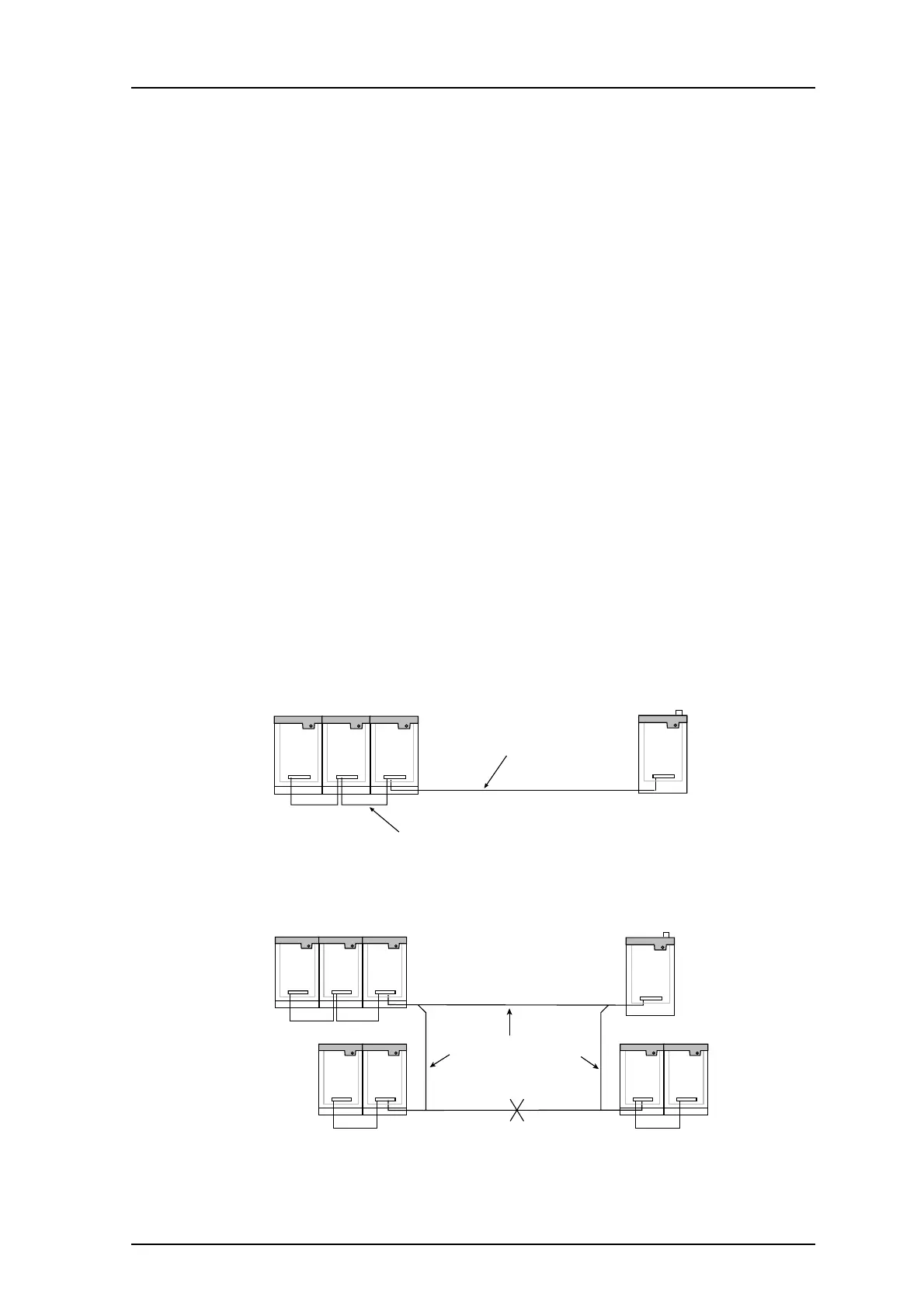
The units communicate via serial transmission on the system bus. Adjacent units are
connected with a ready-made modular system bus cable. Twisted-pair cables are used to
connect remote units, such as a Transmitter located near the antenna, a PBX interface
located at the switchboard, a number of charging interfaces, etc.
System bus cable
Twisted-pair cable
If the bus cable is used, no other system bus connections are needed. Twisted-pairs bus
connections are made at screw terminals on the PC-board. The bus network must never
form loops.
Data buses < 3 km
Speech bus < 500 m
• All data buses are polarized.
• Maximum 32 modules to be connected in a bus network.



 To Next Page