Need help?
Do you have a question about the Ashford KIWI and is the answer not in the manual?
Lists required tools and provides initial setup hints for assembly.
Detailed instructions for assembling the main body and base components.
Attaching the wheel, hinge, and drive components to the main structure.
Erecting the spinning tower and assembling the spindle mechanism.
Completing drive belt setup and tensioning mechanisms.
Assembling and attaching the treadle and foot pedal components.
Performing final assembly checks and applying lubrication for smooth operation.
Kit for spinning finer, high twist yarns, with specific ratios.
Kit for spinning soft, bulky yarns, with different ratios.
Device for winding yarn directly from bobbin into a skein.
Includes Book of Spinning, Hand Carder, Wax Kit, and Niddy Noddy.
Visual guide of all hardware components included in the kit.
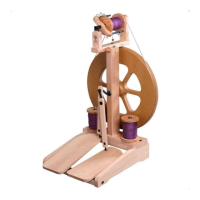
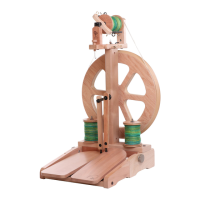
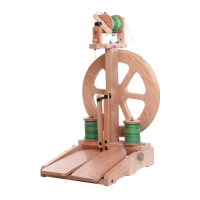
The Ashford Kiwi Spinning Wheel is a versatile and user-friendly device designed for spinning various types of yarn. Its primary function is to transform raw fibers into spun yarn, offering both beginners and experienced spinners a reliable and enjoyable spinning experience. The wheel's design emphasizes ease of assembly, operation, and maintenance, making it a popular choice for home spinning.
The core function of the Kiwi Spinning Wheel is to draft and twist fibers into yarn. This process involves several key components working in harmony. The spinner feeds prepared fibers into the orifice of the flyer, which is a U-shaped assembly that rotates rapidly. As the flyer spins, it imparts twist to the fibers, consolidating them into a continuous strand. Simultaneously, the bobbin, located within the flyer, winds up the newly formed yarn. The speed at which the flyer and bobbin rotate, relative to each other, is controlled by the drive band system and tensioning mechanisms, allowing the spinner to adjust the amount of twist and the rate of take-up.
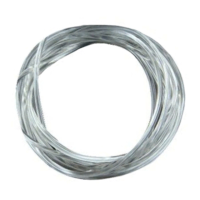
The drive band, typically made of polycord, connects the large drive wheel to the flyer pulley. When the spinner operates the foot treadles, the drive wheel rotates, which in turn drives the flyer. The treadles are designed for comfortable and rhythmic operation, enabling continuous spinning without excessive fatigue. The double treadle system allows for a balanced and smooth motion, which is particularly beneficial for maintaining a consistent spinning rhythm.
The Kiwi Spinning Wheel is capable of producing a range of yarn types, from fine, high-twist yarns to soft, bulky, or novelty yarns. This versatility is enhanced by optional accessories such as the High Speed Adapter Kit and the Jumbo Flyer Kit. The High Speed Adapter Kit, which includes a high-speed whorl and a polycord drive belt, allows for spinning finer yarns with more twist, suitable for delicate projects. Conversely, the Jumbo Flyer Kit, comprising a jumbo flyer, whorl, three jumbo bobbins, and a jumbo bearing, is designed for spinning thicker, bulkier yarns often used in knitting and weaving, accommodating larger quantities of fiber on its bobbins.
The Ashford Kiwi Spinning Wheel is engineered for straightforward assembly and intuitive operation. The manual provides clear, step-by-step instructions with visual aids, ensuring that even novice users can put the wheel together with confidence. Tools commonly required for assembly include a screwdriver, hammer, Allen key, pliers, and a small amount of oil and candle wax, which are often included with the kit or readily available. The use of candle wax is specifically recommended for lubricating screws, making insertion easier and preventing wood splitting, a thoughtful detail that enhances the assembly process.
Once assembled, the wheel's operation is designed to be ergonomic and efficient. The double treadle system allows for a comfortable and balanced foot motion, which is crucial for maintaining a consistent spinning rhythm over extended periods. The drive wheel is large enough to provide good momentum, contributing to smooth and continuous spinning. The tensioning knob, located on the flyer assembly, allows the spinner to adjust the take-up tension, controlling how quickly the yarn is wound onto the bobbin. This adjustability is vital for managing different fiber types and achieving desired yarn characteristics.
The wheel's design incorporates practical features for everyday use. The inclusion of a built-in bobbin holder, or "lazy kate," allows for convenient storage of bobbins and facilitates plying, where two or more single strands of yarn are twisted together to create a stronger, more balanced yarn. The bobbins themselves are designed for easy removal and replacement, streamlining the process of changing bobbins when one is full or when switching to a different fiber or yarn type.
For those looking to expand their spinning capabilities, the optional kits offer significant enhancements. The High Speed Adapter Kit allows spinners to achieve higher ratios, resulting in finer, more tightly twisted yarns. This is particularly useful for lace weight or fine garment yarns. The Jumbo Flyer Kit, on the other hand, caters to the demand for bulky and art yarns, providing a larger orifice and bobbins to handle thicker fibers and accommodate greater yarn volume. This flexibility ensures that the Kiwi Spinning Wheel can adapt to a wide range of spinning projects and skill levels.
Proper maintenance is key to ensuring the longevity and optimal performance of the Ashford Kiwi Spinning Wheel. The manual emphasizes the importance of lubrication, specifically recommending Ashford Spinning Wheel Oil for the bearings, particularly at the end of the whorl. Regular oiling reduces friction, prevents wear, and ensures smooth, quiet operation. The instructions for lubrication are simple, typically involving applying a few drops of oil to designated points, such as the flyer bearings and the drive wheel axle.
Another crucial maintenance practice highlighted is the removal of the drive belt when the wheel is not in use. This simple step helps to prevent the belt from stretching or deforming over time, thereby maintaining proper tension and extending its lifespan. A well-maintained drive belt is essential for consistent power transmission from the drive wheel to the flyer, directly impacting the quality and consistency of the spun yarn.
The construction of the Kiwi Spinning Wheel, primarily from wood, means that it benefits from occasional care to preserve its finish and structural integrity. While not explicitly detailed in the provided excerpts, wooden spinning wheels often benefit from waxing or polishing to protect the wood from moisture and wear. Ashford offers a "Wax Kit" as an accessory, suggesting that periodic waxing with a suitable product can help maintain the wheel's appearance and protect its wooden components.
The design of the wheel also facilitates easy inspection and cleaning of its components. The open structure allows for access to the drive band, flyer, bobbins, and other moving parts, making it straightforward to remove any accumulated fiber dust or debris that could impede smooth operation. Regular cleaning, combined with proper lubrication, ensures that all parts move freely and efficiently.
Furthermore, the modular nature of the Kiwi Spinning Wheel means that individual components can be replaced if they become worn or damaged. This aspect of its design contributes to its long-term usability, as parts like drive bands, bobbins, or even entire flyer assemblies can be sourced and replaced, extending the life of the wheel for many years of spinning enjoyment. The availability of accessories like the Kiwi Skein Holder also speaks to the comprehensive ecosystem Ashford provides, supporting spinners in all aspects of their craft, from spinning to skeining.
 General
| Manufacturer | Ashford |
|---|---|
| Foldable | Yes |
| Product Type | Loom |
| Material | Silver Beech Wood |
| Reed Size | 12dpi (48/10cm) |

 To Next Page