Need help?
Do you have a question about the Aspes ALV1045X and is the answer not in the manual?
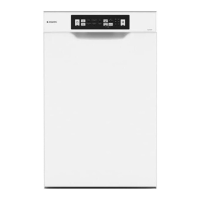
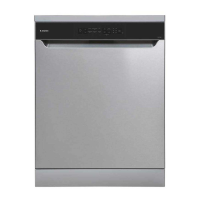
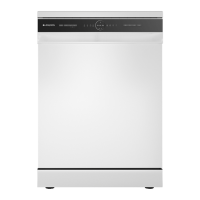
This document serves as a user manual for the Aspes ALV1045 and ALV1045X dishwashers, providing comprehensive information on their operation, maintenance, and safety.
The Aspes dishwashers are designed for automatic dishwashing in domestic households and similar residential environments. They are not intended for commercial use. The appliance offers various washing programs to cater to different levels of soiling and types of dishes, including Intensive, Eco, Light, 1h 60min, Rapid, and Pre-Rinse cycles. The "Eco" program is highlighted as the standard program for energy and water consumption tests, suitable for normally soiled tableware. The dishwashers incorporate a water softener system to prevent mineral and salt deposits, which can negatively affect performance, especially in hard water areas. A rinse aid dispenser ensures thorough rinsing and streak-free drying. The appliance also features a "3 in 1" function for combination detergent tablets, simplifying the washing process by integrating detergent, rinse aid, and salt functions.
The ALV1045 and ALV1045X models are freestanding dishwashers with a standard place setting capacity of 9. They boast an energy efficiency class of A++ and a drying efficiency class of A. Key energy and water consumption figures (based on 280 standard cleaning cycles):
The dishwasher features a control panel with a power switch, program select button (which also functions as a child lock), delay button (up to 24 hours), and a function alternative button for "3 in 1" or upper/lower layer washing. Indicator lights for salt refill, rinse aid refill, child lock, "3 in 1" function, and upper/lower spray arm washing provide clear status updates. A digital display shows remaining running time, malfunction codes, and delay time.
Loading the dishwasher is facilitated by an upper and lower basket, along with a cutlery basket. The upper basket is designed for delicate items like glasses and cups, while the lower basket accommodates larger items such as pots and pans. Both baskets include folding racks for flexible loading. Proper loading instructions emphasize placing items upside down, slanting curved items for drainage, and ensuring spray arms are not obstructed. Sharp items, especially knives, should be loaded with handles up or in a horizontal position to prevent injury.
The water softener system requires initial setup based on local water hardness, with settings from H0 (off) to H7. Salt needs to be refilled when the indicator light illuminates. The rinse aid dispenser also requires refilling, with an optical level indicator to show the amount remaining. Detergent should be added just before starting a cycle, with specific dosing instructions for main wash and pre-wash. The manual advises using detergents specifically designed for automatic dishwashers and provides guidance on using concentrated detergents and "3 in 1" tablets.
The appliance allows for adding forgotten dishes mid-cycle before the detergent cup opens, with a safety warning about hot water. At the end of a cycle, the dishwasher signals completion with a buzzer. It's recommended to wait a few minutes before unloading to allow dishes to cool and dry better.
Regular maintenance is crucial for optimal performance and longevity. The filtering system, consisting of a coarse filter, flat (main) filter, and micro filter, needs to be inspected and cleaned after each use to remove food particles and debris. The spray arms should also be cleaned regularly to prevent clogging from hard water chemicals.
For cleaning the exterior, a damp cloth and appliance polish wax are recommended, avoiding abrasive cleaners or sharp objects. The control panel should be cleaned with a lightly dampened cloth. The door edges should be cleaned with a soft, warm, damp rag, taking care not to use spray cleaners near electrical components.
To protect the dishwasher during winter in unheated places, the manual advises cutting off electrical power, turning off and disconnecting the water supply, draining water from the inlet pipe and valve, and removing filters to absorb remaining water in the sump.
The manual also provides troubleshooting tips for common issues, including error codes (E1-E7) that indicate specific malfunctions like door open, water inlet/drainage issues, temperature sensor problems, or water leakage. For other problems like cloudiness on glassware, spots, filming, or noise, the manual offers possible causes and remedies, such as adjusting detergent/rinse aid dosage, checking water supply, or ensuring proper loading.
 General
| Brand | Aspes |
|---|---|
| Model | ALV1045X |
| Category | Dishwasher |
| Language | English |

 To Next Page