FIRST,
A WORD
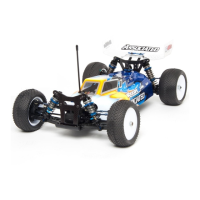
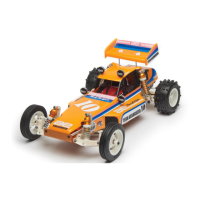
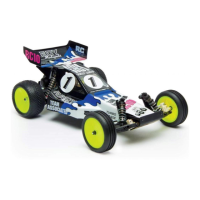
Team Associated's RC10
2WD
ca
r has won three
IFMAR
WOR~D
CHAMPIONSH
IPS,
inclu
ding
the
1991
race
1n Detr
o1t,
MI. For
Austra
li
a,
in 1989, we had
devel-
oped
a
totally
new transmission
called
the STEALTH
transmission. This STEALTH tranny was also
used in the
'91 race in Detroit and is part of our
latest
RC
10,
th
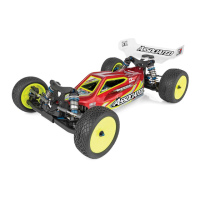
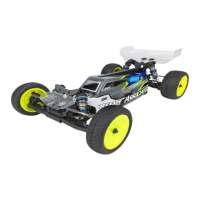
e TEAM
~AR.
Out
of
the box, the TEAM CAR has
already
proven
1t
s the best. At the
1990 ROAR NATIONALS in Livermore,
Calif., it finished an impressive 1st,
2nd, and 3rd.
We
've used the same
WORLD CHAMPIONSHIP-
winning design concepts
and
engineered a
whole
new
vehicle,
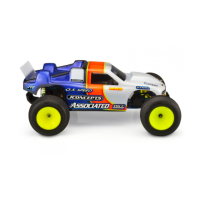
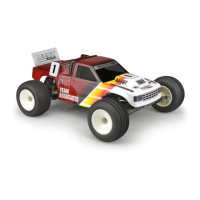
the RC10T
Truck. This is
definitely
not a conver-
sion kit, as
you'll find out when
assembling
the truck. As
you
can
tell,
we
did
use a few important parts from the
TEAM CAR. We used the
best
transmission in the worl
d-
-the STEALTH tranny. We used the best shocks in the
wor
ld
,
our new, improved and hard anodized,
Teflon-
coated race-winning sh
ocks
from the
TE
AM CAR. We
also
used another
spee
d secret, our
aluminum
chassis. Our
Team drivers
h~ve
tested both the
aluminum
and
graphite
cha~s1s
ex
~
ens1ve
ly
,
and
they've a
ll
learned
that they're
gett
1n
g
the1r
best
lap
times
wi
th the standard
aluminum
chassis. Pages
two
and
th
ree detail all the
tota
ll
y
new parts
that were required
to
build our new championship-winning
RC10T.
.
Ro_ger
Curtis,
Cliff
Lett and Curtis Husting used
the1r
comb1ned design experience from the TEAM CAR to
design a truck that
would handle like
our TEAM CAR.
Although ROAR's
racing truck
class
is
called
Monster
Truck, it was easy to see that what was
ac
tually raced more
closely resembled
Stadium Trucks.
Anyone
who
has seen the Stadium Trucks race
know
how
exciting they are to watch.
All
sixteen races in
stadiums
all
arou
nd
the country are always sold
out
proving their
popularity.
At
th
e race at the Los
Ange
l
e~
Co
l1
seum,
the trucks
climb all
the way up
to the top
of
the
bleachers,
through the
pe
ristyle
end, come charging out
through an archway and then down an
unbelievable
jump,
three to four stories
ta
ll
,
to
the
floor
of
the
Coliseum! It's
one
of
the
more
spectacular
sights in truck racing, and the
reason we
depicted
this scene on the
RC10T
box cover.
We
looked at the truck
rules
and found out what we
we~e
allowed
to do, and then brought our design and
rac1ng
expenence to design our truck. Curtis Husting
built
three prototype trucks. Then Curtis and Cliff put in many
hours of track time fine tuning
all
the suspension points
before we were r
eady
to start
building the truck.
. We
still
hadn
't raced the truck in
actual competi-
tion before we took the three trucks to
Florida
for the
Florida
Winter Championships. This
would
be
our first race. There
were
450
en
tri
es with
all
the racing teams present. The
all
new
RC10T
trucks finished 1st and 2nd, with
Cliff
Lett
winning and Butch
Kloeber following
in 2nd!
It
was an
page
4
incredible
finish, justifying
all
our
long
hard work.
We
are
certainly
very
well pleased
with the
RC
10T
and
we
know
you
will
be
too.
You'll
find the photos in the instructions
so
easy
to
follow
that you
may
be
tempted to
put
the tru
ck
together
fr
om
the photos alone.
However, although you have the
best truck ki
t,
if you want the
bes
t
COMPLETED model
race truck,
then you will
want to
pu
t it together
correctly-
by
following
these instructions.
All
that's required is
to
read
the few lines of text near each photo.
DON'T OPEN
ANY
OF
THE PARTS BAGS UNTIL
THESE INSTRUCTIONS
TELL
YOU ,
otherwise
you'
ll
get
the parts mixed
up
and then you
will
have trouble
assem-
bling
your truck.
While
you are
building
the truck you
will some-
times be working with several
parts
bags
at the same time.
These
bags
are referred to
by
number in the instructions,
and you will
find a number
label on each
of
the main parts
bags. There are
also
more
bags
inside the main parts
bags: these are not
number
ed
and
belong
to the
bag
they
came out
of
.
Bags and parts will
start multiplying like
rabbits as
you
build,
so
try to keep the
bags
separa
t
e.
One
good
way
is
to use
lar
ge
paper
plates
(picn
ic
plates
with partitions
are best). Mark the
plates
with
bag
numbers and
dump
the
parts into them. When the parts are used up,
relabel
the
plate
for another bag.
It's
much easier to find the part you
need if it's spread
out where you can see i
t.
TOOLS.
The
ki
t contains the shock wrench and all
the
Allen
wrenches
you'll
need,
but
you
will
have to
supply
the
following:
blade
#2 Phillips
screwdriver (Associated #SP76)
A
needle-nose pliers
A
hobby
knife, such as an X-acto with a pointed
A soldering
iron (25 to
50
watts), and a
small
amount
of
ROSIN
(not acid) core
60/40 solder.
The kit can be assembled
even easier
if
you have
the
following:
3/32" straight
A
ll
en
wrench
wi
th
handle. Will
make
installing
the
Allen
screws much faster and easier (Asso-
ciated
#SP
73)
A
ru
ler
with
decimal
inches
or
metric measure
A
3/16"
nut driver
will
make
installing
the
ball ends
easier (Associated #SP86)
A
1/4"
nut
dr
iver
will
speed
up
installing
the
1/
4"
nuts ( #SP85)
Socket or open-end wrench
Small
screwdriver
Thread-locking
compound
ZAP or Hot
Stuff
(cyanoacrylate adhesive)
Vise
Fi
le
Dri
ll
with #43 (2.3
mm)
bit
WARNING!
Do
not use a
pow
er
sc
rewdriver. They


 To Next Page
 Loading...