BOATING SAFETY
|
29
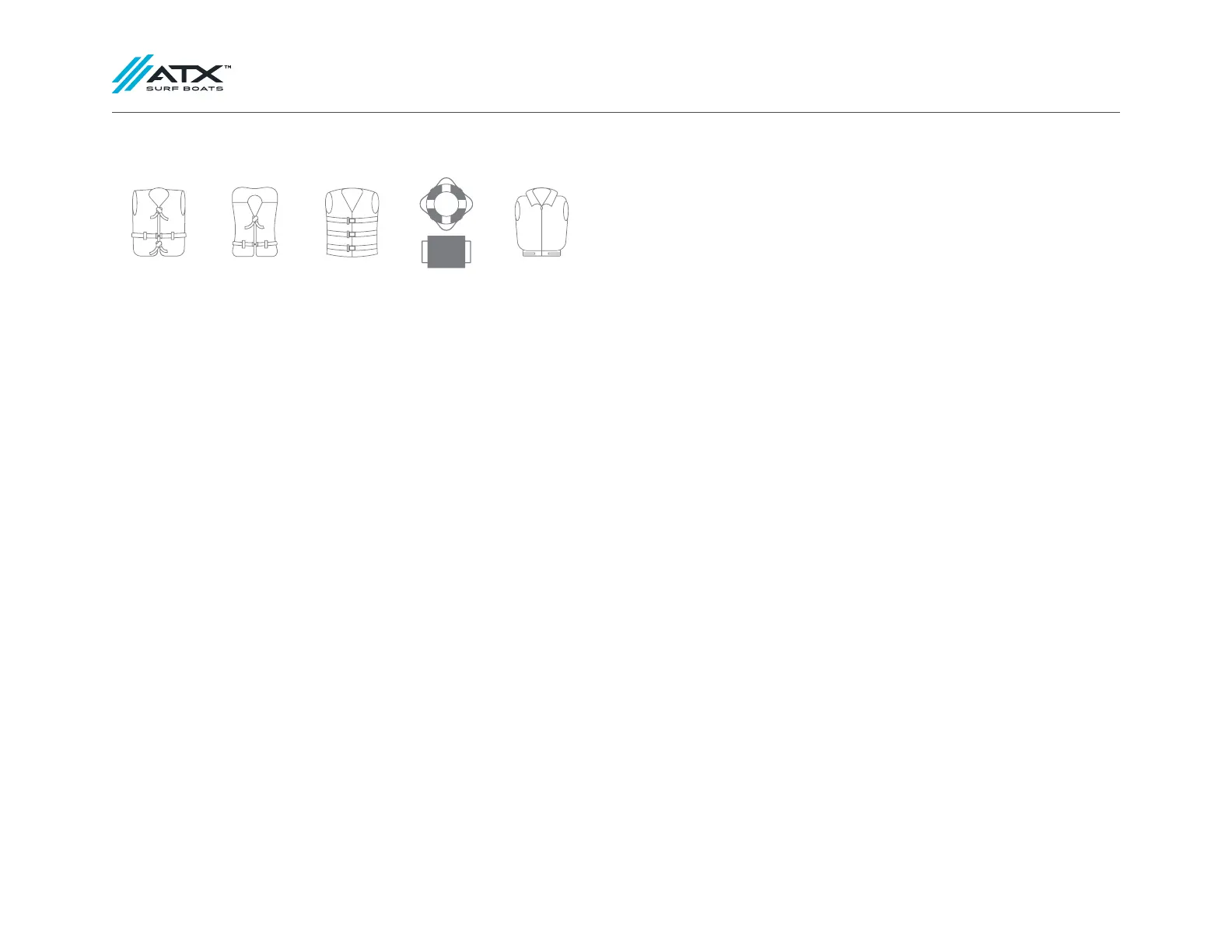
TYPE I
LIFE PRESERVERS
TYPE II
BUOYANT VESTS
TYPE III
FLOTATION AIDS
TYPE IV
THROWABLE
DEVICES
TYPE V
HYBRID PFD MUST
BE WORN WHEN
UNDERWAY
Type I Life Preserver: Most buoyant PFDs are effective on all waters, especially
open, rough water.
Type II Buoyant Vest: Good for calm water
Type III Flotation Aid: Good for most inland water applications where quick
rescue is likely. Comes in various styles and some are designed for water
sport activities.
Type IV Throwable Device: Intended for heavy traffic inland waters where
help is available. Designed to be thrown to a person in the water.
Type V Hybrid PFD: Inflatable design for special use activities and may be
used instead of a Type I, II, or III PFD with non-towed participants if used in
accordance with the approval conditions on the label and if worn when the
boat is underway. Some Type V PFDs provide increased protection against
hypothermia.
• A Type V PFD must be worn to be counted toward the minimum carriage
requirements.
• Special lifejackets are available for skiing and other water sports. These
non-Coast Guard approved lifejackets do not count as PFDs.
Lifejackets (PFDs) are intended to help save lives. The operator should set
an example by wearing one. Wear a life jacket (PFD) whenever boating. It is
especially important that children and non-swimmers wear a life jacket (PFD) at all
times. Make certain all passengers know how to put on and properly adjust their
life jackets (PFDs) and that they are readily accessible. Check local, state, country
agency(ies) as to laws and regulations. Also, selecting the proper type life jacket
(PFD) for your kind of outing helps ensure your time on the water can be safer. RE-
MEMBER—The best life jacket (PFD) is the one that is worn–that is, the one that
can save your life.
At the beginning of each season, check life jackets (PFDs) for damage and test for
proper flotation. Refer to the lifejacket (PFD) manufacturer’s information. To meet
requirements, each lifesaving device must have a current, legible USCG approval
stamp permanently affixed.
Your dealer can help you select appropriate life jackets (PFDs) and throwable
lifesaving devices for your area.
Navigation Lights
Your boat is equipped with navigational lights. Recreational boats are required
to display navigational lights between sunset and sunrise and other periods of
reduced visibility (fog, rain, haze, etc.). Your navigation lights are provided to
keep other boats informed of your presence and course. It is up to you to make
sure they are operational and turned on when required.
Tower Lights
Coast Guard regulations do not permit the use of tower side panel lights while the
vessel is underway. The lights may be in use when the vessel is not in motion.
Horn or Whistle
All boats over 16 feet (4.8 meters) in length must be equipped with an
operable horn or whistle. The following are standard signals when using
a whistle or a horn:
• One prolonged blast: warning.
• One short blast: Pass on my port side.



 To Next Page