AUTOCAR E-ACTT™FIRST RESPONDERS GUIDE
888-218-3611
AWE 00424 Rev. 001
3
ELECTRIC VEHICLE (EV) RESPONSE
CONSIDERATIONS
In the event of damage, re, or ooding involving an electric vehicle:
• Always assume the high voltage (HV) battery and associated components are energized
and fully charged.
• Exposed electrical components, wires, and HV batteries present potential HV shock
hazards.
• Venting/o-gassing HV battery vapors are potentially toxic and ammable.
• Physical damage to the vehicle or HV battery may result in immediate or delayed release
of toxic and/or ammable gases and re.
• A HV battery in a ooded vehicle may have high voltage and short circuits that can shock
and cause res.
EMERGENCY RESPONSE INITIAL STEPS
Immobilize the Vehicle
1. Block the wheels
2. Set parking brake
3. Place vehicle into NEUTRAL (N)
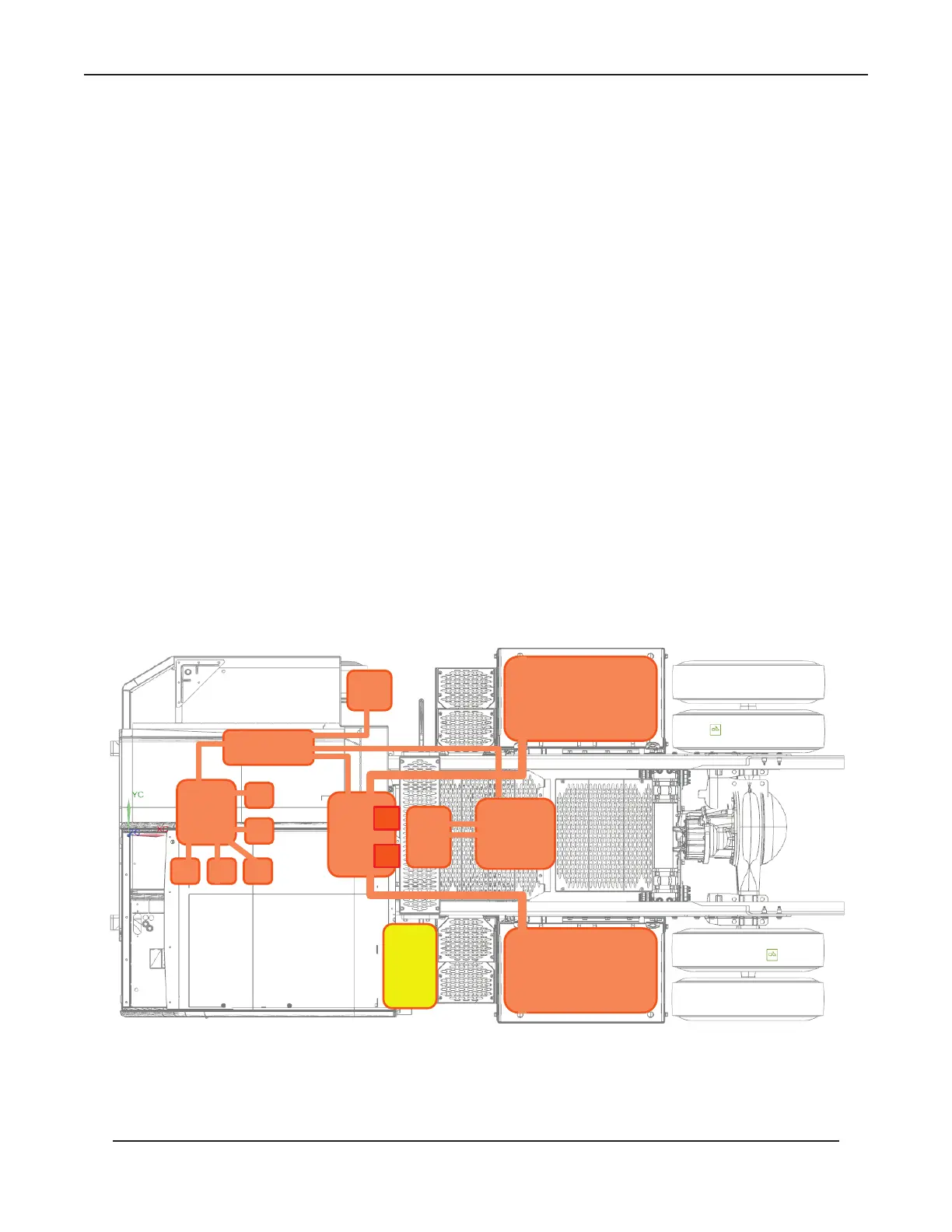
The layout of the high voltage system is shown in Figure 3. Items in orange indicate high
voltage components and cables.
High Voltage
Lithium Ion Battery
High Voltage
Lithium Ion Battery
Motor
Inverter
Motor
MSD
MSD
BMS
PDU
12V
24V
Figure 3



 To Next Page