Need help?
Do you have a question about the Autool HTS 558 and is the answer not in the manual?
Defines carbon deposit as black gel from repeated high temperatures and insufficient combustion.
Explains causes like idle speed, poor fuel quality, changing engine workload, and low RPM driving.
Lists issues like power loss, wasted fuel, noise, rough running, and potential engine damage.
Highlights using natural walnut sand, no chemicals, and efficient operation for cleaning.
Describes the AUTOOL HTS 668's function using walnut sand for engine intake pipe cleaning.
Provides step-by-step guidance on unpacking, assembly, and using the decarbonizing machine.
Lists included accessories such as filter, sand blast gun, and safety goggles.
Outlines warranty certificate, contact procedures for malfunctions, and repair policies.
Specifies situations like improper operation, unauthorized modification, or use of wrong voltage.
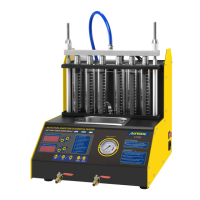
The AUTOOL HTS 558 Walnut Sand Decarbonizing Machine is designed for efficient engine decarbonization, utilizing a natural and non-damaging method to clean carbon deposits. This user's manual outlines the device's function, usage, and maintenance, ensuring optimal performance and longevity.
The AUTOOL HTS 558 is a specialized machine engineered to remove carbon deposits from vehicle engines. Carbon deposits are a common issue, forming as a black gel due to repeated high temperatures during engine operation. These deposits accumulate on various components such as fuel injectors, throttle valves, oil circuits, spark plugs, cylinder heads, and inner walls, primarily caused by insufficient combustion of gasoline. Typically, vehicles require engine carbon cleaning every two years or after driving 40,000 kilometers. The presence of carbon deposits can be clearly observed by removing the throttle.
The machine addresses several problems caused by carbon buildup, including power drop, increased fuel consumption, engine noise, unstable idle speed, difficulty starting, acceleration issues, engine shake, and excessive exhaust. Critically, hard carbon blocks can detach, potentially preventing the engine from starting or falling into the combustion chamber, leading to wear on the chamber wall and eventual engine damage.
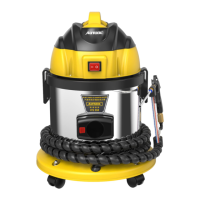
The AUTOOL HTS 558 employs a unique decarbonization method using natural organic material: walnut sand. This approach is chemical-free, ensuring no damage to the engine components. The machine operates by spraying high-pressure airflow mixed with walnut sand into the engine's intake pipe. Inside the closed intake pipe, the high-pressure, high-speed sand rolls and collides, effectively impacting and dislodging carbon deposits from the intake valve and cylinder wall. After the cleaning process, the mixture of walnut sand and carbon deposits is recycled into a dust bucket through a special joint, ensuring a clean and contained operation.
Operating the AUTOOL HTS 558 involves a straightforward, multi-step process designed for efficiency and safety. Upon opening the package, users should first inspect the machine and its components to ensure everything is in order. The initial setup involves connecting the recovery particle pipe to the machine, installing the push rod fixing bracket with the main unit, and then attaching the push rod with its column. Before proceeding, it is crucial to open the lock switches at both ends of the main unit from the upper end and gently lift the head to verify the stability of the recovery particle filter. A quick check to ensure the filter does not move is also necessary.
Once these checks are complete, 2-4KG of walnut sand, with an outer diameter of 0.4-0.8mm, should be poured into the host bucket. It is recommended not to exceed the height of the sieve. After adding the walnut sand, the head should be gently mounted back onto the main unit, and both ends of the lock secured. The machine should then be moved to its intended operating location, and compressed air, with a pressure of not less than 0.7MPa, connected to the host.
Safety is paramount during operation. Users must wear safety goggles to protect against splashing and eye injury. The machine requires a 220V/55Hz power supply. The recovery particle connector should be connected to the recovery pipe for cleaning. To initiate the process, press the power switch. For optimal recycling quality, using high-grade sand materials is recommended. The carbon removal gun is inserted into the injection port on the recycling granule joint, and triggering the carbon removal switch starts the decarbonization process. To adapt to different particles and conditions, the bottom throttle valve of the carbon gun can be adjusted to ensure the firing rate is optimal, guaranteeing thorough carbon removal without damaging the particles.
Proper maintenance is essential for the longevity and efficient operation of the AUTOOL HTS 558. The product comes with a 3-year warranty, during which delicate parts will be offered for free. Users are advised to read the manual carefully to understand the product parts and usage methods, thereby avoiding unnecessary losses.
Upon receiving the machine, if any damage is found during transportation, the dealer should be contacted immediately. Beyond the operating instructions, general safety and accident prevention regulations must be observed. It is crucial to avoid connecting the power cord to heat, oil, or sharp corners, and to prevent pulling, squeezing, or twisting the power cord.
When using the machine, several precautions must be taken:
The manual includes a FAQ section to address common issues. For example, if the motor does not turn, possible reasons include an unplugged power cord, an open fuse, or the machine not being powered on. Solutions involve plugging in the power cord correctly, checking the fuse and ensuring the outlet has electricity, and turning on the power switch. If dust comes out while working, it could be due to an improperly installed or defective Haipa component, or excessive tiny dust on the Haipa. Solutions include proper installation, replacement, or cleaning of the Haipa component. Weakened suction might indicate a plugged main straw, blocked ground brush hose or nozzle, or a full/clogged Haipa or paper bag. Solutions involve inserting the main straw, clearing blockages, or cleaning/replacing the Haipa/paper bag. If an electric shock occurs, it might be due to friction and electricity generation with cotton and linen items like carpets; the solution is to contact and discharge with other metal objects in the room during use.
The machine's accessories include a filter, filter cartridge, sieve, sand blast gun, safety goggle, and sand suction hose connector.
For after-sales service, users should contact the dealer if problems arise during use, providing their name, address, phone number, product model, and a detailed description of the issue. A warranty certificate is required for consultation or repair. If the product malfunctions and the confirmed tips do not resolve the issue, the dealer should be contacted. Repairs for products outside the warranty period will be charged according to regulations.
The warranty does not cover failures due to improper maintenance, mechanical damage, or malfunction; obvious damage to appearance or internal structure from improper operation; disassembly or modification without manufacturer approval; human-caused damage; consumable parts; machines not sold by a designated agent; or use of incorrect voltage.
The contents of the manual are subject to change without notice. If product appearance and specifications change, the actual product prevails. The company reserves the final explanation for any errors or misunderstandings in the printing of the manual.
 General
| Model | HTS558 |
|---|---|
| Supported Protocols | Not applicable |
| Languages | Not applicable |
| Update Method | Not applicable |
| Operating System | Not applicable |
| Processor | Not applicable |
| Memory | Not applicable |
| Connectivity | Not applicable |
| Battery | Not applicable |
| Charging Time | Not applicable |

 To Next Page