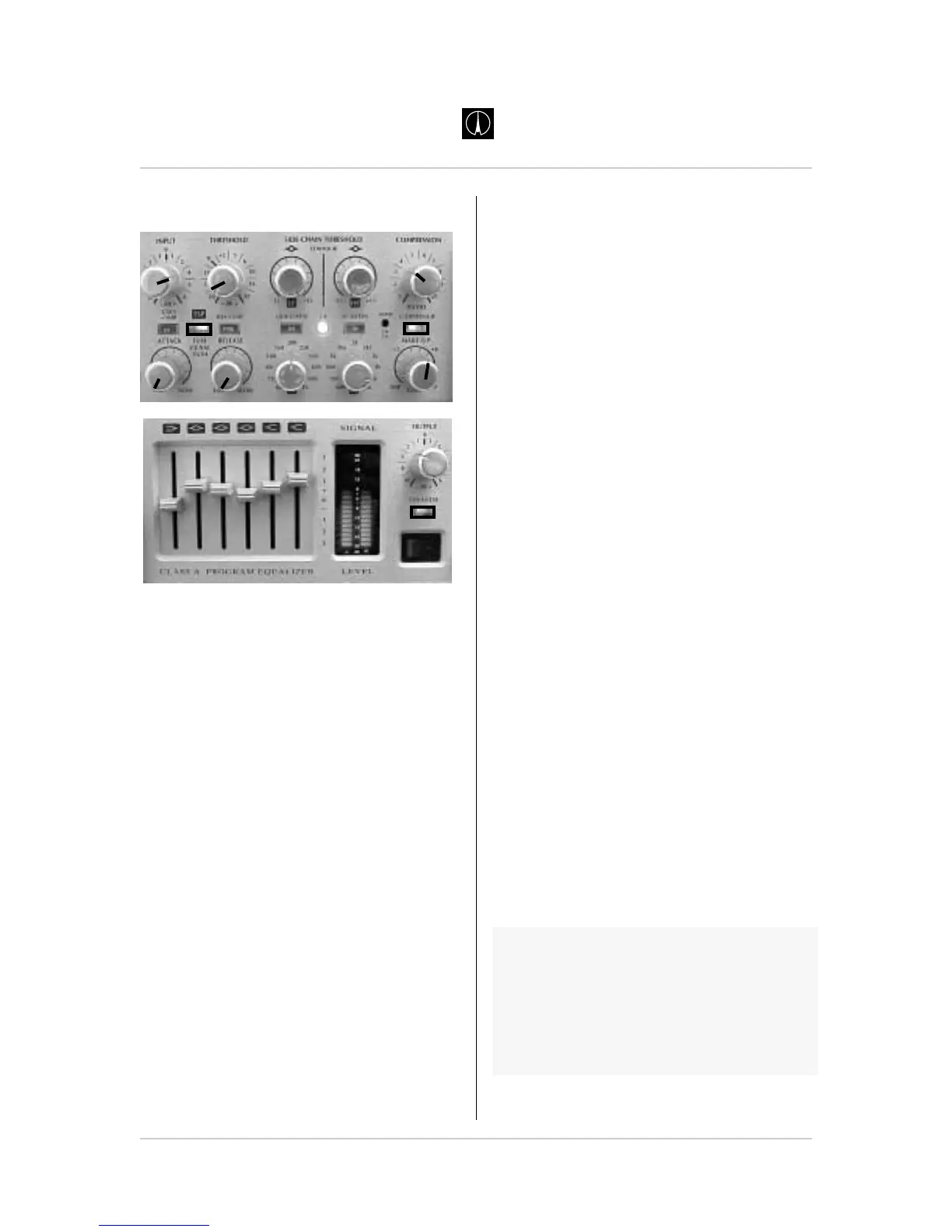
5.2.8 Drum Overheads
Input: +4
Gain: Out
TSP: In
Compressor: In
EQ->Comp: Out
Compression Ratio: 4:1
Compression Threshold:-17
Attack: Fast
Release: Fast
Make-up: +5
Side-Chain: Out
Side-Chain LF Threshold: bypassed
Side-Chain LF Frequency: bypassed
Side-Chain HF Threshold: bypassed
Side-Chain HF Frequency: bypassed
Equalizer: In
EQ Faders from left (1) to right (6):
1. 0
2. +2
3. +1
4. +0.5
5. +1
6. +2
6.0 Compression Primer
A compressor is one of the most widely used
signal processors in the recording studio.
Compressors are used during the recording
process as well as during mixdown and
mastering. During the recording process
compressors are used to control the dynamic
range or volume of a signal. For example,
a singer may vary his volume level from a
whisper to a scream during a particular song.
A compressor will control the volume of the
vocal so that the volume is consistent whether
the singer is whispering or screaming. During
mixdown compressors are used to "tighten
up" the tracks so that nothing pops out of the
mix uncontrollably. During the mastering
process compressors are used very slightly to
tighten up the entire mix and can give the mix
a bigger sound.
The way a compressor works is like an
automatic fader. When the input signal
exceeds a predetermined level called the
threshold, the gain is reduced by the
compressor and the signal is attenuated. By
attenuating the louder signal levels, you are in
fact, reducing the program’s overall dynamic
range. Because the range between the
loudest and softest signal is "compressed" by
increasing the signal’s overall gain, the
average level will be greater. Thus the signal
will be perceived as being louder than it
otherwise would be.
Compression is measured by the ratio of the
change in output level (in dB) to the change in
input level, called the compression ratio. If a
compressor is set to 8:1 compression then an
8 dB increase in the input level will result in a
1dB increase in the output level.


 To Next Page