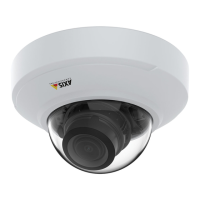
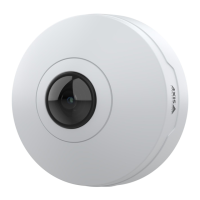
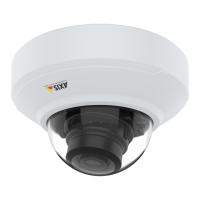
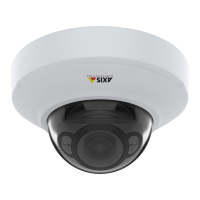
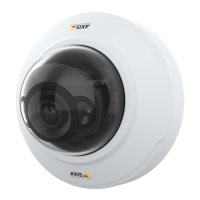
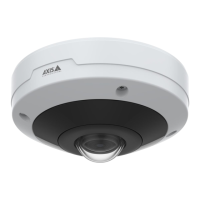
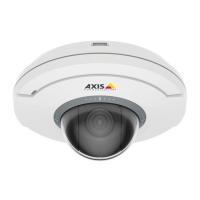
This document serves as a user manual for the AXIS M42 Network Camera Series, specifically covering the AXIS M4206-LV and AXIS M4206-V Network Cameras. It provides comprehensive instructions for installation, configuration, operation, and troubleshooting of these devices.
Function Description
The AXIS M42 Network Camera Series devices are network cameras designed for surveillance and monitoring. They capture video streams and can be integrated into a network for remote access and management. These cameras offer various image adjustment capabilities, including zoom and focus control, as well as optimization for different lighting conditions. They support both visible light and near-infrared light, allowing for day and night mode operation to deliver clear images even in low-light environments. The cameras can transmit live video streams to an HDMI monitor, making them suitable for local surveillance or public viewing applications. They also support recording video to network storage or an SD card, enabling continuous or event-triggered recording. The devices are equipped with a control button for various functions, including resetting to factory default settings.
Usage Features
The cameras offer a range of features to enhance their usability and adaptability to different surveillance needs:
- Image Adjustment: Users can adjust the zoom and focus remotely via the camera's web interface. An autofocus area can be defined to ensure specific parts of the image are in sharp focus.
- IR Illumination Optimization: The cameras feature IR illumination, which can be optimized for various installation environments. Users can manually adjust the intensity of the IR LEDs to prevent image saturation, especially when the camera is placed close to walls or corners.
- Day and Night Mode: The cameras automatically shift between day (color) and night (black-and-white) modes based on available light. In night mode, they utilize both visible and near-infrared light for brighter and more detailed images. The threshold for shifting between modes can be adjusted.
- Motion Blur Reduction: Settings like "Blur-noise trade-off," "Max shutter," and "Max gain" can be adjusted to reduce motion blur in low-light conditions. Recommendations include increasing light levels or mounting the camera to minimize sideways object movement.
- Wide Dynamic Range (WDR): For scenes with strong backlighting, WDR can be enabled to make both dark and bright areas of the image visible. The "Local contrast" slider allows for adjustment of the WDR amount.
- Corridor Format: To efficiently monitor long and narrow areas like hallways or staircases, the camera or its 3-axis lens can be rotated 90° or 270° to utilize the full field of view.
- Pixel Resolution Verification: A pixel counter feature allows users to verify that a defined part of the image contains sufficient pixels for specific tasks, such as facial recognition.
- Privacy Masks: Users can create one or more privacy masks to hide sensitive areas in the video stream. These masks appear as solid color blocks in live views, snapshots, and recorded video.
- Text Overlays: The cameras support displaying text overlays in the video stream, which can be triggered by events such as motion detection. This allows for dynamic information display, like "Motion detected."
- Bandwidth and Storage Reduction: To minimize bandwidth and storage requirements, users can select H.264 compression, enable dynamic GOP, increase compression, and turn on dynamic FPS. View areas can also be used to crop the full view, streaming only the relevant parts.
- HDMI Output: A live video stream can be transmitted to an HDMI monitor, providing a local display for surveillance or public viewing without requiring a network connection.
- Network Storage Setup: The cameras can be configured to record video to network storage by specifying the IP address of the host server and the shared location.
- Rules and Alerts: Users can create rules to automate actions based on specific events. For example, the camera can start recording to an SD card when motion is detected, or send an email notification if the lens is tampered with (e.g., spray-painted). Conditions for triggering actions can be scheduled or event-based, and multiple conditions can be combined.
- Video Compression Formats: The cameras support Motion JPEG, H.264 (MPEG-4 Part 10/AVC), and H.265 (MPEG-H Part 2/HEVC) compression formats, allowing users to choose based on their viewing requirements and network properties.
- Bitrate Control: Variable bitrate (VBR) and maximum bitrate (MBR) options are available to manage bandwidth consumption. VBR adjusts bandwidth based on scene activity, while MBR allows setting a target bitrate to handle system limitations.
- AXIS Camera Application Platform (ACAP): The cameras are compatible with ACAP, an open platform that enables third-party analytics and other applications. This extends the camera's functionality for various specialized tasks.
Maintenance Features
The manual also covers essential maintenance and troubleshooting aspects:
- Reset to Factory Default Settings: The camera can be reset to its factory default settings, which is useful for troubleshooting or reconfiguring the device. This can be done by disconnecting power, pressing and holding the control button while reconnecting power, and waiting for the status LED to flash amber and then turn green. A software-based reset is also available through the web interface.
- Firmware Management: Axis offers active and long-term support (LTS) tracks for firmware. Users can check the current firmware version via the product's webpage and upgrade it to access new features or security updates. Firmware upgrades are performed through the web interface, and preconfigured settings are generally saved.
- Troubleshooting Guide: The manual provides solutions for common technical issues, such as problems with upgrading firmware, setting IP addresses, accessing the device from a browser, or issues with video streaming (e.g., multicast H.264 accessibility, poor rendering, lower frame rates). It also addresses scenarios like IP address conflicts and the device being accessible locally but not externally.
- Performance Considerations: The document outlines factors that affect camera performance, including image resolution, compression levels, rotation in the GUI, the number of clients accessing streams, simultaneous viewing of different streams, event settings usage, HTTPS, network utilization, client computer performance, and the number of ACAP applications running. These considerations help users optimize their system for desired frame rates and bandwidth.
- SD Card Slot: The camera includes an SD card slot for local storage. Users are advised to handle SD cards carefully to prevent damage and data loss, and to unmount the card from the product's webpage before removal.
- LED Indicators: Status LED indicators provide visual feedback on the camera's operational status, including connection, normal operation, startup, firmware upgrade, reset, and network connection availability.

 Need help?
 General

 To Next Page