Need help?
Do you have a question about the Axis M4216-LV and is the answer not in the manual?
Ideal for installers to fine-tune the camera view during installation without requiring login.
Methods to find the Axis device on the network and assign IP addresses using specific tools.
Steps to open the device's web interface by entering its IP address or hostname.
Process for creating the initial administrator account upon first login to the device.
Recommendations for creating and protecting strong passwords to secure the device.
Steps to ensure the device has original Axis firmware and is secure against tampering.
Configuring power line frequency, capture mode, and image orientation.
Adjusting zoom, focus, and optimizing IR illumination for better image quality.
Reducing motion blur and handling strong backlight for improved image clarity.
Utilizing corridor format for better field of view in long, narrow areas.
Verifying pixel resolution and creating privacy masks to hide specific image areas.
Adding text or image overlays to the video stream for information display.
Recording video, setting up network storage, and reducing bandwidth usage.
Creating rules for events, setting up network storage, and viewing live streams.
Configuring tampering detection and email alerts for security events.
Enabling and configuring audio input sources for video recordings.
Adding audio capability using portcast technology and PoE connections.
Checking device status, security, time synchronization, and ongoing recordings.
Managing recordings, viewing device info, and controlling live video streams.
Configuring preset positions, guard tours, exposure, and pixel counters.
Adjusting image settings like scene profiles, saturation, contrast, WDR, and white balance.
Configuring IR-cut filter, IR light, and various exposure modes for optimal imaging.
Configuring video stream settings, compression formats, and bitrate control.
Adding and customizing text, image, and data widgets as overlays on the video stream.
Creating and configuring specific view areas for focused monitoring and bandwidth saving.
Managing analytics applications, recordings, and privacy masks.
Setting device time, location, network parameters, and DNS servers.
Configuring network discovery, proxy settings, authentication methods, and SNMP.
Managing security certificates and implementing IEEE 802.1x for network security.
Configuring firewall rules and blocking brute-force attacks for network defense.
Managing user accounts, anonymous access, and OpenID configuration.
Creating event rules and setting up recipients for notifications and file transfers.
Configuring MQTT clients, SIP settings, and NAT traversal for communication.
Managing SIP accounts, call handling, DTMF, and test calls.
Configuring network shares and onboard SD card storage for recordings.
Creating and configuring custom stream profiles for video output.
Setting up ONVIF accounts and media profiles for interoperability.
Managing analytics metadata, camera tampering, and audio detection.
Restarting the device and resetting all settings to factory default values.
Guidelines for upgrading firmware, including standard, factory default, and autorollback options.
Information on benefits of fiber-optic cable installations for extended connectivity.
Using view areas to save bandwidth and choosing capture modes for surveillance needs.
Creating privacy masks to obscure specific areas of the monitored video feed.
Understanding video compression formats and adding overlays to video streams.
Managing bandwidth consumption using Variable Bitrate (VBR) and Maximum Bitrate (MBR).
Introduction to Axis applications like People Counter, Scream Detection, and Blocked View Detection.
Using Object Analytics for detection and understanding the TPM module for security.
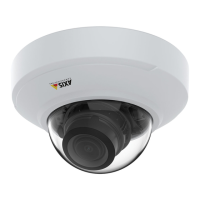
Identifying product components, LED status indicators, and the SD card slot.
Details on control button, power button, HDMI, and network connectors.
Steps to reset the device to factory default settings with important warnings.
Checking firmware version and understanding firmware upgrade options.
Resolving problems related to IP address conflicts and subnet configuration.
Solutions for browser access issues, streaming problems, and stream retrieval errors.
Considering performance factors and contacting support for further assistance.
 General
| Type | IP security camera |
|---|---|
| PTZ modes | Digital PTZ |
| Day/night mode | Yes |
| Languages support | CHI (SIMPL), CHI (TR), DEU, ENG, ESP, FRE, ITA, JPN, KOR, POR, RUS |
| Number of languages | 11 |
| Placement supported | Indoor |
| Connectivity technology | Wired |
| Security algorithms | EAP-TLS |
| Alert notification type | E-mail, Text alert message |
| Wi-Fi | No |
| Networking standards | IEEE 802.1x, IEEE 802.3af, IEEE 802.3at |
| Supported network protocols | IPv4, IPv6 USGv6, ICMPv4/ICMPv6, HTTP, HTTPSb , TLSb , QoS Layer 3 DiffServ, FTP, SFTP, CIFS/SMB, SMTP, mDNS (Bonjour), UPnP® , SNMP v1/v2c/v3 (MIB-II), DNS/DNSv6, DDNS, NTP, RTSP, RTP, TCP, UDP, IGMPv1/v2/v3, RTCP, ICMP, DHCP, ARP, SOCKS, SSH, HDMI, LLDP, CDP, MQTT v3.1.1 |
| IK code | IK08 |
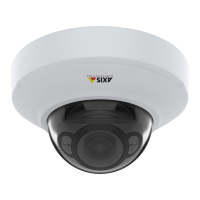
| Form factor | Dome |
| Mounting type | Ceiling/wall |
| Product color | White |
| Housing material | Aluminium, Polycarbonate (PC) |
| International Protection (IP) code | IP42 |
| Pan range | -180 - 180 ° |
| Tilt angle range | -40 - 65 ° |
| Camera shutter speed | 1/37500 - 1/5 s |
| Minimum illumination | 0.18 lx |
| Flash memory | 512 MB |
| Internal memory | 1024 MB |
| Compatible memory cards | MicroSD (TransFlash), MicroSDHC, MicroSDXC, SD |
| Total megapixels | 4 MP |
| Maximum resolution | 2304 x 1728 pixels |
| Supported video modes | 720p, 1080p |
| Video compression formats | H.264, H.265 |
| Sensor type | CMOS |
| Number of sensors | 1 |
| Optical sensor size | 1/2.7 \ |
| Focal length range | 3 - 6 mm |
| LED type | IR |
| Infra-red wavelength | 855 nm |
| Night vision distance | 20 m |
| Power source type | PoE |
| Power consumption (max) | 9.7 W |
| Power consumption (typical) | 5 W |
| Storage temperature (T-T) | -40 - 65 °C |
| Operating temperature (T-T) | 0 - 45 °C |
| Storage relative humidity (H-H) | 5 - 95 % |
| Operating relative humidity (H-H) | 10 - 85 % |
| Doesn't contain | BFR, PVC |
 Weight and Dimensions
| Height | 71 mm |
|---|---|
| Weight | 375 g |
| Diameter | 121 mm |

 To Next Page