Need help?
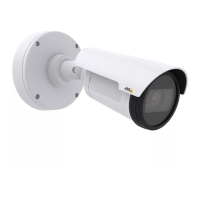
Do you have a question about the Axis P1468-LE and is the answer not in the manual?
This product is approved for repainting by Axis, provided that you follow the instructions.
Potential risks include ESD damage, dust contamination, and paint overspray during the process.
Detailed steps for repainting, covering preparations, pretreatment of parts, disassembly, masking, painting, and reassembly.
This document provides repainting instructions for the AXIS P14 and AXIS Q19 Camera Series, which includes various models such as the AXIS P1455-LE Network Camera, AXIS P1455-LE 29 mm Network Camera, AXIS P1465-LE-3 License Plate Verifier Kit, AXIS P1467-LE Bullet Camera, AXIS P1468-LE Bullet Camera, AXIS Q1951-E Thermal Camera, AXIS Q1952-E Thermal Camera, and AXIS Q1961-TE Thermal Camera. The primary function of these instructions is to guide users through the process of repainting their Axis cameras while minimizing risks and ensuring continued functionality and warranty compliance.
The repainting process is approved by Axis, provided that the instructions outlined in this document and on the Axis website regarding warranty implications are strictly followed. It's crucial to understand that repainting involves certain risks. Disassembling and reassembling an Axis product inherently carries a risk of yield loss. While proper training and tools can mitigate some issues, they cannot be entirely eliminated. Key risks include ESD (Electrostatic Discharge) damage, which can occur even with precautions and may remain undetected, potentially causing problems later in the equipment's lifetime. Therefore, handling the product in an ESD-safe environment is paramount.
Another significant risk is dust contamination. Opening the camera can expose sensitive components like the lens and sensor to dust or paint particles, which can adversely affect optical performance. Lenses, in particular, should be disassembled and handled in a dust-free environment, ideally a cleanroom, to prevent any compromise to image quality. Paint overspray is also a critical concern. Masking various components of the equipment is essential to prevent paint from reaching sensitive areas. Failure to properly mask can lead to problems during reassembly and impact the equipment's functionality. Any areas that were not painted at the factory, or have a different surface treatment (such as threads, ground, and electrical contact surfaces), must be masked to ensure they continue to function correctly.
The repainting process begins with thorough preparations. If applicable, the device must be disassembled according to the instructions provided in the manual. All parts intended for repainting must be meticulously cleaned to remove any grease, dust, or oil. To ensure proper reassembly and functionality, all openings, such as those for screws, LED indicators, or microphones, must be masked before painting. Additionally, to prevent unwanted reflections, the inside of the weathershield should also be masked.
Pretreatment of parts is a crucial step to ensure the new coating adheres well. Depending on the material of the part and the type of factory coating, pretreatment may be necessary. Before applying a new coating, it is recommended to roughen up the surface with light sandpaper or a similar abrasive to increase adhesion. Alternatively, the original coating can be removed down to the base material. After roughening, the parts must be cleaned again to remove any oil, grease, and dust. If necessary, a primer layer suitable for the specific material should be applied to enhance adhesion. For outdoor products, using a primer that improves corrosion resistance is highly recommended to ensure durability and protection against environmental elements. The document specifically recommends pretreatment for parts made of materials such as powder-coated, wet-painted, anodized, chromated, stainless steel, other metals, and plastic.
The disassembly process is detailed with clear steps and an illustrative diagram. It involves removing the bottom base cover, then the lid from the bottom base cover, followed by the weathershield, and finally the holder from the weathershield. Further disassembly includes removing the lock screw, other screws, and the arm cover, and then removing a specific pin. These steps ensure that only the parts intended for repainting are exposed, while sensitive internal components remain protected.
Masking is a critical phase to protect areas not meant to be painted. The instructions emphasize making sure all necessary preparations of the camera unit have been completed as per the earlier steps. All screw and screwholes must be masked. The entire top and bottom surfaces of the bottom base cover need to be masked. The back of the lid, the underside of the weathershield, the holder, and the inside of the arm cover must also be masked. Furthermore, everything between the foot and the ball joint, the slots for the weathershield, and the front of the camera should be masked. This comprehensive masking ensures that only the desired surfaces receive paint, preventing overspray on critical areas.
Once masking is complete, the repainting can begin. The instructions advise applying a thin and even layer of spray paint, strictly following the paint manufacturer's instructions. After the first layer, the paint must be allowed to dry completely. To achieve better coverage and a clearer color, a second layer of spray paint should then be applied. Once the paint is dry, all masking can be carefully removed.
Reassembly is the final stage, reversing the disassembly process. It starts by placing the pin back into its recess in the arm. Then, the arm cover, the four screws, and the lock screw are attached. It is important not to tighten the lock screw at this point. The four screws should be tightened with a specific torque of 1 Nm (0.7 lb ft). Next, the weathershield is attached. Finally, the camera is reassembled, and the screws are tightened with a torque of 1.2 Nm (0.9 lb ft). Adhering to these torque specifications is vital for ensuring the structural integrity and proper sealing of the camera, especially for outdoor models.
In summary, these repainting instructions provide a detailed guide for users to customize the appearance of their Axis P14 and Q19 series cameras. The process is designed to be user-friendly while highlighting the importance of careful handling, proper preparation, and precise execution to maintain the device's functionality, optical performance, and warranty validity. The emphasis on ESD protection, dust prevention, and meticulous masking underscores the delicate nature of these devices and the need for a controlled environment during the repainting procedure.
 General
| Type | IP security camera |
|---|---|
| PTZ modes | Digital PTZ |
| Certification | EN 55032 Class A, EN 50121-4, IEC 62236-4, EN 55035, EN 61000-3-3, EN 61000-6-1, EN 61000-6-2, FCC Part 15 Subpart B Class A, ICES-3(A)/NMB-3(A), VCCI Class A, RCM AS/NZS CISPR 32 Class A |
| Languages support | CHI (SIMPL), CHI (TR), DEU, ENG, ESP, FRE, ITA, JPN, KOR, POR, RUS |
| Number of languages | 11 |
| Placement supported | Indoor & outdoor |
| Connectivity technology | Wired |
| Wide Dynamic Range (WDR) | Yes |
| IK code | IK10 |
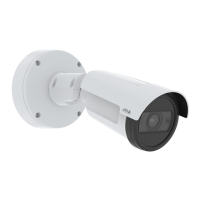
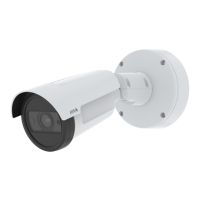
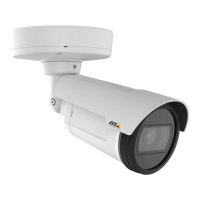
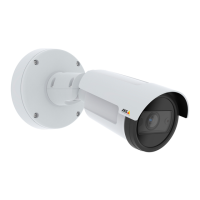
| Form factor | Bullet |
| Mounting type | Ceiling/wall |
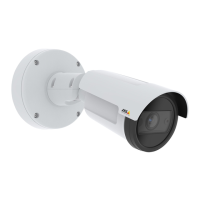
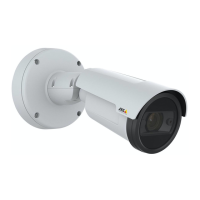
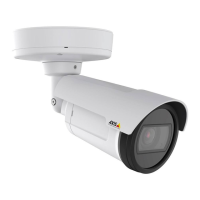
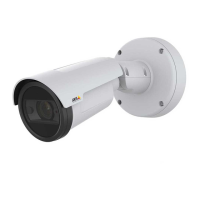
| Product color | White |
| Housing material | Aluminium, Polycarbonate (PC) |
| International Protection (IP) code | IP66, IP67 |
| Camera shutter speed | 1/66500 - 2 s |
| Minimum illumination | 0.07 lx |
| Sensor type | CMOS |
| Number of sensors | 1 |
| Optical sensor size | 1/1.2 \ |
| Optical zoom | 2.08 x |
| Focal length range | 6.2–12.9 mm |
| LED type | IR |
| Infra-red wavelength | 850 nm |
| Night vision distance | 40 m |
| Bit rate control | Variable Bit Rate (VBR) |
| Total megapixels | - MP |
| Maximum resolution | 3840 x 2160 pixels |
| Video compression formats | H.264, H.265, M-JPEG |
| Supported graphics resolutions | 1280 x 720 (HD 720) |
| Audio system | 2-way |
| Audio formats supported | AAC-LC, ADPCM, G.711, G.726, LPCM, OPUS, PCM |
| Wi-Fi | No |
| Networking standards | IEEE 802.1x, IEEE 802.3af, IEEE 802.3at |
| Supported network protocols | IPv4, IPv6 USGv6, ICMPv4/ICMPv6, HTTP, HTTPSa , HTTP/2, TLSa , QoS Layer 3 DiffServ, FTP, SFTP, CIFS/SMB, SMTP, mDNS (Bonjour), UPnP® , SNMP v1/v2c/v3 (MIB-II), DNS/DNSv6, DDNS, NTP, RTSP, RTCP, RTP, SRTP, TCP, UDP, IGMPv1/v2/v3, DHCPv4/v6, ARP, SSH, LLDP, CDP, MQTT v3.1.1, Syslog, Link-Local address (ZeroConf) |
| Flash memory | 8192 MB |
| Internal memory | 2048 MB |
| Compatible memory cards | MicroSD (TransFlash), MicroSDHC, MicroSDXC |
| Security algorithms | 256-bit AES-XTS, EAP-TLS |
| Alert notification type | |
| Power source type | PoE |
| Power consumption (max) | 12.95 W |
| Power consumption (typical) | 7.7 W |
| Storage temperature (T-T) | -40 - 65 °C |
| Operating temperature (T-T) | -40 - 60 °C |
| Storage relative humidity (H-H) | 5 - 95 % |
| Operating relative humidity (H-H) | 10 - 100 % |
| Doesn't contain | BFR, PVC |
 Weight and Dimensions
| Width | 280 mm |
|---|---|
| Weight | 1200 g |
| Diameter | 132 mm |


 To Next Page