18
19
FIRE CONTROL, FUEL-, AND LPG SYSTEM
FIRE CONTROL
This boat is tted with hand-held re extinguishers with the following
output and location. Keep the bilge clean and check regularly for fuel-
and gas fumes or fuel leaks. Do not hang curtains or other fabrics near
or above the LPG cooker or other equipment with naked ames.
The re extinguisher must have a re rating of at least 8A 68B. The re
extinguisher’s total re rating must be at least 8A / 68B and for an indi
-
vidual extinguisher at least 5A / 34B. Check the correct location of the
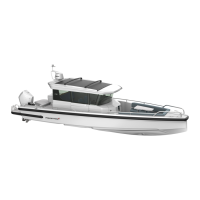
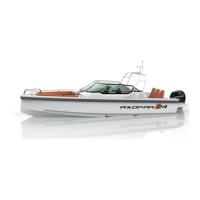
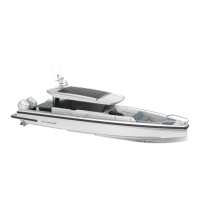
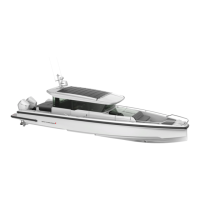
extinguishers from the diagram on page 19.
The re blanket should be kept beside the driver’s seat.
CAUTION!
Never:
• Block evacuation routes and emergency exits.
• Block access to safety equipment such as fuel valves or main power
switches.
• Block access to re extinguishers, visible or concealed.
• Leave the boat unattended when the cooker or heater is switched on.
• Modify the boat’s systems (especially electrical, fuel or gas systems).
• Refuel or replace gas containers when the engines are running.
• Smoke when handling fuel or gas.
It is the boat owner’s/user’s responsibility to ensure that:
• the re extinguishing equipment is checked regularly at the intervals
specied for the equipment.
• equipment with passed expiry dates is replaced immediately with
equivalent or better equipment.
• the crew and guests are advised of the location and instructions for
re control equipment, and the location of evacuation routes and
emergency exits.
• the re control equipment is accessible at all times.
Action in the event of re in the engine compartment
• Stop the engine.
• If possible, steer the boat up against the wind.
• All passengers on board must put their life jackets on.
• If necessary, evacuate the passengers.
• If necessary, call for sea rescue.
• Shut off fuel, LPG and main power switches.
• Wait until fully certain that the re has been extinguished before
opening the engine hatches. Carefully open the engine hatch and
be prepared to use the handheld re extinguisher if necessary for
post-re extinguishing.
• Put out possible smouldering res with water.
Action after the re has been extinguished
• Open doors and windows for better ventilation.
• Make sure that the re extinguishing equipment is relled or
replaced after use.
FUEL SYSTEM
The boat is tted with a separate xed fuel system and extra fuel l
-
ter on the suction line. The extra fuel lter is a water separating type.
Try to prevent damages on the fuel lines.
See the engine’s instruction manual for care and maintenance of the
engine’s fuel system.
Do not smoke or handle open ames when refuelling.
Remember that it is not allowed to store fuel in spaces not specically
designed for it. Since there is no ventilated storage space on this boat,
possible spare fuel cans must be stored on deck.
Management
When refuelling a boat with composite decks, (Esthec or FlexiTeek) the
deck should be wetted down with water before refuelling. This ensures
that any fuel spillage will oat on the water and won’t penetrate the
decking material.
Water reaching the engine’s injection system can cause rapid corrosion
damage to the precision components in the injection pump compon
-
ents. For this reason, it is vital to check the extra fuel lter regularly
for water. Every so often, drain a small quantity of fuel into a suitable
container (avoid fuel spillage) and check that there is no condensation
water. If there is water in the lter, continue to drain until only clean
fuel appears.
The fuel system on the engine is sensitive to air bubbles in the fuel.
Always ll the tanks well before they are completely empty. If the sys
-
tem has been run dry, it must be bled before the engine can be started
again. See the engine manufacturer’s instruction manual before bleed
-
ing the fuel system.


 To Next Page