15
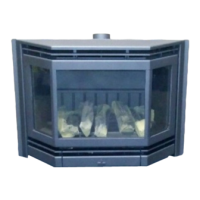
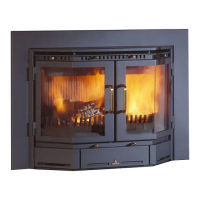
PANOLUX 65PANOLUX 52
6. USE
6.1. VENTILATION
Air is a vital component of the combustion process. Ensure that there is a
suf• cient supply of fresh air. For each kilo of wood that you put on the • re (door
closed), 10 - 15 m
3
of extra air is needed. That means 50 m
3
per hour! As you
can see, a plentiful supply of air is essential.
6.2. GETTING THE FIRE GOING (Figure 1)
When you start the • re, the chimney is still cold and there is little draught. This
means that the chimney’s capacity to draw in air is limited. Consequently the air
supply has to be helped by opening the door, slides and ash drawer. Use dry,
• ne wood and some scrunched-up paper or • relighters to start the • re.
Leave the door(s) ajar for 10 minutes. Do not open the door wide, as the window
will remain cold. If the door is shut during this time, smoke will condense on
the glass and form soot. To admit more air from the top of the • re: open the
secondary air " ow slide … to its full extent.
Prevent white glow and over-fi ring.
6.3. INSTRUCTIONS WHILE STOKING
After approx. 10 minutes, the • re will be burning • ercely. You can now top it up
with a few larger blocks of wood. Close the door(s) when the new wood catches
• re.
After another 10 minutes, close the ash drawer †.
If the • re is still burning well, close the ridling grill ‰ and the primary air supply
slide Š. The • re can now be controlled with the secondary air " ow slides ….
N.B. The primary air supply slide Š should be kept closed except during the
lighting procedure. Your • re will then be much cleaner and more ef• cient (more
heat, less topping up).
We recommend that you maintain a substantial layer of ash (2 - 3 cm). This not
only forms a protective layer for the base of the appliance but also signi• cantly
reduces consumption of fuel and allows new wood to catch light easier.


 To Next Page