34
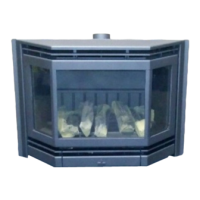
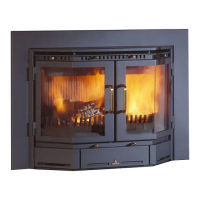
PANOLUX 65PANOLUX 52
What happens when wood is burnt?
The combustion process.
The combustion of wood involves the following steps.
Drying
The • rst step is that the fuel (wood) dries out. Even at low temperatures (<100°C),
any moisture still in the wood will evaporate. This drying procedure implies a
signi• cant loss of energy if wood which is ‘too’ damp is burnt. The right degree of
moisture is achieved after 1.5 - 2 years of drying. The moisture content is then
15 - 17%.
Decomposition
At moderate - high temperatures (150°C - 350°C), the decomposition process can
be discerned. This is when the chemical structure of the fuel breaks down. This
process involves the creation of volatile compounds such as carbon monoxide
(CO), water vapour (H
2
O) and methane (CH
4
). In addition, substances which are
volatile at decomposition temperature but condense at lower temperatures are
often released. These are the tar-like components (this by-product is also known
as creosote, which is deposited in the chimney and cold parts of the • re in poor
burning conditions).
Combustion of the products of decomposition
The volatile compounds burn in the gas phase if O
2
(air) is added. The ignition
temperature of these volatile compounds is approx. 550°C.
Combustion of solid hydrocarbons
The solid component that remains consists of pure hydrocarbons, which will burn
at approx. 800°C if O
2
(air) is added.


 To Next Page