2
CWS 400 Closed Wound Suction Evacuator Kit
I. Device Description:
The Davol
®
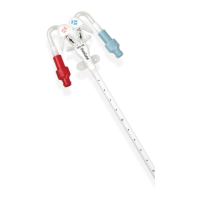
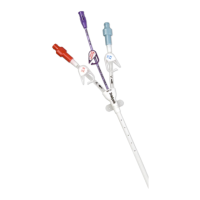
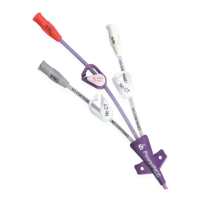
400 CWS Closed Wound Suction Evacuator Kits contain Wound Drains and
Evacuators. Wound Drains are made up of Silicone or PVC materials; they are round
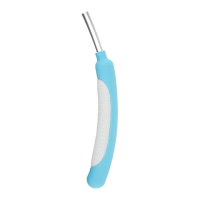
shaped with perforations. They are packaged with a Trocar. 400 cc Evacuators are
made up of PVC materials. Clear Evacuator sidewalls with volume calibrations facilitate
examination and measurement of drainage fluid.
II. Indications for Use:
Wound drains are used to remove exudates from wound sites.
III. Contraindications: DO NOT use for chest drainage.
IV. Precautions:
1. Ensure that the wound site is dry and free of debris before closure.
2. The surgeon must determine the number of drains needed for an effective drainage of
the entire wound site.
3. The junction between the tubing and tissue at the drain entrance site must be air-tight
for effective functioning of the system.
4. If the drain is occluded, irrigation and/or aspiration of the drain may be required.
5. The quality and quantity of drained fluid must be regularly monitored and reported to
the surgeon.
6. Reservoir, once full, must be emptied per hospital protocols. Failure to do so will result
in incomplete drainage.
7. Suction must be discontinued prior to the removal of the drain.
8. Before starting the Drainage Procedure, ensure that all the connections are tight and
free of any obstructions within the drainage pathway. Connections to check are:
i) Drain to suction source.
ii) Y-connector (when applicable):
• Drain to Y-connector.
• Y-connector to suction source.
9. Di(2-ethylhexyl) phthalate (DEHP) is a plasticizer used in some polyvinyl chloride
medical devices. DEHP has been shown to produce a range of adverse effects in
experimental animals, notably liver toxicity and testicular atrophy. Although the toxic
and carcinogenic effects of DEHP have been well established in experimental animals,
the ability of this compound to produce adverse effects in humans is controversial.
There is no evidence that neonates, infants, pregnant and breast feeding women
exposed to DEHP experience any related adverse effects. However, a lack of evidence
of causation between DEHP-PVC and any disease or adverse effect does not mean
that there are no risks.
V. Warnings:
1. An effective closed suction drain system requires maintenance of the system
to preserve patency. The drain must not be allowed to occlude nor the
reservoir to completely fill; and reservoir must be maintained in order for the
system to function properly. If the system is not maintained properly, surgical
complications including hematomas may result.
2. Blood collected using the Evacuator MUST NOT be re-infused.
3. DO NOT use in patients who are allergic to materials used in BarD
®
Drain Products.
4. DO NOT bypass or inactivate the anti-reflux valve.
5.
In the event of occlusion of the drain, all wound drainage ceases. Careful attention to the
drain will minimize the probability of this problem. If occlusion does occur, the drain can be
aspirated by connecting auxiliary suction to the reservoir outlet or temporarily disconnecting
the drain from the evacuator and applying auxiliary suction directly to the drain.
6.
If an air-tight seal between the drain and the skin (from where the drain emerges) is not
achieved, then air leak must be rectified or the system must be converted to open drainage.
7. An airtight seal between all system components (drain, adapter, Y-connector, crab-claw,
evacuator and tube ends) is necessary for intended system function.


 To Next Page
 Loading...