3. Locate the C3 Cell Stand on a stable bench. Vibrations can cause noise.
4. Select a room where temperature remains stable throughout the day. Avoid installing the
C3 near windows, air ducts, ovens, and refrigerators. Diffusion coefficients can change
by 3%/°C. A water-jacketed cell may be required for very precise work.
5. Place the C3 away from busy, congested areas. Remote, isolated areas are best for high-
sensitivity work.
6. Avoid very dry areas and areas that are carpeted. Static electricity can affect instrument per-
formance. Anti-static floormats and benchmats are useful if spiking caused by static
charge is a problem.
7. Avoid areas where radio-frequency interference is likely. Beeper-type paging devices can
be a problem in some installations.
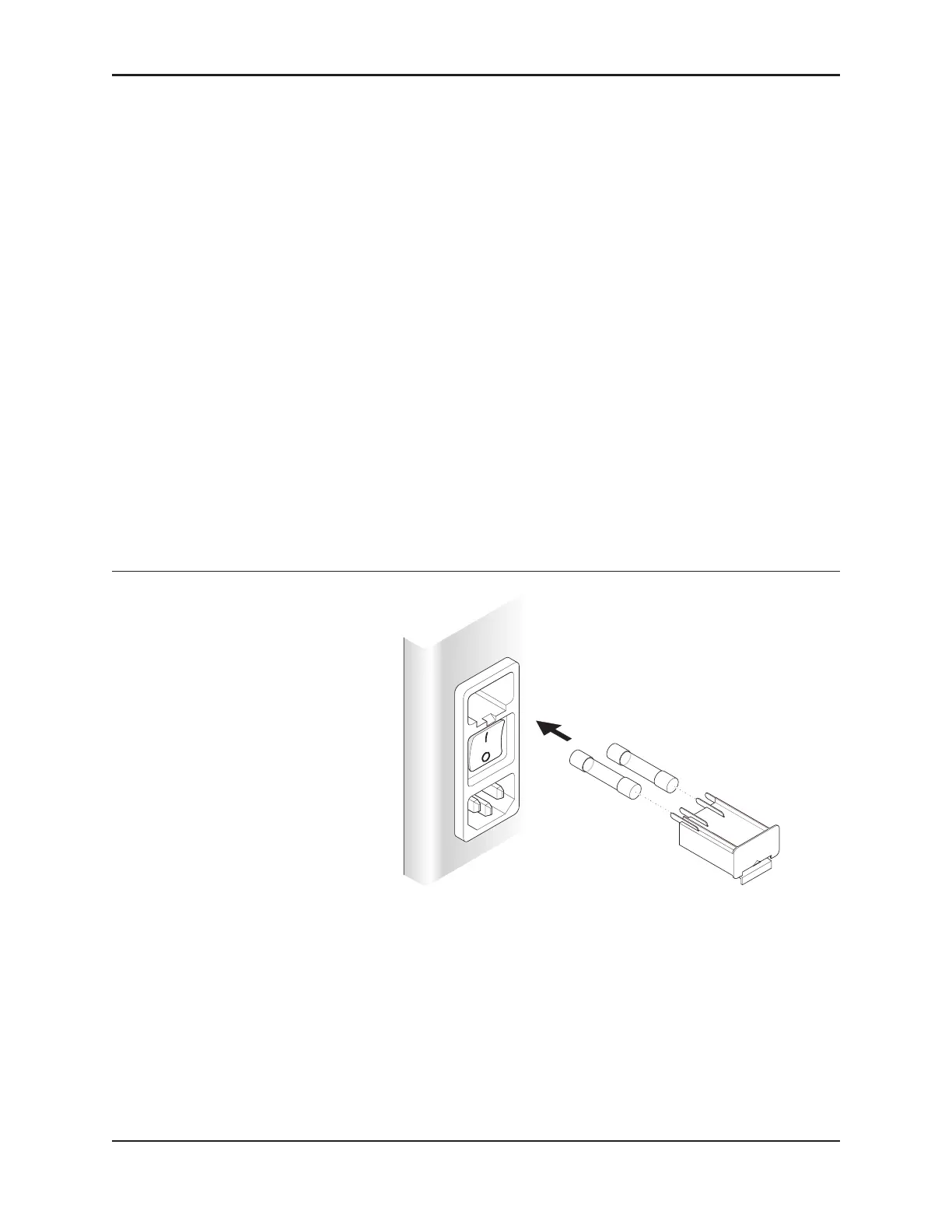
Power Requirements The C3 Cell Stand contains a fused, self-sensing power supply which can be powered by
100-240 V (50-60 Hz). It uses two 2 Amp fuses. Power requirements are shown on the back
panel of the C3 (see Figure 2).
Figure 1. Fuse Placement
Section 3. Installation
5
Artisan Technology Group - Quality Instrumentation ... Guaranteed | (888) 88-SOURCE | www.artisantg.com



 To Next Page